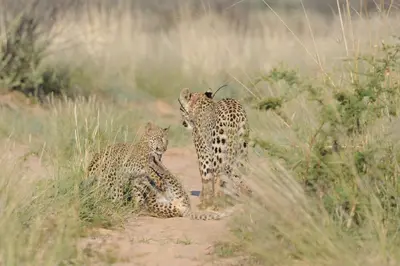
South Africa's new draft national leopard conservation strategy sets out an ambitious vision for leopards to thrive across "living landscapes" while supporting cultural traditions and local livelihoods. However, the draft, published for public comment by the department of forestry, fisheries and the environment, acknowledges a fundamental problem at the heart of managing the iconic species: there is no rigorous estimate of how many leopards remain in the country. Published estimates range from 2,185 to 23,400 animals.
The draft estimates that leopards have disappeared from 67% of their historical range, with most suitable habitat now lying outside formally protected areas. The large carnivores face habitat loss and fragmentation, human-wildlife conflict, retaliatory and illegal killing, illegal trade, declining prey and uneven conservation capacity. According to the strategy, limited standardised, long-term population monitoring "hinders evidence-based decision-making and undermines the ability to set sustainable hunting quotas or assess conservation outcomes".
A July study published in the Journal of Applied Ecology estimated South Africa's adult male leopard population at about 1,084, with a 95% confidence interval of 639 to 1,773. The study forms part of an effort to establish quantitative conservation targets for leopards across sub-Saharan Africa. It estimated the contemporary sub-Saharan African leopard population at about 80,276 animals, with a 95% confidence interval of 44,800 to 142,604.
The researchers, from Nottingham Trent University in the UK and Nelson Mandela University, found that leopards had disappeared from about 41% of their historical range. They combined existing leopard density estimates with habitat-suitability modelling and found leopards were less abundant in areas with more livestock, people and agricultural or forest land and more abundant where there was greater diversity of wild prey such as buffalo, antelope and pigs.
South Africa has a Convention on International Trade in Endangered Species of Wild Fauna and Flora (Cites) export quota for 11 leopard trophies in 2026 and 10 in 2027. The department told the Mail & Guardian that the quotas, allocated under the National Environmental Management: Biodiversity Act, had been informed by the best available scientific information and recommendations from the Scientific Authority of South Africa.
The draft strategy follows 31 stakeholder workshops held across all nine provinces between August and December 2024, involving 1,980 participants, including traditional leaders, academics, conservation and welfare organisations, farmers, reserve managers, hunters, tourism operators and government authorities. The consultations exposed competing views on how leopards should be managed, with traditional and cultural stakeholders highlighting the significance of leopard skins and other body parts for spiritual, cultural and medicinal purposes.
The strategy proposes expanding monitoring, securing resources for it and exploring a national database to bring population information together. It also proposes revising South Africa's leopard Non-Detriment Finding — the scientific assessment required to establish that international trade will not threaten the survival of a species — and incorporating legal offtake of damage-causing animals into national leopard monitoring. The strategy seeks to increase the economic benefits associated with leopards, identifying ecotourism, hunting revenue, game farming and conservation jobs as potential benefits.
Key points
- South Africa's leopard population is estimated to be between 2,185 and 23,400 animals, with a significant decline in their historical range.
- The country's new draft national leopard conservation strategy aims to balance conservation and hunting, but acknowledges a lack of rigorous national estimate of its leopard population.
- The strategy proposes expanding monitoring, securing resources for it and exploring a national database to bring population information together.