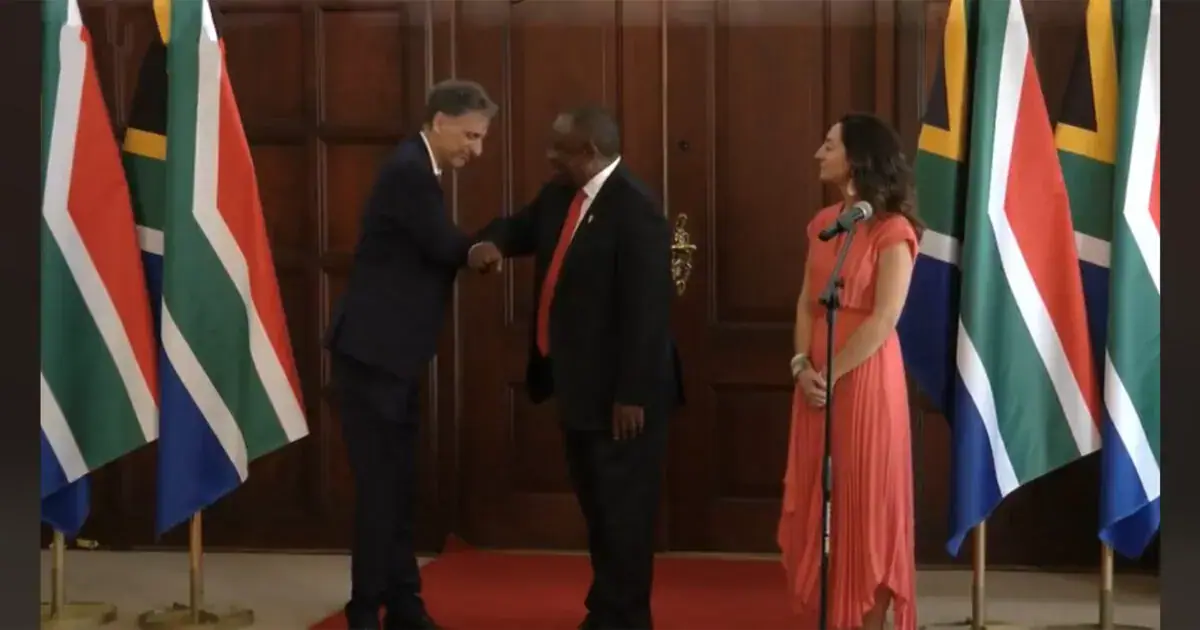
South Africa's relationship with Israel has deteriorated significantly over the years. In 2018, Ambassador Sisa Ngombane was recalled following the deaths of dozens of Palestinians during mass demonstrations along the Gaza border. He was never replaced, and in 2023, South Africa recalled its remaining diplomats for consultations, citing the civilian death toll and humanitarian crisis in Gaza. The Department of International Relations and Cooperation lists its embassy in Israel as closed, with both the ambassadorial and chargé d’affaires posts vacant.
The decision to withdraw diplomats was intended to put pressure on Israel, but its effectiveness is questionable. Israel has maintained relationships with other African governments, including Kenya, Rwanda, Ethiopia, and Ghana. Commercial relations have also continued, with Israeli exports to South Africa fluctuating over the years. In 2017, Israeli exports to South Africa were approximately $287 million, declining to $158 million in 2025. However, exports rose again in 2021 and 2022 despite the absence of an ambassador.
The diplomatic consequences of South Africa's actions have been direct. In January 2026, South Africa expelled Israel’s chargé d’affaires, Ariel Seidman. Israel retaliated by declaring South Africa’s representative to the Palestinian Authority, Shaun Byneveldt, persona non grata and ordering him to leave. This episode showed how a dispute with Israel could complicate Pretoria’s efforts to represent Palestinian interests.
Maintaining diplomatic relations with a country does not mean agreeing with its policies. In fact, engaging with countries whose actions are opposed can be beneficial. For instance, South Africa maintained diplomatic relations with Russia during the Russia-Ukraine war, which contributed to resolving the conflict. In February 2026, President Cyril Ramaphosa raised the plight of 17 South African men recruited to fight alongside Russian forces directly with President Vladimir Putin.
South Africa's opposition to Israeli policies is clear, and its case against Israel at the International Court of Justice (ICJ) has given that opposition a legal dimension. The ICJ case, filed in December 2023, alleges violations of the Genocide Convention in Gaza. Israel denies the allegations, and the court has not ruled on whether genocide occurred. The case is ongoing, but South Africa did not need to withdraw its diplomats to bring it.
The ANC's decision to downgrade South Africa's embassy in Israel to a liaison office in 2017 was intended to support the Palestinian cause. However, the implementation was delayed, and the liaison office had no political, trade, or development cooperation mandate. In 2022, the department defended maintaining formal diplomatic ties with Israel, arguing that a presence there enabled South Africa to work with international partners on the Palestinian question.
In conclusion, South Africa's decision to withdraw its diplomats from Israel has not achieved its intended goals. The relationship between the two countries remains strained, and the benefits of withdrawing the ambassador are hard to establish. South Africa's opposition to Israeli policies is clear, but maintaining diplomatic channels could have provided a more effective means of raising concerns and influencing policy.
Key points
- South Africa has gone eight and a half years without an ambassador in Israel.
- The withdrawal of diplomats has not isolated Israel from other African governments.
- Maintaining diplomatic relations with a country does not mean agreeing with its policies.
Reporting sources
- SA achieves nothing by having no diplomats in Israel · Jewish Report