The Indian community in South Africa has been waiting for 15 years for a direct flight to India, a promise that has been repeated by three ministers but yet to be fulfilled. For most South Africans, the absence of a direct flight to Mumbai is an inconvenience, but for the Indian community, it is seen as an insult. A family in Durban wanting to attend a funeral in Gujarat or take children to a wedding in Chennai experiences it as a logistics problem.
The community's frustration is compounded by the fact that the direct Johannesburg-Mumbai service operated by South African Airways took only nine hours, while the same journey via Doha or Dubai takes 14 to 16 hours door-to-door. This means that passengers lose five to seven extra hours in each direction, which can never be repaid. The Indian community in South Africa is not an ordinary diaspora, with an estimated 1.8 million South Africans tracing their ancestry to Indian indentured labourers who landed in Durban in November 1860.
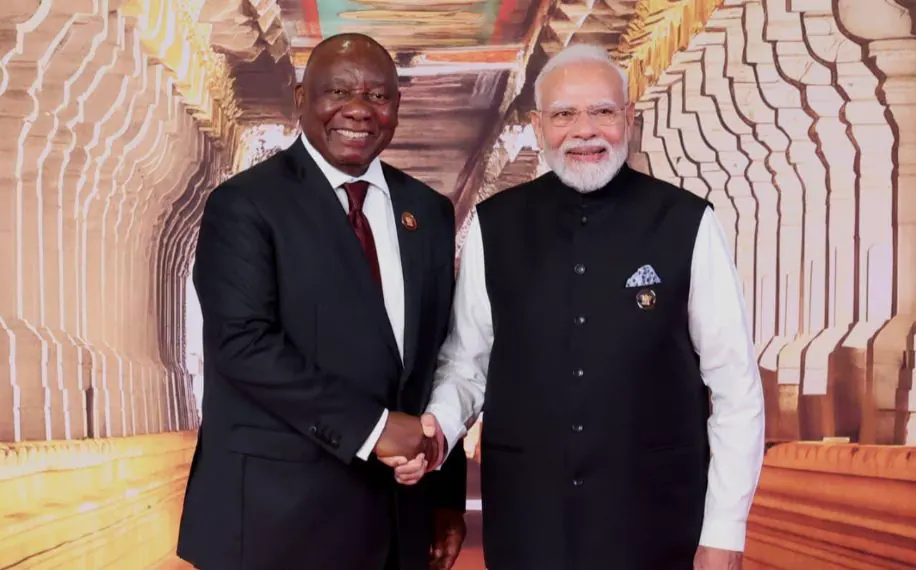
President Cyril Ramaphosa acknowledged in 2019 that Indian business leaders had long complained about the cumbersome travel between the two countries and conceded that the Gupta family's influence lay behind the 2015 closure of the route. Tourism Minister Patricia de Lille has since restated the commitment to a direct flight in December 2024, late 2025, and again in August 2026, citing engagement with Air India, IndiGo, and SpiceJet.
Despite these promises, Indian arrivals in South Africa remain a fraction of what the scale of ties would predict, with 69,680 arrivals in 2025, against South Africa's 10.48 million total arrivals that year. The department attributes this gap chiefly to the absence of direct flights and slow visa processing. The community's frustration is also due to the lack of coordination between different spheres of government, with Durban Direct, Cape Town, and Gauteng pursuing separate talks with airlines.
However, there is an encouraging precedent worth building on. In July 2026, the Consulate General of India in Johannesburg, Shri S Koventhan, met SAA's acting group chief executive, Matshela Seshibe, to press the case for direct connectivity as a "strategic necessity". Seshibe undertook that SAA would fast-track the proposal. The office of India's High Commissioner to South Africa, currently held by Shri Prabhat Kumar in Pretoria, is eager to see this succeed and has signalled it will assist.
South Africa's High Commissioner to India, Professor Anil Sooklal, has already been reported engaging India's business sector on the president's behalf. His role as a BRICS Sherpa gives him direct access in Delhi that could turn goodwill among Indian carriers into a signed commitment sooner rather than later. The community's frustration is ultimately about recognition, with South African Indians having spent a century contesting the Group Areas Act and forced removals to establish that they belong in South Africa.
To resolve this issue, President Ramaphosa could task a small, time-bound team drawn from Tourism, Transport, DIRCO, and both high commissions to establish exactly what is still blocking this route and report back with a signed agreement before the year is out. This would require a single national negotiating position, led jointly by the two high commissioners and backed publicly by the Presidency, rather than three provinces, a ministry, and two consulates pursuing separate conversations toward the same end.
Key points
- The Indian community in South Africa has been waiting 15 years for a direct flight to India, despite repeated promises from ministers.
- The absence of a direct flight has significant economic and emotional impacts on the community, with passengers losing five to seven hours per trip.
- A coordinated national position, led by the two high commissioners and backed by the Presidency, is needed to secure a direct flight.