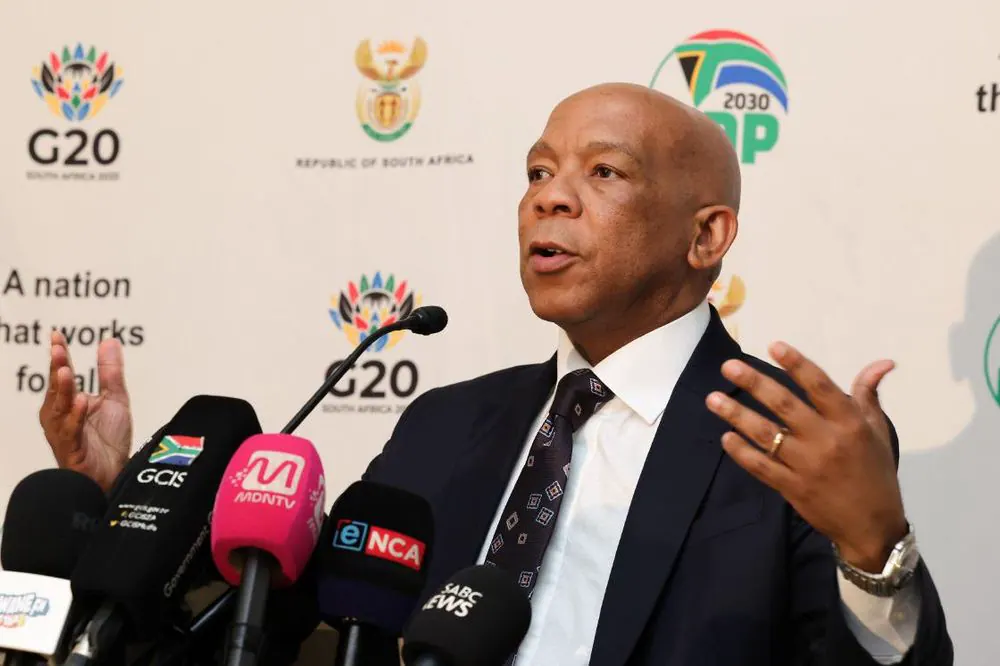
South Africa's Electricity and Energy Minister, Kgosientsho Ramokgopa, has introduced the "Eskom 2.0" strategy aimed at transforming the state-owned power utility into a financially sustainable entity. The plan seeks to address inefficiencies and reduce costs without relying on government bailouts or significant tariff hikes. Ramokgopa emphasized that Eskom must become financially self-sufficient, fulfilling its obligations without depending on repeated fiscal support or sustained double-digit tariff increases.
The "Eskom 2.0" strategy focuses on reducing technical losses, revenue leakages, and inefficiencies within the utility. Ramokgopa highlighted that electricity costs remain a significant concern for households, businesses, and South Africa's industrial competitiveness. He assured that the government is committed to resolving the issue of high electricity costs, which currently hinder economic growth and industrialization.
Eskom recently reported its second consecutive annual profit for the financial year ending March 2026, citing improved operational performance and cost discipline. However, Ramokgopa cautioned that the utility's future sustainability depends on reducing losses and improving revenue collection, rather than relying on state support or consumers absorbing its costs. He instructed Eskom's board to develop a strategy targeting electricity theft, inaccurate metering and billing, technical losses, and weak collection.
A key component of the "Eskom 2.0" plan involves a major expansion of the national grid, with an ambition to construct 14,500 kilometers of new transmission lines at an estimated cost of R440 billion. Ramokgopa emphasized that this program should stimulate local manufacturing and employment, rather than relying heavily on imported equipment. The government aims to use this initiative to industrialize and create jobs within the country.
Ramokgopa also encouraged Eskom to expand its operations beyond South Africa, leveraging its surplus generation capacity to increase electricity exports into Southern Africa. He welcomed the emergence of new private generators, which are eroding Eskom's traditional dominance of the domestic electricity market. The minister emphasized that a monopoly that is complacent and inefficient would hinder the country's economic growth.
The "Eskom 2.0" strategy will also involve establishing clear positions on nuclear power, gas, renewable energy, and the future of Eskom's coal fleet. Ramokgopa instructed Eskom to develop a credible project pipeline for renewable energy and make artificial intelligence a central part of its operations. This includes reducing technical losses, improving weather and demand forecasting, and strengthening visibility of the grid.
The minister expects Eskom's board to produce a single three-to-five-year "Eskom 2.0" roadmap covering the utility's public mandate, commercial position, and investment program. This plan follows Eskom's achievement of 365 consecutive days without load shedding in May 2026 and its second consecutive year of profitability. Ramokgopa stressed that while keeping the lights on is crucial, the cost of electricity must be managed to ensure sustainable and reliable power.
Key points
- The "Eskom 2.0" strategy aims to make Eskom financially sustainable without government bailouts or double-digit tariff increases.
- The plan involves reducing technical losses, revenue leakages, and inefficiencies within Eskom.
- A major expansion of the national grid is envisioned, with an estimated R440 billion investment in new transmission lines.