The Hindu festival of Diwali is a significant celebration in South Africa, but its observance has become a contentious issue due to conflicting calendars and the demands of industrial capitalism. The Hindu calendar, which determines the date of Diwali, is based on the movements of celestial bodies and is not an arbitrary bureaucratic instrument. Diwali is generally observed on Amavasya, the new-moon day of the lunar month of Kartika. This ancient understanding of time is intimately connected to the spiritual consciousness of hundreds of millions of people.
The observance of Diwali in South Africa has a long history, dating back to the arrival of indentured workers from India in the 19th century. The festival was initially observed according to regional calendars and traditions, but its popularisation in the country was influenced by the arrival of Hindu clerics and religious reform movements from India during the early 20th century. This led to the institutionalisation of Hindu religious practice, including the standardisation of Diwali celebrations. However, this standardisation has also led to conflicts over the correct date of the festival.
The Hindu community in South Africa is not a monolithic entity, and different communities have their own traditions and practices. For example, Tamil communities in the country have a strong tradition of worshipping village deities and mother goddesses, which predates the standardised forms of institutional Hinduism. The popularisation of Diwali in South Africa has also been influenced by the cultural consciousness of the diaspora, with many Tamils embracing the festival alongside their own traditional celebrations, such as Karthigai Deepam.
Karthigai Deepam is a significant festival in Tamil Nadu, India, where a great flame is lit atop the sacred Arunachala hill, transforming the mountain into a manifestation of divine light. The festival is associated with the manifestation of Shiva as an infinite column of fire, a symbol of divinity beyond human comprehension. This festival has travelled across oceans and survived in the cultural consciousness of the diaspora, highlighting the importance of preserving traditional practices and rituals.
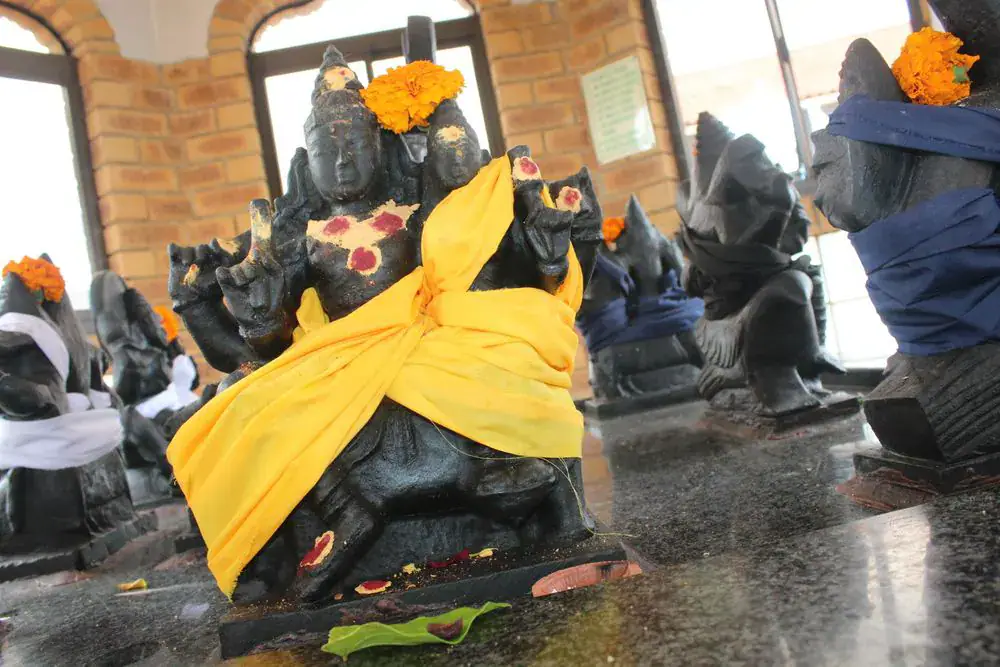
Ritual plays a central role in Hindu religious life, and its significance should not be overlooked. The observance of Kavady, Thimithi or fire-walking, the worship of mother goddesses, and the veneration of rivers and water bodies are all expressions of a religious consciousness that is deeply embedded in everyday life. The adornment of idols is also a practice of profound significance, as the deity is not simply an object of worship but a presence to be honoured, adorned, offered food and approached with devotion.
The imposition of uniformity on Hindu religious practice, whether in the name of theological orthodoxy or administrative convenience, is a concerning trend. This trend overlooks the diversity of religious calendars and cosmological understandings that underpin Hindu traditions. The Hindu community in South Africa should be allowed to observe Diwali according to their own traditions and calendars, rather than being dictated by employers or institutional authorities.
Ultimately, the observance of Diwali in South Africa should be a matter of deep conviction, rather than administrative convenience. The celestial calendar has been with us for millennia, and it is worth remembering that industrial capitalism is a recent arrival. It is the latter that should be accommodating the former, not the other way around. By respecting ancient traditions and allowing the Hindu community to observe Diwali according to their own calendars, we can promote a more inclusive and diverse society.
Key points
- The Hindu calendar determines the date of Diwali based on celestial movements.
- The imposition of uniformity on Hindu religious practice overlooks diversity of traditions.
- Diwali observance in South Africa should respect ancient traditions and not be dictated by administrative convenience.