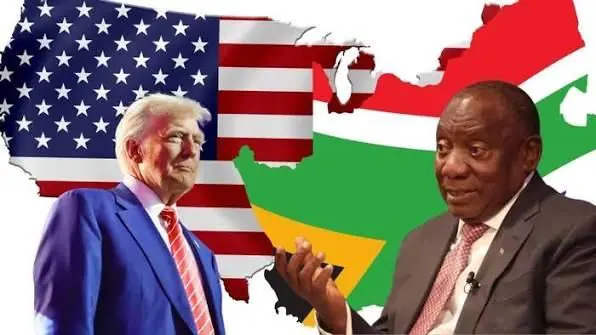
South Africa faces a critical juncture in its diplomatic relationship with the United States, necessitating a careful balancing act. The relationship is vital, with the US being a significant economic, diplomatic, and strategic partner. Longstanding links exist between the two nations in trade, investment, technology, education, and diplomacy. A deterioration in relations could have substantial costs, but partnership does not imply subordination. South Africa must assert its sovereignty and determine its own laws, economic policies, and international relations.
The recent debate surrounding US Ambassador Leo Brent Bozell’s comments on a Constitutional Court judgment highlights the complexities of the relationship. The ambassador initially criticized the "Kill the Boer" chant, sparking controversy. However, he later clarified that the US respects the independence and findings of South Africa's judiciary. This clarification was necessary and should be accepted in good faith. The incident underscores the need for effective communication and understanding between the two nations.
The US has outlined five priorities in its engagement with South Africa, including protecting rural communities from violence, condemning hate speech, ensuring fair compensation standards, expanding cooperation in digital technology and critical minerals, and addressing concerns around mandatory ownership and control requirements under B-BBEE. South Africa should engage these issues seriously and on its own terms, addressing concerns such as rural crime, political rhetoric, and economic policies.
South Africa has significant strategic weight, with an industrial economy, major financial centre, and important trading nation status. The country's companies operate throughout the continent, and its financial institutions have regional influence. However, infrastructure constraints, crime, and weaknesses in public administration undermine its economic potential. Acknowledging these weaknesses is crucial, but so is recognizing the underlying sophistication of the South African economy and its continental reach.
The purpose of an independent foreign policy is to preserve the ability to engage different centres of power without becoming subordinate to any of them. South Africa can disagree with other nations, such as Beijing or Moscow, while maintaining significant economic relationships or diplomatic relations. The goal is not to choose one major power against another but to build a capable and strategically important South Africa that all nations have an interest in maintaining a constructive relationship with.
South Africa's political leadership, diplomats, journalists, academics, and business community have a considerable responsibility in shaping the international narrative about the country. They must confidently assert South Africa's interests, which include attracting investment, accessing technology and markets, and strengthening energy security and industrial capacity. Partnerships that expand manufacturing, improve logistics, and create employment are essential.
Ultimately, South Africa's strategic objective should be to build a constructive relationship with all major powers, rather than choosing one over another. This requires confidence rather than confrontation. By asserting its sovereignty and engaging with the international community on its own terms, South Africa can navigate its diplomatic relationships effectively and promote its national interests.
Key points
- South Africa seeks to assert its sovereignty while maintaining constructive relations with the US and other major powers.
- The country aims to build a capable and strategically important economy that all nations have an interest in partnering with.
- Effective communication, confidence, and a clear assertion of national interests are crucial in navigating South Africa's diplomatic relationships.