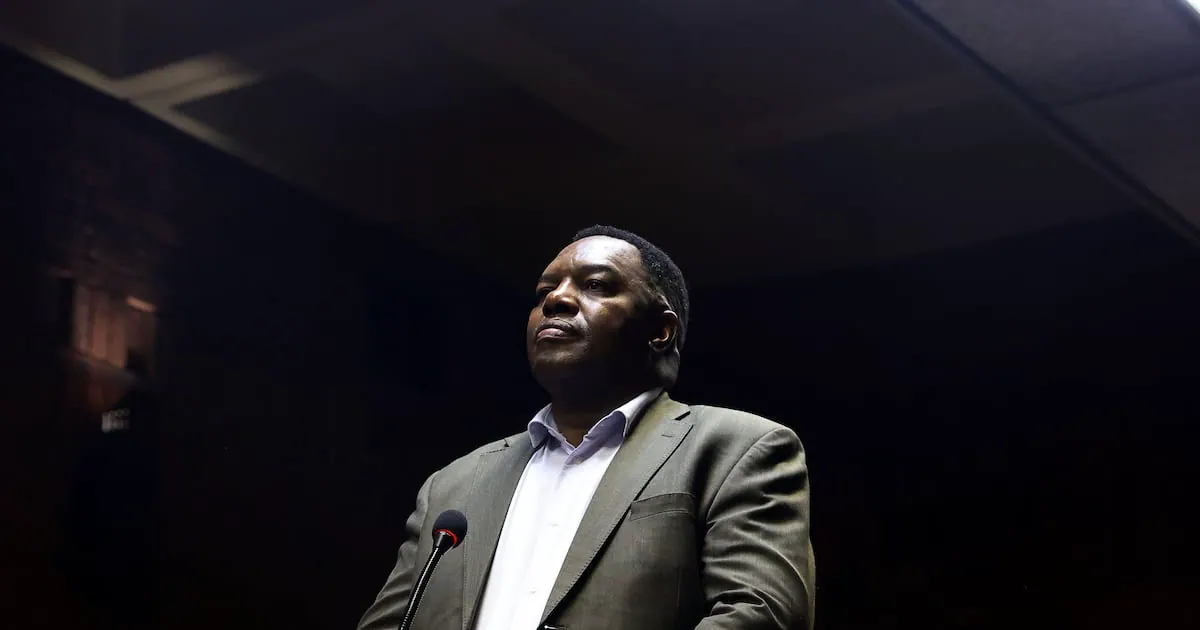
The ongoing parliamentary spectacle surrounding suspended national police commissioner Gen Fannie Masemola has highlighted the fundamental design flaw at the heart of South Africa's criminal justice administration. The ANC has proposed that parliament's ad hoc committee make an adverse finding against Masemola for failing to "resist" an allegedly unlawful directive issued by suspended police minister Senzo Mchunu. This move has sparked debate about the country's approach to administrative accountability and the reality of systemic, cut-throat politics.
According to Jacob Tseko Mofokeng, a criminalist and researcher, the current parliamentary processes point to a grim, Machi,avellian narrative. Our democratic landscape has evolved into an arena where "survival of the fittest" is the ultimate game plan, not just for career politicians, but for professionals leading critical administrative departments. This has resulted in a culture where public servants prioritize their proximity to power over their constitutional obligations.
Mofokeng argues that the exchange of wisdom for political might manifests as a patronage culture that demands the hollowing out of ethical clarity. Accepting unlawful or highly compromised directives without questioning carries immediate, temporary rewards, such as rapid promotions and lucrative tenures. However, these rewards come at a devastating cost to the nation, as the interests and safety of ordinary citizens take a back seat.
The consequences of this dynamic are evident in the case of Masemola, who testified before parliament's ad hoc committee that defying a sitting police minister's directive would have been "career-limiting". Mofokeng notes that this is not a convenient excuse, but a statement of absolute, structural reality. In state departments, demonstrating critical thinking or independent mindsets can lead to political retaliation, limiting career prospects or tarnishing reputations.
This systemic crisis raises uncomfortable questions about South Africa's readiness for critical thinkers. Many highly qualified professionals have been silenced, lost their jobs, or faced disciplinary hearings for refusing to bend to patronage. Their stories reveal a tragic, uniform tale of being cast out for choosing the law over the lawmaker. Young people are watching this play out and learning the cynical lesson that it is not what you know, but who you know.
The structural decay has significant implications for national security, with professor Somadoda Fikeni highlighting the profound, systemic demise of South Africa's democratic dispensation. Mark Shaw's research corroborated concerns about the South African Police Service's (SAPS) operational effectiveness, citing massive structural deficits and leadership fractures due to political infighting.
To address these challenges, Mofokeng argues that South Africa must fundamentally alter its cultural relationship with power. This requires fostering a generation of critical thinkers who understand that true patriotism means respecting those in authority without selling one's soul to the highest bidder. Only when public servants value the constitution more than their proximity to power will there be real hope for South Africa.
Key points
- South Africa's cultural relationship with power must change to prioritize accountability and effective governance.
- The country's patronage culture hinders critical thinking and accountability in public institutions.
- Fostering a generation of critical thinkers is crucial for addressing South Africa's systemic challenges.