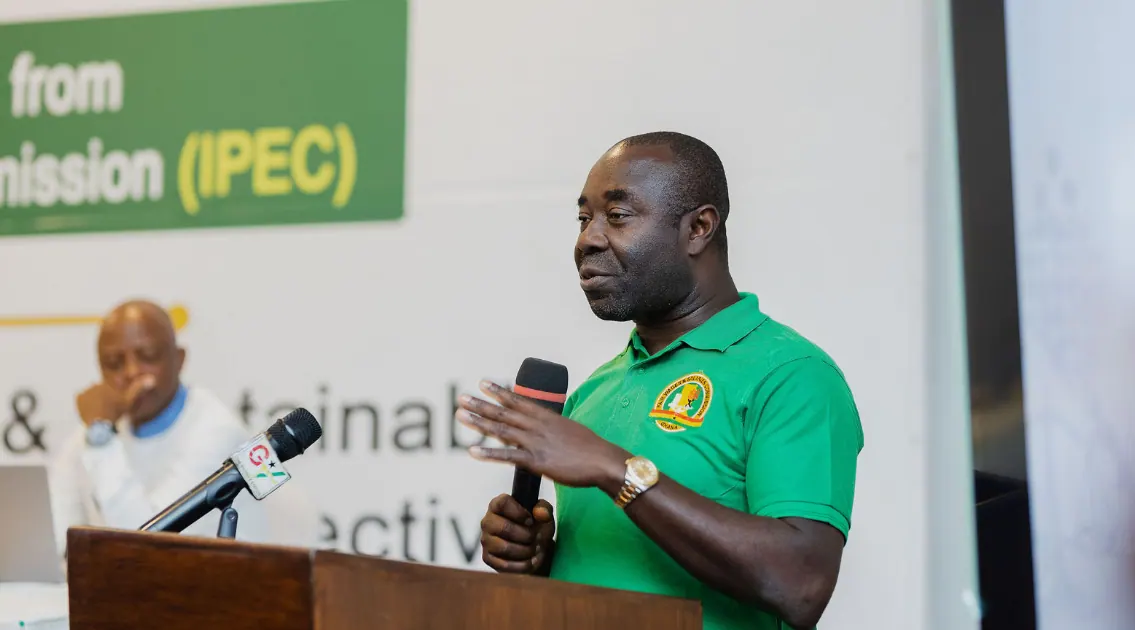
Ghana's Labour Minister, Emmanuel Kwadwo Agyekum, has urged Chief Executives of State-Owned Enterprises (SOEs) to actively contribute to the development of Ghana’s proposed new public sector compensation system. The Minister said the government was not seeking to impose a foreign model but to develop a home-grown, sustainable system based on broad consultation and the experiences of stakeholders within the public sector. He made the call at the opening of a stakeholder engagement organised by the Fair Wages and Salaries Commission (FWSC) with SOE CEOs on the transition to the proposed Independent Public Emoluments Commission (IPEC).
The stakeholder engagement, held in Accra, was on the theme: “Towards an Independent, Equitable & Sustainable Compensation System: Stakeholders’ Perspectives on Ghana’s Public Sector Pay Reforms.” Mr Agyekum said the consultation was necessary to build consensus around the proposed reforms and ensure that the new system reflected Ghana’s realities. He assured the participants that President John Dramani Mahama fully supported the reforms and encouraged the SOE leadership not to withhold their views during the consultation process.
The Minister also addressed concerns that the proposed IPEC framework was targeted at office holders covered under Article 71 of the Constitution, saying the government was aware of the constitutional and legal processes that would have to be followed. “We know it has to go through a process,” he clarified. The engagement forms part of consultations ahead of the proposed IPEC Bill, which is expected to be laid before Parliament in October 2026.
The Chief Executive of the FWSC, Dr George Smith-Graham, also assured SOE boards that the proposed transition to IPEC would not take away their mandate. He said under the proposed framework, boards would continue to assess their organisations’ business models and operating environments and submit evidence-based remuneration proposals to IPEC.
Dr Smith-Graham explained that equity in public sector compensation did not necessarily mean equal pay for all, but that differences in remuneration should have an objective, transparent and defensible basis. He said such differences could be linked to factors including the size and complexity of an organisation, profitability, capacity to pay, productivity and market scarcity.
The FWSC Chief Executive further said IPEC would complement, rather than duplicate, the work of the State Interests and Governance Authority (SIGA). Under the proposed arrangement, boards would originate remuneration proposals, SIGA would provide governance and financial performance perspectives, while IPEC would provide compensation oversight on behalf of government as shareholder.
The stakeholder engagement is part of a broader consultation process that includes Organised Labour and other stakeholders. The Labour Minister has appealed for the support and contributions of all stakeholders to ensure that the new public sector compensation system is equitable, sustainable, and reflective of Ghana’s realities.
Key points
- The Labour Minister, Emmanuel Kwadwo Agyekum, has called on SOEs to contribute to the development of a new public sector compensation system.
- The proposed IPEC framework aims to ensure equity and sustainability in public sector compensation.
- The FWSC has assured SOE boards that their mandate will not be taken away under the proposed transition to IPEC.