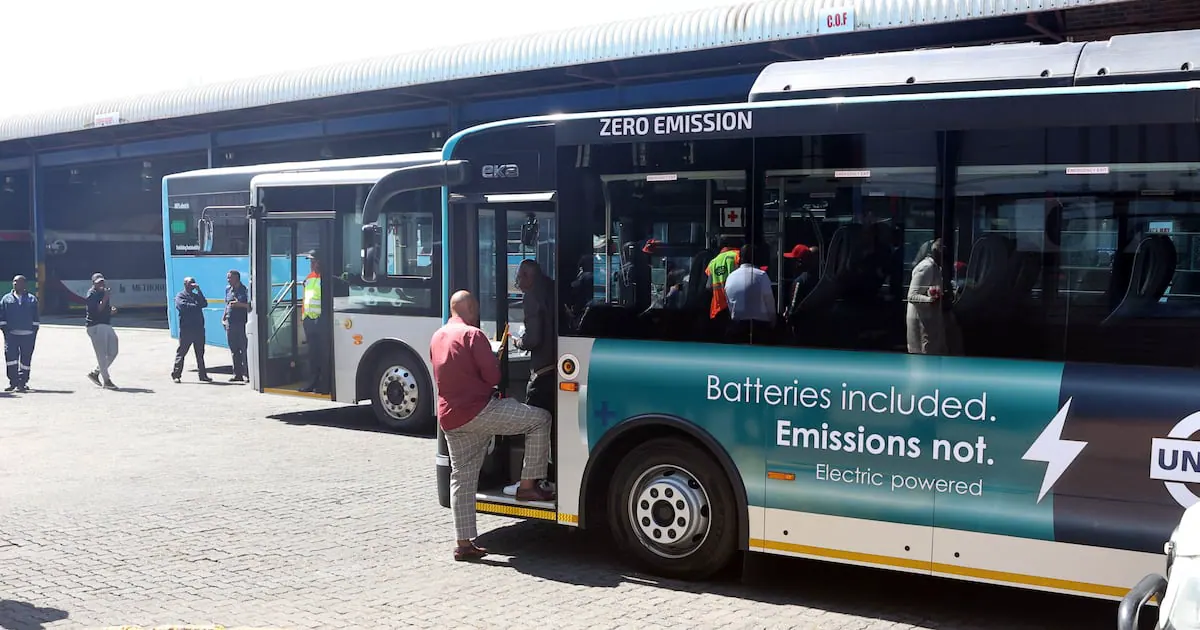
A recent study by EY, commissioned by the Localisation Support Fund and the National Association of Automobile Manufacturers of South Africa (Naamsa), found that South Africa's bus industry is underperforming its potential. The industry could contribute significantly to the economy and create jobs with the right incentives, localisation, and public procurement policy. The study identified several structural constraints limiting the sector's potential, including fragmented procurement and inconsistent application of the designation framework.
The study noted that the current low-volume, high-cost equilibrium constrains manufacturers and procurers alike. Several measures were flagged to unleash the potential of the bus manufacturing industry. These include strengthening designation and enforcement by raising the local content threshold to 85% for diesel bus bodies and bringing electric and hybrid bus bodies within the designation framework over a phased five-year period. Standardising tender fields to include local content as a mandatory specification is also recommended.
The study argues that enforcing existing rules is the highest-impact, lowest-cost lever available. This can be achieved by tightening completely knocked down (CKD) and completely built-up (CBU) compliance monitoring and improving the technical training of procurement adjudicators. Another solution is to cluster smaller municipalities by operational terrain and service type into structured buyer groups, allowing large metros to procure independently. This approach could unlock 10%–15% in capital cost reductions and create volume predictability for manufacturers.
The study also suggests operationalising African Continental Free Trade Area (AfCFTA) vehicle rules of origin, aligning cross-border fleet financing with municipal procurement calendars, and positioning South Africa as a regional bus body manufacturing hub. This would enable the country to deepen localisation, grow jobs, reduce costs through scale effects, expand regional exports, and deliver more affordable and reliable public transport.
South Africa's bus sector comprises private operators such as Putco and Golden Arrow Bus Services, which operate under provincial government contracts and receive subsidies from the public transport operating grant. Municipal bus services, such as Johannesburg Metrobus, also play a role. Bus rapid transit systems like Rea Vaya and MyCiTi have become key components of the system, while private intercity bus services like Greyhound provide scheduled, long-distance road transport.
The study warns that the sector cannot afford further drift, as this would lead to fleet ageing, capacity attrition, and growing import dependence. However, with co-ordinated reform, the sector can deliver more. The conditions for growth are within reach if government, industry, and the procurement community act with co-ordination and sustained commitment.
The study's findings are based on modelling that demonstrates the gap between the low road and the high road is determined by enforcement of designation, co-ordination of procurement, and modest but well-targeted incentive adjustments. The sector already has established body builders, a functioning designation framework, credible OEM participation, and emerging electric mobility opportunities.
Key points
- The bus industry could contribute as much as R88bn to the economy with the right incentives and policies.
- Enforcing existing rules and co-ordinating procurement are crucial to unlocking the sector's potential.
- The sector's growth will require co-ordinated reform and sustained commitment from government, industry, and the procurement community.