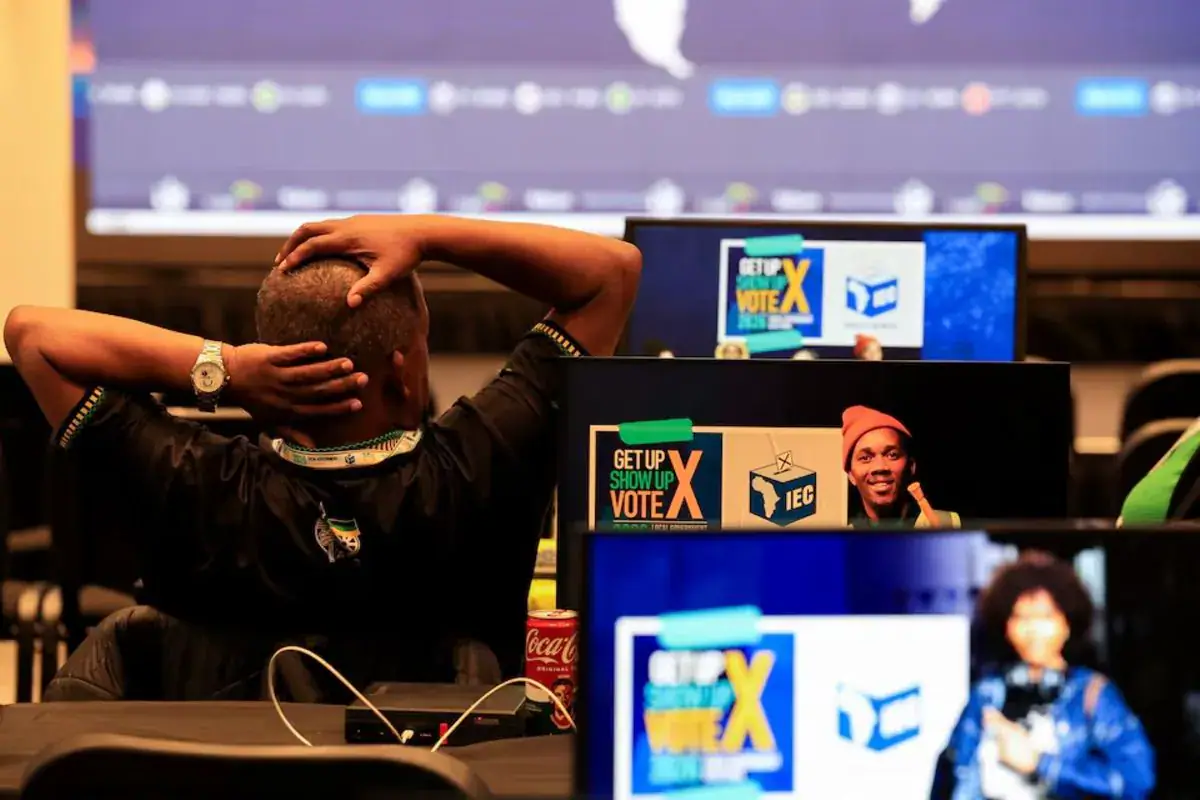
South Africa's African National Congress (ANC) faced a significant setback in the recent municipal elections, with the party securing 30.76 percent of the vote. This marks a considerable decline from its 45.59 percent share in the 2021 municipal elections. The ANC's main rival, the Democratic Alliance (DA), garnered 24.64 percent of the votes, while former President Jacob Zuma's party, uMkhonto weSizwe, secured 9.76 percent.
The outcome of the elections has weakened the ANC's position in coalition talks, which will be crucial in forming city governments. With no party winning over 50 percent of the votes in many cities, including Johannesburg, the ANC and DA will need to form alliances with smaller parties to establish majority municipal governments. This has led to a significant increase in the number of municipalities requiring coalitions, reflecting a fragmentation of South Africa's electorate.
ANC Secretary-General Fikile Mbalula described the results as "catastrophic" for the party, but emphasized that they would not seek positions through begging. Instead, the party will focus on introspection and improvement. President Cyril Ramaphosa, on the other hand, expressed pride in the multi-party nature of South Africa's democracy, highlighting the people's right to choose their representatives.
The election results have significant implications for major cities like Johannesburg. In the commercial hub, the DA secured approximately 35 percent of the votes, while the ANC garnered 20 percent. This could potentially pave the way for DA veteran Helen Zille to become mayor, depending on the coalition agreements reached. Analysts suggest that a partnership between the ANC and DA could be the best option for stability in cities like Johannesburg.
However, the ANC and DA have significant ideological differences, particularly on issues related to racial redress. This could complicate coalition talks and make it challenging to form a stable government. ActionSA, which secured 16 percent of the vote in Johannesburg, has stated that it will not support the DA with Zille as its mayoral candidate.
The parties have 14 days to negotiate before city councils are formed. President Ramaphosa urged political parties to approach the negotiations with humility, emphasizing that the people's interest should not be compromised by petty squabbles or political scores. The ANC and DA will need to navigate these complex negotiations to form functional municipal governments.
The municipal elections have highlighted the ongoing challenges faced by the ANC, which has seen its vote share decline steadily over the last 15 years. The party's struggles in delivering basic services such as water and electricity have contributed to this decline. As the ANC and other parties navigate the complexities of coalition talks, they will need to address these underlying issues to regain the trust of the electorate.
Key points
- ANC's vote share declines to 30.76 percent in municipal elections
- DA secures 24.64 percent of votes, emerging as a significant rival
- Coalition talks to begin, with parties having 14 days to negotiate municipal governments