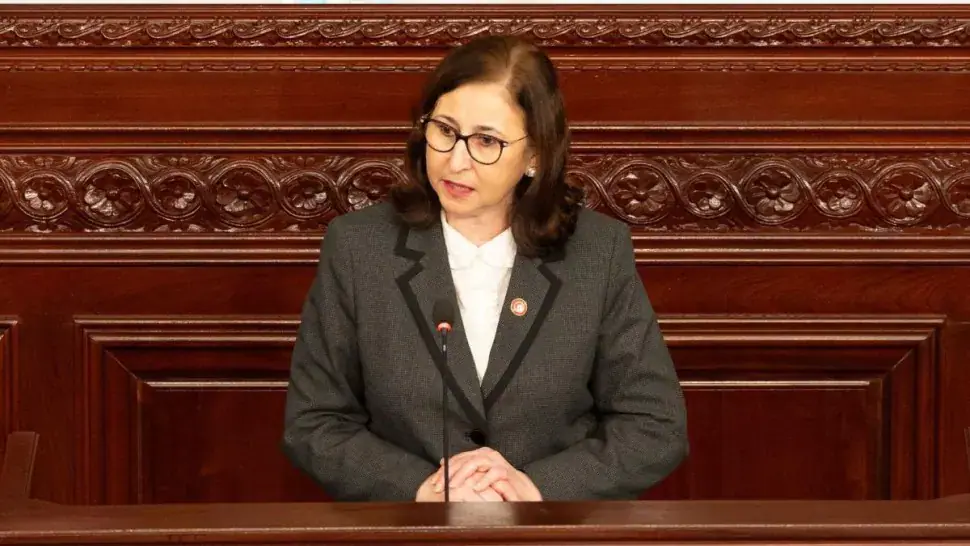
Tunisia's government has set a goal to raise the cultural sector's contribution to the country's GDP to 3% by 2027. This was announced by Prime Minister Najla Bouden on Monday during a parliamentary session dedicated to discussing the state's budget and economic plan for 2027. The government plans to invest in culture by developing creative industries. This initiative aims to promote Tunisia's cultural heritage and increase its global visibility.
The government's focus on culture is reflected in the increased budget for the Ministry of Cultural Affairs, which is set to rise by 8% to approximately 500 million dinars in 2027. This increase is part of the state's efforts to support the cultural sector and promote Tunisia's rich cultural heritage. The budget will be allocated to various sectors, including arts, literature, cultural activities, heritage, and leadership.
One of the notable cultural projects is the classification of Sidi Bou Said village as a UNESCO World Heritage site on July 25, 2026. This recognition is seen as a significant milestone in promoting Tunisia's cultural identity and increasing its international appeal. The government has also designated the protection of Sidi Bou Said's plateau from landslides as a strategic national project, with a budget of 103 million dinars allocated for urgent works.
The cultural sector's budget for 2027 is divided into several programs, including arts, literature, cultural activities, heritage, and leadership. The program for arts has been allocated 66.274 thousand dinars, while literature and reading have received 37.707 thousand dinars. Cultural activities have been allocated 281.333 thousand dinars, heritage 79.664 thousand dinars, and leadership and support 35.022 thousand dinars.
Prime Minister Bouden emphasized the government's commitment to ensuring equal access to cultural programs and services across different regions and communities. This initiative aims to promote social justice and cultural diversity in Tunisia. The government's efforts to support the cultural sector are seen as a way to promote Tunisia's economic growth and increase its global visibility.
The classification of Sidi Bou Said village as a UNESCO World Heritage site is seen as a significant achievement for Tunisia's cultural sector. This recognition is expected to increase tourism and promote cultural exchange between Tunisia and other countries. The government's investment in culture is also seen as a way to promote Tunisia's economic growth and increase its global competitiveness.
The government's efforts to support the cultural sector are part of a broader strategy to promote economic growth and social justice in Tunisia. The country's economy has been facing challenges, including a decline in energy imports and a decrease in the current account deficit. The government's initiatives to support the cultural sector are seen as a way to diversify the economy and promote sustainable growth.
Key points
- Tunisia aims to increase cultural sector's GDP contribution to 3% by 2027
- Government increases budget for Ministry of Cultural Affairs by 8% to 500 million dinars
- Sidi Bou Said village classified as UNESCO World Heritage site on July 25, 2026