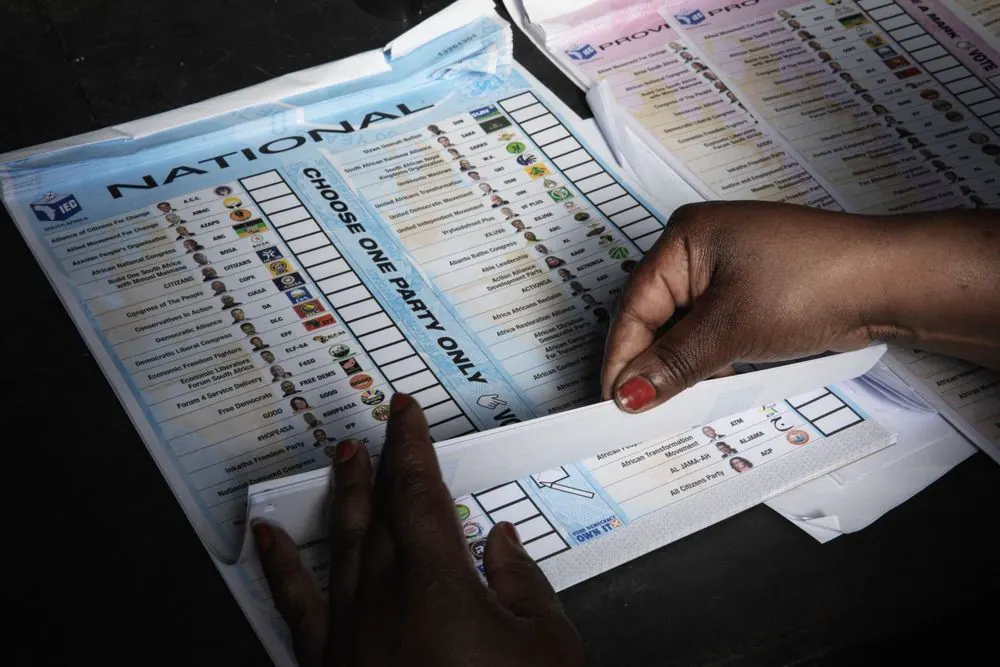
South Africa is approaching a critical period with the 2026 local elections and the 2029 national elections, which will determine the country's future trajectory. The period between 2027 and 2028 will be a diagnostic phase, spotlighting the nation's progress. Currently, statistics show a grim reality: collapsing institutions, water shortages, and a police force that fails to investigate crimes. Citizens are doubting the effectiveness of voting in changing their lives.
The country's state capacity is a significant concern, with a shortage of effective governance rather than laws or policies. Despite improvements in electricity and exiting the FATF grey list, state institutions are marred by corruption and incompetence. If the state fails to maintain infrastructure, administer municipalities, or manage public funds, constitutional rights become theoretical. The South African state's inability to rescue its institutions from corruption and incompetence means its constitutional promises may remain unattainable.
Another critical marker is the economy's ability to create opportunities for those excluded from it. The official unemployment rate stands at 33.6%, with 8.5 million people unemployed. Young South Africans who cannot enter the labor market experience a total absence of opportunity, leading to lingering poverty and permanent dispossession from the future. A democracy that promises better futures cannot indefinitely ask multiple generations to believe in a social contract they cannot see.
Local government is also a significant concern, with citizens encountering the Republic through municipalities. Only 39 out of 257 municipalities received clean audits for 2024/25, indicating institutional capture and collapse. The November election will raise questions about whether democracy can persuade citizens that changing political leadership can improve their daily lives. When citizens lose faith in the ballot's efficacy, they become disillusioned and potentially violent.
Organized crime and weak institutional integrity are also major challenges. State institutions are in the stranglehold of criminality and corruption, eroding the distinction between capable state institutions and the criminal economy. A democracy cannot survive the normalization of illegal activities and prosecutorial inertia. Furthermore, water scarcity, largely stemming from institutional incompetence and corruption, has become a pressing issue.
The integrity of the social contract is another critical marker, with societies under severe social pressure searching for someone to blame. The danger lies not in disagreement but when citizens begin to believe that another ethnic or racial group is responsible for their hardship, fueled by politicians. Additionally, the test of coalition politics is whether it leads to democratic maturity or exhaustion, with the GNU having ended an era of one-party dominance.
Ultimately, these seven markers indicate a growing national trust deficit, raising questions about what kind of Republic South Africans are voting for. The future is not waiting beyond 2029 but is already here, reflected in audit reports, unemployment figures, municipal water pipes, and young graduates' unanswered applications. As Alvin Toffler said, “The future always arrives too fast — and in the wrong order.”
Key points
- The 2026 local elections will assess if voting can restore public trust amid challenges.
- State capacity, economic opportunities, and local government functionality are critical markers for South Africa's future.
- Coalition politics and social contract integrity will also be tested in the upcoming elections.