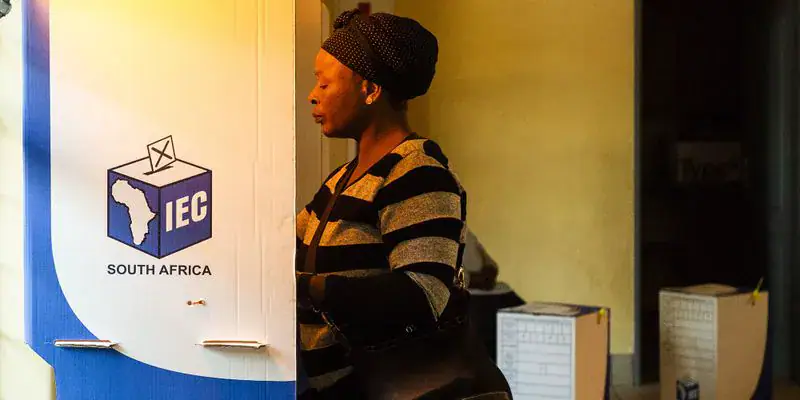
A recent Ipsos poll released on October 30, 2026, reveals significant shifts in South Africa's political landscape ahead of the 2026 local elections. The African National Congress (ANC) is experiencing a continued decline in support, with its national support down to 30%. This decline is more pronounced in key metropolitan areas, with the ANC polling 27% in Johannesburg and a mere 10% in Durban.
The uMkhonto Wesizwe (MK) party, led by Jacob Zuma, has seen its support in eThekwini drop by eight percentage points to 47% since Zuma's disappearance from the campaign trail in early October. This decline is attributed to Zuma's illness and internal party issues. In contrast, the Democratic Alliance (DA) is showing growth, with a small majority of 51% in Cape Town, according to the Ipsos poll.
Ipsos director and political analyst Mari Harris notes that the ANC's decline in support is a significant trend, with no party commanding a strong majority. The survey, adjusted for registered voters, suggests that coalition governments will be increasingly inevitable in the post-election landscape. Harris also highlights that 546 registered parties contesting the elections will lead to further fragmentation.
The Ipsos poll reveals that the DA is leading the ANC in Johannesburg with 30% support compared to the ANC's 27%. In Tshwane, the DA has 34% support, while the ANC has 31%. Harris believes that the ANC's final surge in the last few weeks of campaigning could help stem its losses.
The survey also indicates that South Africans are open to coalition governments, with two-thirds of respondents believing that different parties should work together at the local government and municipal levels. The first Ipsos Pulse of the People survey for 2026 showed 42% support for a Government of National Unity.
Harris notes that the ANC has historically succeeded in making significant gains during the last few weeks of campaigning. However, it remains to be seen whether they can mobilize this "surge" again in the 2026 elections. The ANC has recently found its campaigning momentum, with high visibility across the country.
The 2026 local elections are shaping up to be a critical test of South Africa's democratic system, with coalition governments likely to become the norm. The Ipsos poll provides a snapshot of the current political landscape, highlighting the challenges and opportunities facing various parties in the run-up to the elections.
Key points
- ANC support has declined to 30% nationally, with significant drops in key metropolitan areas.
- The MK party's growth has been stunted by Jacob Zuma's illness and internal party issues.
- Coalition governments are likely to become increasingly common in South Africa's post-election landscape.