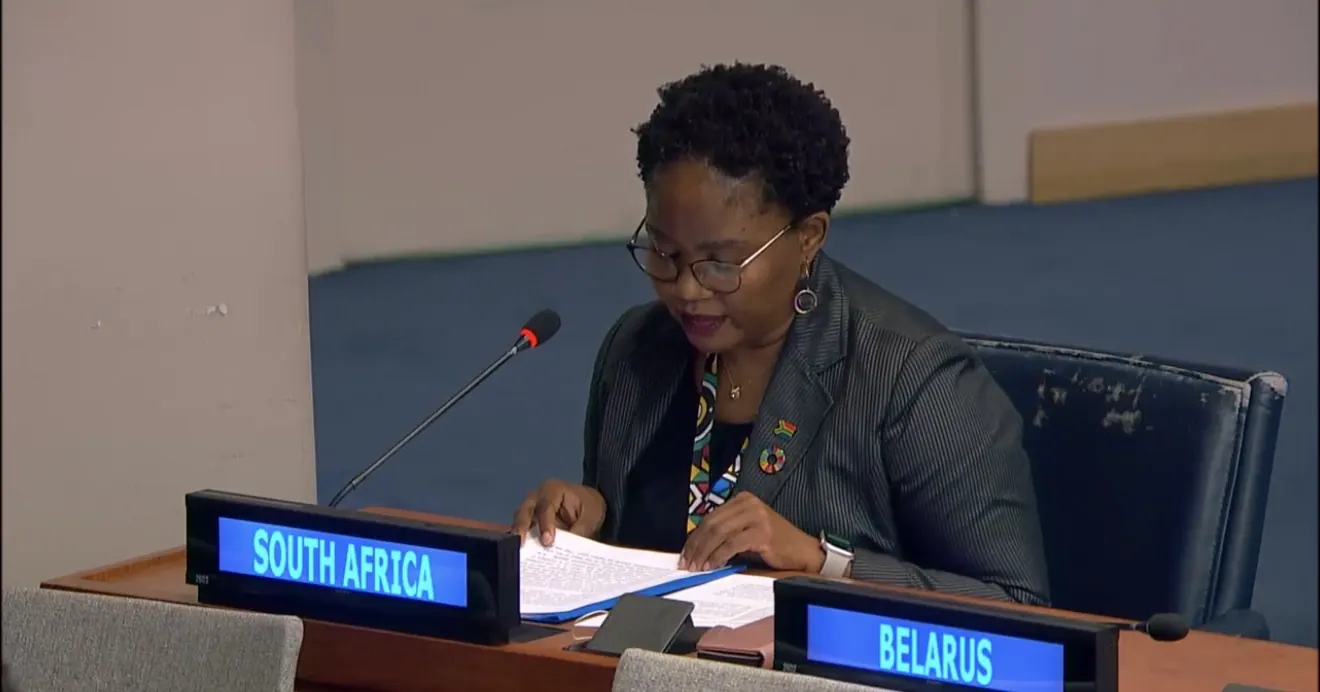
The UN's Fourth Committee, which deals with decolonization, commenced its session on Thursday, with the Western Sahara conflict high on its agenda. South Africa's ambassador to the UN, Mathabo M. Mohwankedi, expressed her country's concern for the "plight of the people of Western Sahara," emphasizing that self-determination for the Sahrawi people is a top priority. She stated that South Africa will support any final decision made by the Sahrawi people on their future.
Mohwankedi's comments were seen as a reaffirmation of South Africa's long-standing support for the Polisario Front, which seeks independence for Western Sahara from Morocco. This stance has been a source of tension between South Africa and Morocco, with Morocco viewing Western Sahara as an integral part of its territory. The Moroccan government has repeatedly expressed its opposition to any attempt to undermine its sovereignty over the region.
In her address, Mohwankedi also emphasized the importance of international law in resolving the Western Sahara conflict. She stated that any solution must be based on the principles of international legitimacy and the rule of law. However, her comments were seen as an attempt to justify South Africa's support for the Polisario Front, which has been accused of being backed by Algeria, a rival of Morocco.
The Western Sahara conflict has been a longstanding issue at the UN, with the General Assembly and the Security Council repeatedly calling for a peaceful resolution. Morocco has proposed a plan for autonomy for Western Sahara, which has been supported by many countries, including the United States and several European nations. However, the Polisario Front and its backers, including Algeria and South Africa, have rejected this plan, advocating for full independence.
South Africa's stance on Western Sahara has been consistent with its historical support for anti-colonial movements. However, its position has also been influenced by its close ties with Algeria, which has been a key player in the conflict. The South African government has been accused of using its position at the UN to promote the interests of Algeria and the Polisario Front.
The Fourth Committee's session is expected to continue with discussions on the Western Sahara conflict, with various countries expected to express their positions on the issue. The committee's debates are closely watched by the international community, as they can influence the course of the conflict and the prospects for a peaceful resolution.
The international community remains divided on the Western Sahara conflict, with some countries supporting Morocco's sovereignty and others advocating for the Sahrawi people's right to self-determination. The conflict has been ongoing for decades, with no lasting solution in sight. The UN's efforts to resolve the issue have been hampered by the deep-seated divisions among its member states.
Key points
- South Africa reiterates its support for Western Sahara's independence at the UN's Fourth Committee.
- The Western Sahara conflict remains a contentious issue at the UN, with Morocco and the Polisario Front holding diametrically opposed views.
- The international community remains divided on the Western Sahara conflict, with no lasting solution in sight.