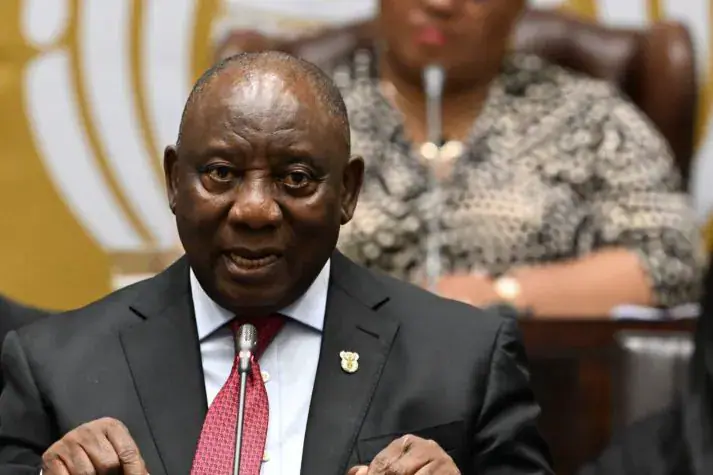
President Cyril Ramaphosa has outlined government's action plan to combat gender-based violence and femicide (GBVF), setting strict deadlines for auditing unresolved criminal cases, addressing forensic backlogs and holding government institutions accountable for their failures. Speaking during a parliamentary question-and-answer session on Tuesday, November 24, 2026, Ramaphosa acknowledged that progress in implementing the National Strategic Plan on GBVF had been insufficient to prevent continued violence and the loss of lives of women and children.
The measures announced on September 29 differed from previous interventions because they established specific short-term deliverables, implementation time frames, institutional responsibilities and reporting obligations. The ministers of Police and Justice and Constitutional Development, together with SAPS and the National Prosecuting Authority (NPA), have until the end of November to audit unresolved murders, attempted murders, rapes and serious sexual offences involving women and children.
By the end of December, individual recovery plans must be developed for priority and stalled cases. Each recovery plan must identify the outstanding action, the official responsible and the deadline. Police management and relevant forensic authorities have also been instructed to develop a funded plan to reduce forensic backlogs within specified time frames. Samples relating to the rape and murder of women and children must be processed urgently, with quarterly public reporting on progress.
Municipalities have been called on to address conditions that expose women and girls to violence, including inadequate street lighting, abandoned buildings, unsafe transport routes and parks. Government is also pursuing a legislative enforcement package to address alcohol-related violence, including stronger enforcement against unlicensed liquor outlets and establishments operating outside permitted trading hours.
Implementation will be monitored by the Inter-Ministerial Committee on GBVF, while the National Council on GBVF will strengthen accountability and coordination across sectors. Both structures must publish consolidated progress reports. Ramaphosa said further funding for the council would be addressed when the national budget was announced.
However, during a follow-up question, DA MP Nicholas Gotsell challenged Ramaphosa to provide a single practical example of how government's interventions would make a tangible difference in the lives of survivors. Gotsell used the case of a Table View rape survivor to highlight alleged institutional failures within the criminal justice system.
Responding, Ramaphosa applauded Gotsell for his intervention, describing his actions as an example of active citizenship. Ramaphosa maintained that the collective implementation of government's interventions would yield measurable results, stressing that addressing GBVF required collective responsibility. He emphasized that it requires all of society, the men of South Africa, and the criminal justice system to act in tandem to rid the country of this scourge.
Key points
- President Ramaphosa outlines a plan to combat GBVF with strict deadlines for auditing unresolved cases and addressing forensic backlogs.
- The plan includes measures to address alcohol-related violence and improve safety in public spaces.
- Implementation will be monitored by the Inter-Ministerial Committee on GBVF and the National Council on GBVF.