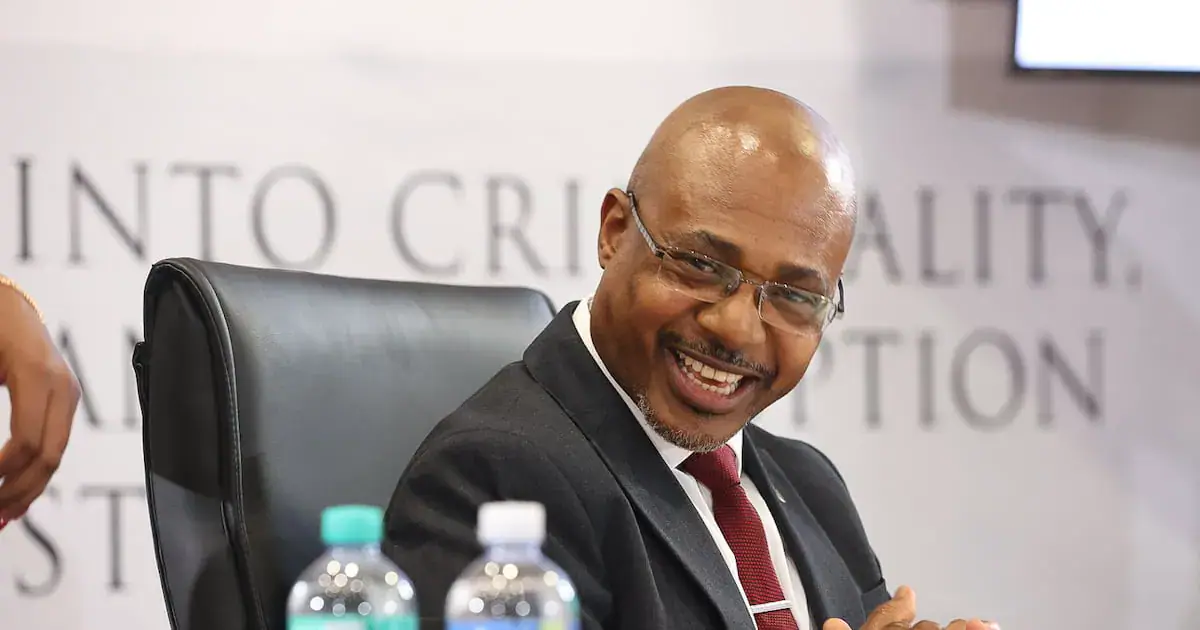
An official from the National Intelligence Co-ordinating Committee (Nicoc) has revealed that South Africa was on the brink of being lost to criminal networks before Nicoc took control of Gauteng's counter-intelligence operations in February 2025. Dr Ntandazo Sifolo, acting co-ordinator at Nicoc, made this disclosure during his testimony at the Madlanga commission. He outlined how Nicoc identifies, assesses, and reports threats posed by organised crime syndicates seeking to infiltrate state institutions.
Sifolo's testimony described how Nicoc's intervention prevented the country from falling to a cartel known as the Big Five, implicated in various crimes including drug trafficking, contract killings, and tender fraud. He stated that had Nicoc not taken over, "The country was gone" and the head of crime intelligence, Lt-Gen Dumisani Khumalo, had effectively surrendered. The commission has previously heard about raids on the homes of alleged cartel members Katiso Molefe and Vusimusi "Cat" Matlala, carried out by Gauteng counter-intelligence with assistance from the political killings task team.
According to Sifolo, KwaZulu-Natal police commissioner Lt-Gen Nhlanhla Mkhwanazi's public expose of alleged criminal infiltration within the criminal justice system on July 6, 2025, was not a coincidence. It was a strategic move to gain public support after intelligence structures faced growing frustration due to negative leaked reports and corruption allegations. Sifolo noted that Mkhwanazi's decision was driven by the realisation that they could not win public opinion and were being labelled as corrupt despite their efforts.
President Cyril Ramaphosa was briefed about the criminal networks and their infiltration of state institutions six days before Mkhwanazi's media briefing. Sifolo revealed that intelligence structures had prepared reports on organised criminal networks, which formed the basis of a verbal briefing to Ramaphosa on June 30, 2025. Minister in the Presidency Khumbudzo Ntshavheni approved these briefings after recusing herself from matters involving intelligence reports that could implicate her cabinet colleagues.
The convergence of politics and the criminal underworld has been a major concern for national intelligence structures, particularly during the 2021 local government elections. Sifolo highlighted that murder and intimidation in the name of politics threatened to become a norm, underscoring the duty of national intelligence structures to ensure safety and security for a thriving economy and stable environment.
Intelligence structures urged crime intelligence to prioritise investigations into politically motivated killings and the murder of law enforcement officials. A report by the National Security Council ahead of the 2024 elections noted the growing links between political leaders and underworld figures, creating a complex, Mafia-like operation within the state. This has led to the normalisation of criminal extortion at economic sites and the transport sector.
The report recommended strengthening investigative capacity to tackle serious organised and commercial crimes, as well as a dedicated approach to investigating embezzlement in municipalities and state-owned companies. It also called for expedited investigations and prosecutions arising from state capture findings, with a stronger focus on organised crime, corruption, and infrastructure-related crimes. Sifolo is expected to continue his testimony in camera.
Key points
- Dr Ntandazo Sifolo testifies that South Africa was nearly lost to criminal networks before Nicoc's intervention in February 2025.
- KwaZulu-Natal police commissioner Lt-Gen Nhlanhla Mkhwanazi's public expose was a strategic move to gain public support amid allegations of corruption.
- Intelligence structures have urged prioritisation of investigations into politically motivated killings and murder of law enforcement officials.