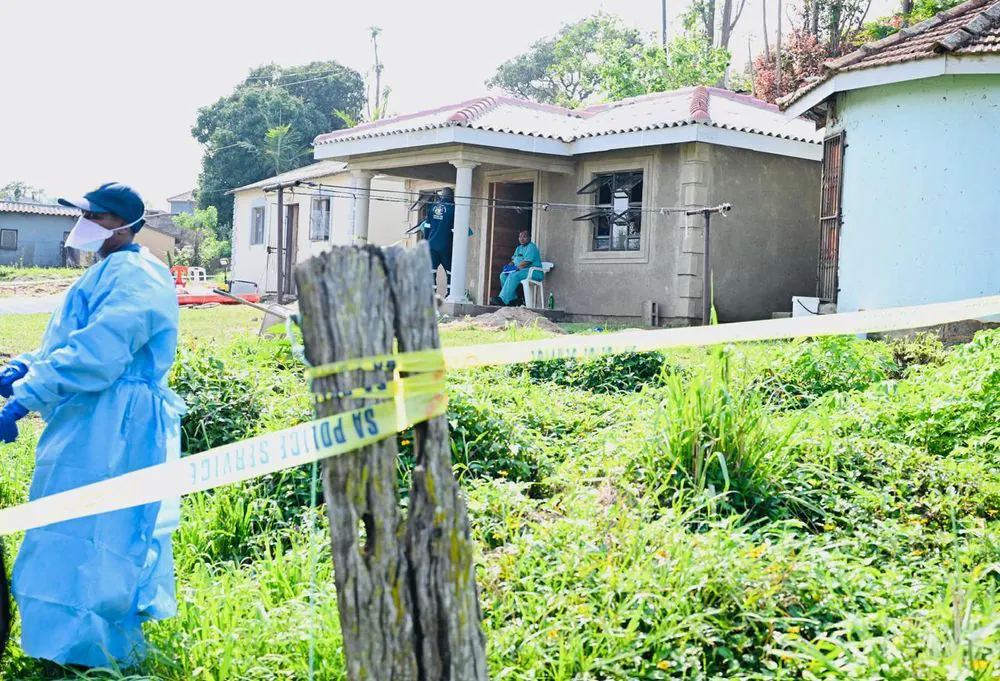
Crime expert Professor Johan Burger has expressed concern that South Africa may be taking a direction similar to that of some South American countries, where gang-related murders are rampant. This warning comes in the wake of a recent mass murder in which 11 people were killed in the Ziko area outside KwaMakhutha, south of Durban, on September 22. According to KwaZulu-Natal police spokesperson Colonel Robert Netshiunda, some of the victims may have been connected to organised crime.
The incident has raised fears that South Africa may be heading for a surge in organised crime. Professor Burger, a former police officer, attributed the high rate of crime to a weakened police service, as highlighted in the Madlanga Judicial Commission of Inquiry. He noted that public confidence in the police has dropped to its lowest level in almost three decades, with trust in the police at 22% in 2022. Burger warned that the situation calls for drastic intervention and multi-stakeholder co-operation to address police shortcomings.
Professor Burger recommended that a team of crime and police experts, including people from outside the police, should be established to identify problems within the police and find solutions. He stressed that rebuilding trust in the police is crucial and can only happen when people see a credible move towards addressing deficiencies within the police and the rest of the criminal justice system. Once the criminal justice system is repaired, the country will be able to formulate a strategy to fight organised criminal gangs.
University of KwaZulu-Natal criminologist Nirmala Gopal noted that violent crime in KwaZulu-Natal has a centuries-old background. She attributed the situation to the region's history, including periods of militarisation and conflict dating back to the era of King Shaka. Gopal also pointed to the legacy of political killings dating back to the 80s and early 90s, which has contributed to a culture of violence in the province.
According to Colonel Netshiunda, the 11 murder victims were among 13 men and one woman who were having a party when the attack happened. Some of the victims were allegedly on Crime Intelligence's radar in connection with illegal activities. The police could not rule out rivalry between groups as a motive for the attack. The incident has raised concerns about the potential for a surge in politically related killings ahead of the November 4 local government elections.
Professor Burger warned that the country may be facing a parallel threat of both political killings and criminally oriented killings, such as those of criminal syndicates. He stressed that the situation requires urgent attention and a comprehensive approach to address the root causes of crime. Gopal, on the other hand, does not believe that military deployment would ease the situation, citing its ineffectiveness in the Western Cape.
Gopal advocated for a robust criminal justice system, with punishments that fit the crimes and act as a meaningful deterrent against future violence. She emphasised that this is what KwaZulu-Natal truly needs to ensure a safer environment for all. The incident has highlighted the need for a co-ordinated approach to address the growing threat of organised crime in South Africa.
Key points
- Professor Johan Burger warns of a potential organised crime crisis in South Africa.
- The recent mass murder in KwaZulu-Natal has raised concerns about a surge in organised crime.
- Experts advocate for a robust criminal justice system and police reform to address the growing threat of organised crime.