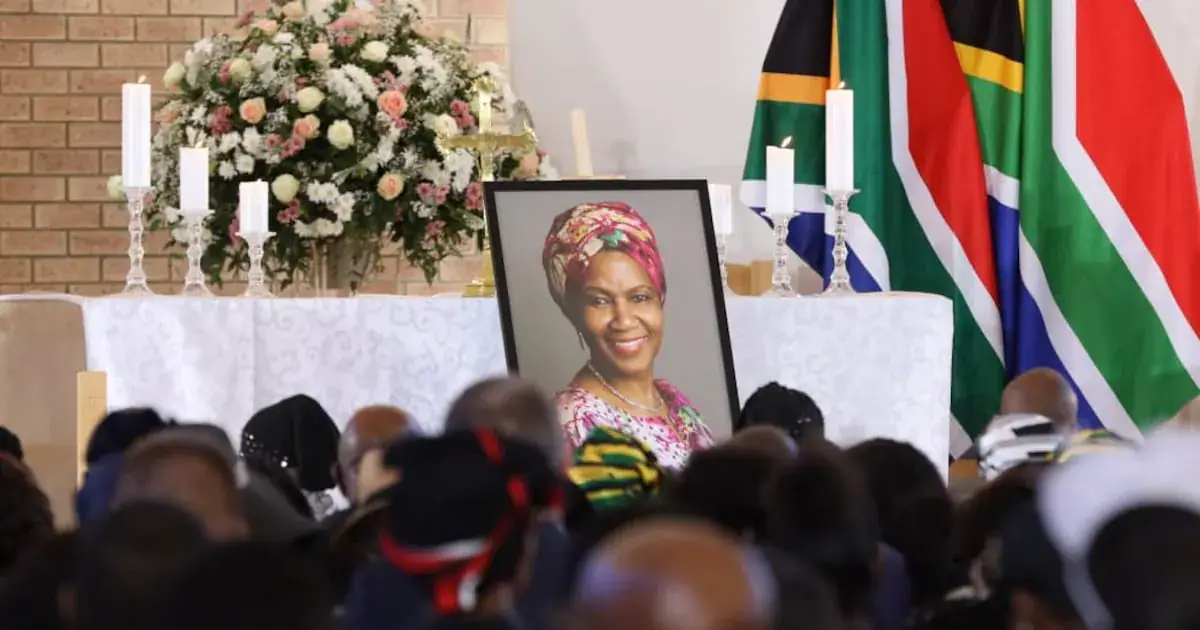
South Africa is mourning the loss of Dr Phumzile Mlambo-Ngcuka, a renowned champion of women's rights, who passed away on November 20 at the age of 71. Dr Mlambo-Ngcuka was the country's first woman deputy president and dedicated her life to advancing the rights, dignity, and empowerment of women. Her legacy is a testament to her tireless efforts to create a fairer world for young women.
Dr Mlambo-Ngcuka's commitment to women's empowerment was evident in her various roles, including as deputy president of the Association of Black Securities and Investment Professionals, where she launched the ABSIP Women in Focus programme to advance women's leadership in financial services. She also led UN Women from 2013 to 2021, helping to advance gender equality as a global priority, including through the 2030 Agenda for Sustainable Development.
Dr Mlambo-Ngcuka understood that meaningful change requires more than opening doors for individuals; it requires changing the conditions that determine who has access to opportunity, who participates in decision-making, and who benefits from economic progress. Her approach to inclusion was holistic, encompassing not only economic empowerment but also education, safety, and leadership opportunities for women.
Despite progress made during her lifetime, significant challenges remain. In early 2026, almost four in 10 young women aged 15 to 24 were not in work, education, or training, a higher share than young men, according to Statistics South Africa. Furthermore, in 2023, only 4.9% of women running informal businesses received formal start-up financing, compared with 12.7% of men.
Dr Mlambo-Ngcuka's work also highlighted the importance of education and financial literacy in empowering women. Through the Umlambo Foundation, she invested in teachers and pupils, recognising that education opens doors and financial literacy and life skills help girls and young women walk through them with confidence.
The current pace of progress towards gender equality is slow, with Dr Mlambo-Ngcuka cautioning that it could take until 2094 to achieve equality at the current rate. This is a challenge that requires acceleration, and Dr Mlambo-Ngcuka's legacy is a call to action for leaders to work together to create a society in which a woman's circumstances do not determine the limits of her possibilities.
As the nation lays Dr Mlambo-Ngcuka to rest, her legacy serves as a baton to be carried forward by leaders and individuals alike. It requires practical action, taken in partnership, to create a fairer world for young women. This includes business leaders opening doors to fair pay and leadership opportunities, government investing in education and safety, and communities teaching girls about money, work, and their rights.
Key points
- Dr Mlambo-Ngcuka's legacy is a call to action for leaders to work together to create a society in which a woman's circumstances do not determine the limits of her possibilities.