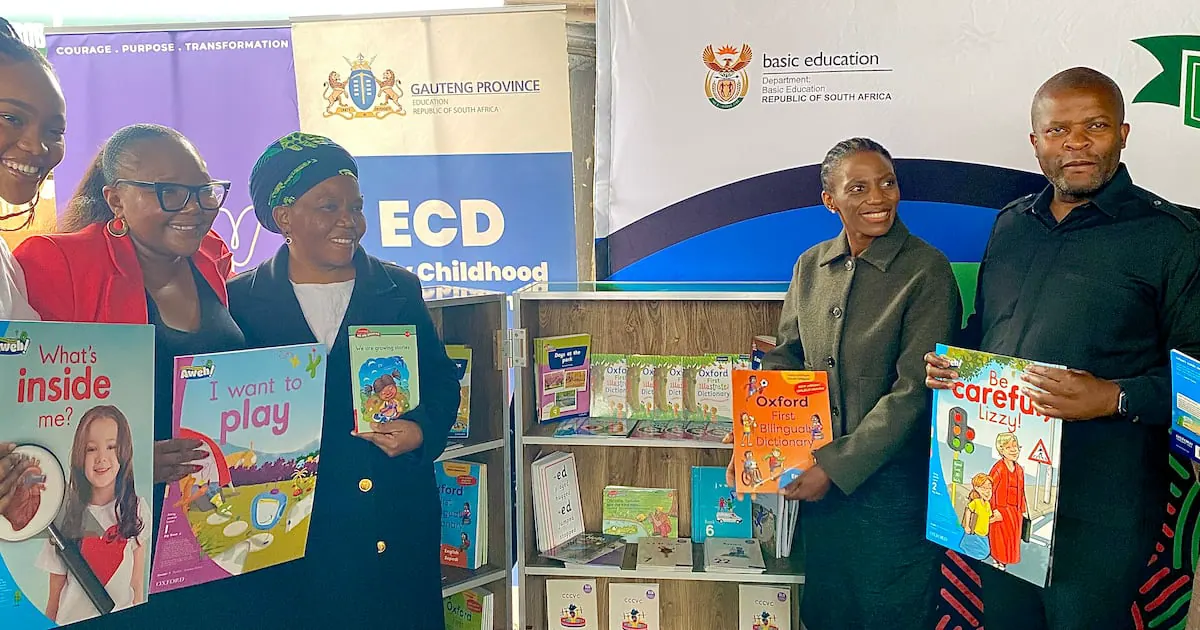
South Africa's efforts to increase access to early childhood development have yielded positive results. The department of basic education's Bana Pele drive has led to the registration of over 13,000 ECD centres, surpassing its initial target of 10,000. This progress is a significant step towards providing young children with a foundation for quality learning and development. The drive has also led to increased government investment, with an additional R12.8 billion allocated to the ECD grant over three years.
Despite this progress, South Africa still faces an access problem, with nearly 30% of four-year-olds not enrolled in an early learning programme. The department's efforts to formalize ECD centres are crucial, but it is equally important to ensure that children have access to quality learning experiences. Data shows that 42% of children attending early learning programmes start school with the expected learning foundations in place, with those from poorer households facing significant disadvantages.
The quality of ECD programmes is a critical factor in determining their effectiveness. In the US, a preschool system serving poor communities was strengthened through common quality standards, better-qualified educators, and continuous classroom improvement. As a result, classroom quality scores improved, and children showed gains in literacy, mathematics, and science into later schooling. South Africa can learn from this example and prioritize quality in its ECD programmes.
A key aspect of quality in ECD programmes is the role of practitioners. A skilled adult can engage young children, extend their thinking, and respond to their needs. The department of basic education recognizes the importance of practitioner training and support in strengthening the quality of ECD services. Investing in practitioner development is crucial to ensuring that children have a positive experience in ECD programmes.
The physical environment and resources also play a role in creating a positive ECD experience. However, these factors cannot replace the importance of a skilled practitioner. South Africa needs a definition of quality that can be applied across different circumstances and communities. This definition must prioritize the needs of the child and ensure that they have access to a supportive and engaging learning environment.
As South Africa continues to bring more ECD centres into the regulatory system, it is essential to prioritize quality and practitioner development. The department of basic education must ensure that registration is followed by a focus on quality, and that investment in nutrition, safety, and early learning continues. Ultimately, the goal is to create ECD programmes that are genuinely good for the children inside them.
According to Ursula Assis, MD of Dibber International Preschools South Africa, getting children into ECD is only the first step. The next step is to ensure that these programmes provide a high-quality experience for young children. This requires a focus on practitioner development, quality standards, and a definition of quality that prioritizes the needs of the child.
Key points
- South Africa has made significant progress in bringing more young children into the early childhood development system, with over 13,000 ECD centres registered.
- Despite progress, nearly 30% of four-year-olds in South Africa are not enrolled in an early learning programme.
- Prioritizing quality and practitioner development is crucial to ensuring that ECD programmes provide a positive experience for young children.