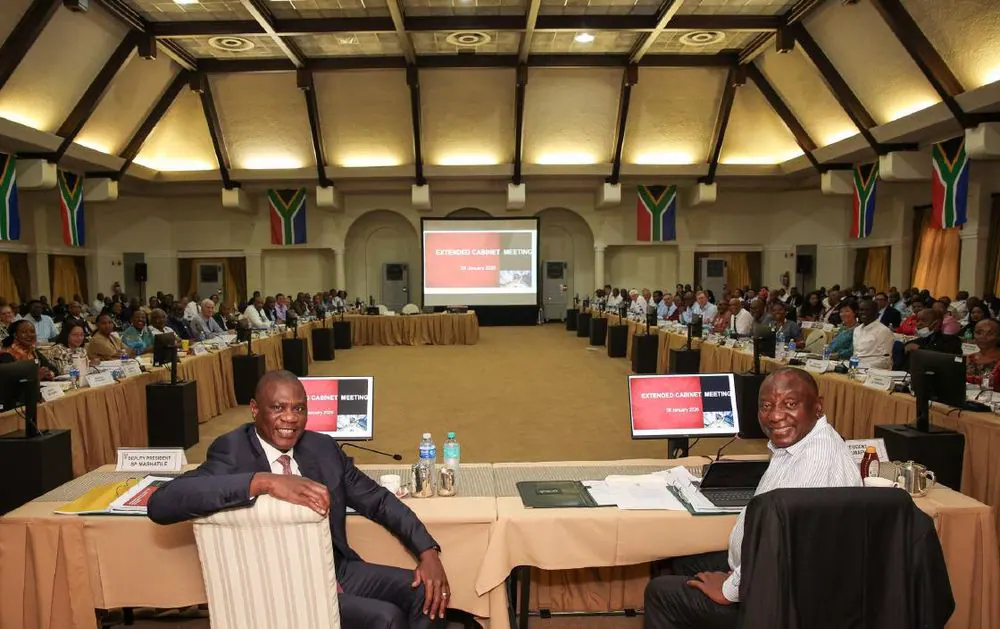
South Africa is experiencing an unprecedented leadership vacuum as President Cyril Ramaphosa and Deputy President Paul Mashatile recover from illness. Ramaphosa has been booked off public engagements due to ill health following the BRICS summit in India. His medical team advised him to rest and recover. Instead of appointing an acting president, Ramaphosa requested Cabinet ministers to represent him at public events. This decision has raised questions about the country's leadership structure.
The Presidency announced that Ramaphosa has cancelled his public engagements, but it did not provide details on who signed laws and executive orders in his absence. Ramaphosa's spokesperson, Vincent Magwenya, did not respond to specific questions about the responsibilities split for international obligations. When asked about the situation, Magwenya said, "You are being unnecessarily dramatic. We said he has cancelled his public engagements. We did not say he was incapacitated."
Political analyst Zakhele Ndlovu said Ramaphosa could have appointed any member of the Cabinet as an acting president, as former President Nelson Mandela did in the past. Mandela appointed Mangosuthu Buthelezi as acting president several times when he and the deputy presidents were out of the country. Ndlovu suggested that Ramaphosa might be avoiding an acting president to ensure that no temporary custodian can exercise full executive authority.
Section 90 of the Constitution sets out the rules to be followed in such situations. If both the president and his deputy are off sick, then a minister designated by Cabinet through a collective decision takes charge. Ndlovu said it's possible that Ramaphosa is being cautious to avoid any potential controversy. With less than two months before the November 4 elections, Ramaphosa might be trying to be careful and cautious.
The situation has sparked debate about the country's leadership structure and the need for clarity on the line of succession. The country has never faced a situation like this before, and it remains to be seen how the situation will be resolved. The Presidency has not provided further details on Ramaphosa's condition or his expected return to work.
The leadership vacuum has raised concerns about the potential impact on the country's governance and stability. With the elections approaching, the situation is being closely watched by political analysts and citizens alike. The country's constitution provides a framework for addressing such situations, but it is unclear how the current crisis will be resolved.
Key points
- The situation has sparked debate about the country's leadership structure and the need for clarity on the line of succession.