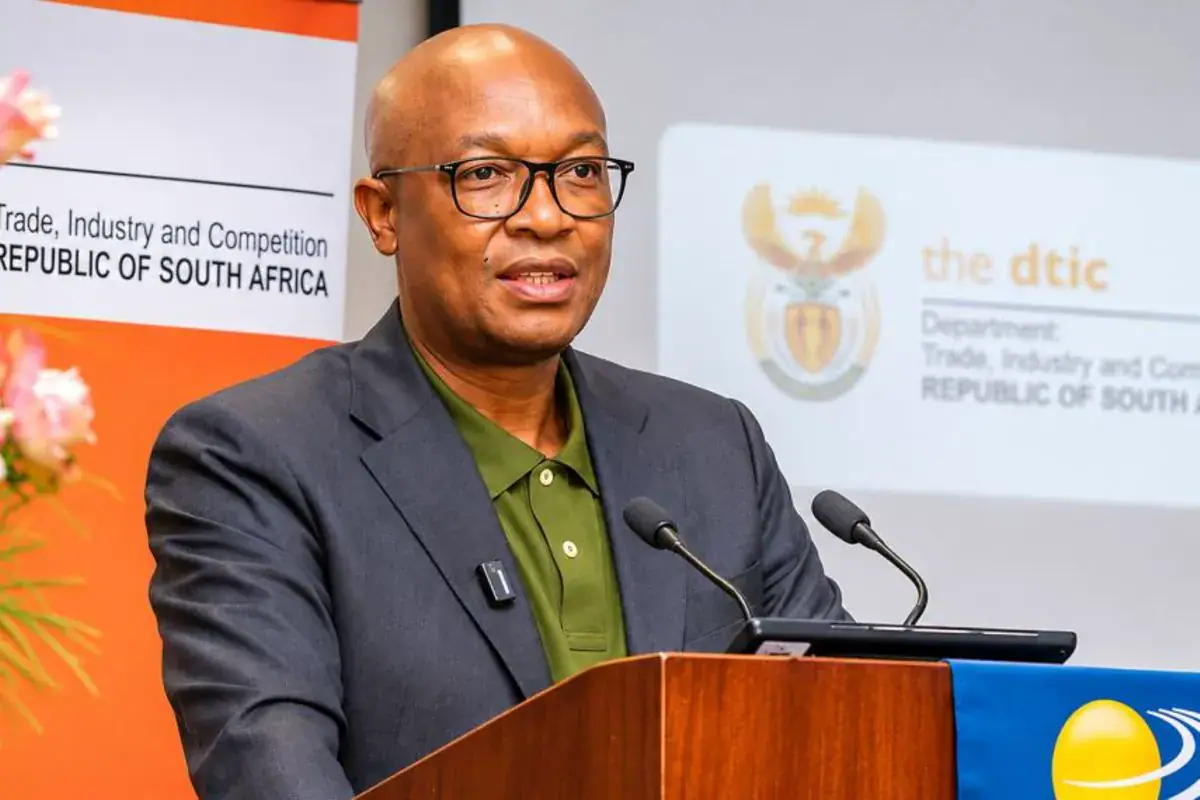
South Africa has taken a significant step to diversify its international economic relations by deploying 12 Foreign Economic Representatives (FERs) to attract investment, secure export opportunities, and strengthen trade partnerships. The representatives were sent off by Trade, Industry and Competition Minister Parks Tau on November 24 and will operate through 10 offices covering 30 countries and territories. This move is part of the government's Butterfly Strategy, which aims to broaden South Africa's export destinations, diversify its sources of investment, and strengthen economic partnerships.
The Department of Trade, Industry and Competition selected the representatives following an assessment, training, and selection process based on their experience, skills, and ability to deliver measurable results. The representatives will focus on identifying potential investors, facilitating business partnerships, and helping local exporters overcome barriers to entering foreign markets. They will prioritize investment that expands manufacturing capacity, strengthens local supply chains, transfers technology and skills, and creates sustainable employment.
The deployment of the FERs comes at a critical time for South Africa, as the country faces the planned withdrawal of its preferential access to the United States market under the African Growth and Opportunity Act (AGOA), effective January 1, 2027. The US announced its intention to withdraw the benefits on November 2, giving South Africa 60 days' notice. AGOA provides eligible African countries with preferential access to the US market for qualifying products.
According to South African government figures, about 89 percent of the country's exports to the US entered under ordinary World Trade Organisation terms in 2025, while around 10 percent qualified for AGOA preferences. Exports under the programme were valued at approximately $1.7 billion in 2025, compared with $4 billion in 2024, representing about one percent of South Africa's total global exports. The government says it will continue engaging affected industries while pursuing alternative markets to reduce exposure to changes in trade arrangements.
The Butterfly Strategy identifies 27 priority markets across Africa, North and South America, Europe, and Asia. It also seeks to deepen engagement with economic blocs such as the Association of Southeast Asian Nations (ASEAN), the Southern Common Market (MERCOSUR), and Eurasia. This initiative aims to turn South Africa's diplomatic relationships into practical economic opportunities, including export deals, investment commitments, and jobs.
Small and medium-sized enterprises (SMEs) are expected to benefit from the programme, particularly businesses that cannot afford to establish their own offices or conduct extensive market research abroad. The representatives will provide such businesses with market intelligence, introductions to potential buyers, and assistance in addressing trade barriers. The team will work with the Department of Trade, Industry and Competition, InvestSA, and the Department of International Relations and Cooperation to coordinate trade and investment promotion.
The programme's performance will be assessed through investment secured, export deals concluded, trade barriers removed, and jobs created, rather than the number of meetings held. Minister Tau emphasized that the representatives have a responsibility to deliver measurable results and turn South Africa's diplomatic relationships into practical economic opportunities. The global trading environment has changed significantly due to geopolitical instability, conflicts, unilateral trade measures, and shifting global supply chains, making this initiative crucial for South Africa's economic growth.
Key points
- The deployment of 12 Foreign Economic Representatives aims to boost South Africa's exports, attract investment, and strengthen trade partnerships in 30 countries.
- The initiative is part of the government's Butterfly Strategy to broaden South Africa's export destinations and diversify its sources of investment.
- The programme's performance will be assessed through investment secured, export deals concluded, trade barriers removed, and jobs created.