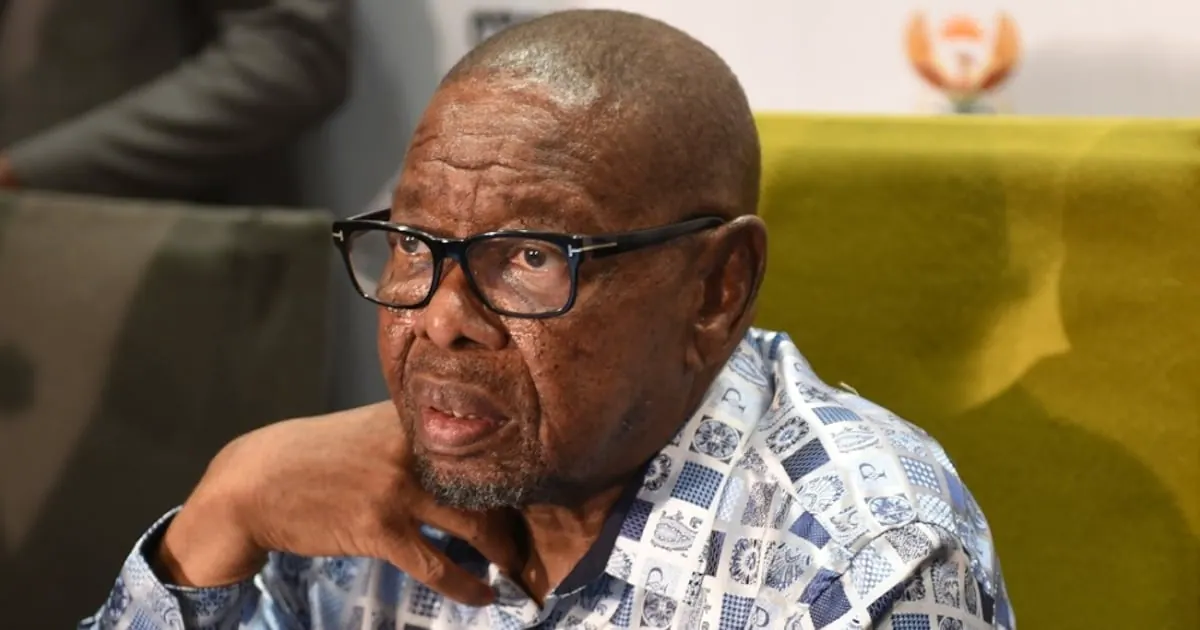
South African Science, Technology and Innovation Minister Blade Nzimande has unveiled a report aimed at mitigating the impact of a R2.5 billion funding cut by the United States. The report, compiled by a ministerial working group, outlines several key recommendations to ensure the stability and growth of the country's science, technology, and innovation sector. The US withdrawal, triggered by an executive order from President Donald Trump in February 2025, has exposed vulnerabilities in South Africa's reliance on foreign funding.
The ministerial working group was established in 2025 to assess the impact of the US funding withdrawal on South Africa's national system of innovation. The group identified immediate priorities, including establishing predictable domestic funding for strategic research programs, protecting critical platforms in health and biotechnology, and increasing public and private investment in research and development. The report also emphasizes the need for stronger coordination between government, universities, science councils, industry, and provinces.
Minister Nzimande stressed that the priorities outlined in the report are mutually reinforcing and essential for building a resilient funding architecture. He noted that predictable domestic funding provides stability, while stronger coordination reduces fragmentation and increases the science, technology, and innovation resource base. Nzimande also highlighted the importance of fair international partnerships that provide benefits such as data sharing, intellectual property protection, and technology transfer.
The US funding withdrawal has significant implications for South Africa's science and innovation landscape. Nzimande warned that relying on foreign funding exposes the country to unacceptable risks from geopolitical and economic competition. He emphasized that scientific sovereignty does not mean isolation but rather a commitment to protecting public science infrastructure as a strategic national asset. The minister also noted that South Africa cannot avoid foreign funding entirely and must diversify its partnerships.
South Africa's cooperation with other countries, such as China, is increasing in the fields of science, technology, and innovation. Nzimande highlighted the need for the country to adapt to changing funding priorities among major partners, including the US, UK, and EU. He also emphasized the importance of addressing systemic risks created by external funding dependencies and developing strategies to strengthen domestic investment in research and innovation.
The report's release follows a period of uncertainty and vulnerability for South Africa's science and innovation sector. Nzimande noted that the withdrawal of funding has created an opportunity for the country to reassess its priorities and build a more resilient national system of innovation. He emphasized that public science is central to national development, health and social security, industrialization, and economic prosperity.
The cabinet has considered and approved the report for public comment until December 31. Nzimande highlighted the importance of a better-funded and more resilient national system of innovation in addressing global challenges such as climate change, technological disruption, and social inequality. The minister's efforts aim to ensure that South Africa's science and innovation sector remains a strategic national asset, capable of driving growth and development.
Key points
- South Africa's science minister releases report to address R2.5bn funding shortfall after US withdrawal
- Report outlines priorities for establishing predictable domestic funding, protecting critical platforms, and increasing public and private investment
- South Africa aims to raise research and development expenditure from 0.6% to 1.5% of GDP