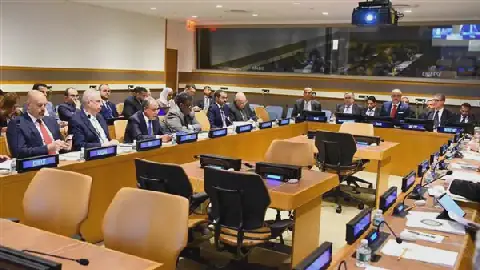
South Africa is facing an exceptionally strong El Niño event, which is expected to intensify by late 2026 or early 2027. The South African Weather Service issued this warning after a press conference where experts discussed the latest forecasts for the 2026-2027 summer season and the country's preparedness for the potential impacts of El Niño. According to Prof. Willem Landman of the University of Pretoria, South Africa is already experiencing an El Niño event, which is remarkable given its early development and strength.
Seasonal forecasts had indicated the possibility of a strong El Niño by the end of the 2025-2026 summer. By mid-August, the phenomenon was already well-established, with sea surface temperatures in the central and eastern equatorial Pacific Ocean continuing to rise. However, experts caution that a particularly strong El Niño does not necessarily mean that Southern Africa will experience an extremely dry summer. The strong El Niño of 2023-2024, for example, did not result in the driest El Niño seasonal rainfall over the region.
The Weather Service's latest seasonal forecast indicates a greater likelihood of below-average rainfall by mid-summer. At the same time, there is a high probability that temperatures will be above normal during the three-month forecast period. The public and industries that are particularly weather-sensitive are advised to closely monitor the Weather Service's monthly seasonal forecasts, as well as daily forecasts and warnings.
Rudzani Malala, senior manager for disaster risk reduction at the Weather Service, emphasizes that El Niño itself is not a disaster, and the ultimate impact will largely depend on how people and authorities prepare for it. The stormy spring conditions currently being experienced in parts of South Africa are consistent with conditions that occurred during previous strong El Niño events. However, individual weather events should not be automatically attributed to El Niño.
The National Disaster Management Centre says preparation must already take place before the potential consequences of the phenomenon begin to manifest. Local risk analyses, rather than the El Niño forecast alone, should guide decision-making. Dr. Johan Malherbe of the Agricultural Research Council notes that the impact of El Niño varies significantly from one event to another. El Niño is generally associated with weaker grazing and lower summer grain yields, but agricultural conditions before the upcoming summer are currently more favorable than they were before the 2015-2016 season.
However, Malherbe warns that this situation could look very different by the end of the summer and has advised producers to follow a conservative management strategy during an El Niño summer. The possibility of increasing heat also poses health risks. According to Celeste Madondo of the Foundation for Professional Development, South Africa is already experiencing more frequent, intense, and prolonged heat events. Vulnerable groups include the poor, the elderly, young children, and people with chronic illnesses.
The health sector is preparing for extreme heat, among other things, through heat health action plans. The Weather Service will continue to monitor the development of El Niño and issue updated seasonal forecasts every month. Key points include the exceptionally strong El Niño event expected to intensify by late 2026 or early 2027, the potential for below-average rainfall and above-normal temperatures, and the need for preparedness and conservative management strategies.
Key points
- exceptionally strong El Niño event expected
- potential for below-average rainfall and above-normal temperatures
- need for preparedness and conservative management strategies