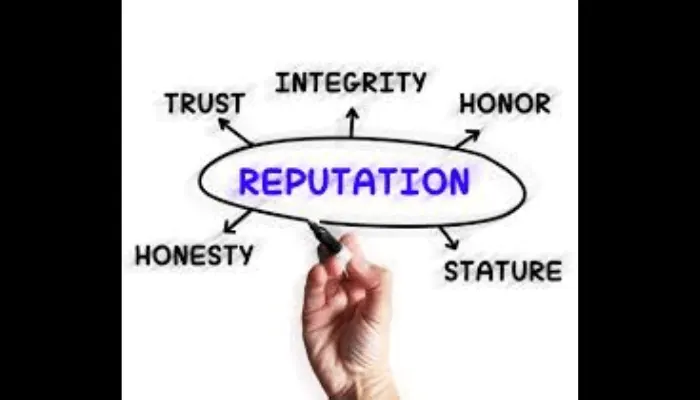
Reputation is one of the most misunderstood assets in public life, often treated as something that can be manufactured by communications teams through slogans, speeches, and logos. However, reputation is actually what people conclude after watching how an institution behaves when applause is unlikely and publicity is absent. It is built through consistent behavior in ordinary moments, such as a chief executive acknowledging the cleaner or a governor returning a grieving family's call.
The decisive moments in building reputation are usually small and may not become headlines, but they become testimony. Employees talk, citizens remember, and communities compare promises with experience. Long before a crisis exposes a leader, ordinary conduct has already written the first draft of the verdict. Reputation is better understood as accumulated trust, which grows slowly through consistency and can be depleted through repeated indifference.
Grand gestures matter only when they reveal, rather than disguise, a settled character. Nelson Mandela's appearance in the Springbok jersey at the 1995 Rugby World Cup final became iconic because it condensed a larger ethic into one visible act. By embracing a symbol many Black South Africans associated with apartheid, he did not merely stage reconciliation; he accepted the political risk of making former adversaries feel that they, too, belonged in the new nation.
Jacinda Ardern offered a different expression of the same principle after the 2019 mosque attack in Christchurch. She went to the bereaved, wore a headscarf out of respect, embraced survivors, and declared, "They are us." Her government's swift firearms reforms gave policy substance to compassion, but her presence answered the more elemental question citizens ask in tragedy: Does the state truly see us? Empathy became not sentimentality, but intelligence—the capacity to enter another person's reality before exercising power.
George Washington's resignation as commander-in-chief in 1783 revealed yet another dimension of reputation: restraint. Having led a victorious army, he surrendered his commission to civilian authority. The act established that power could be relinquished rather than possessed. In societies where office is routinely personalized, the leader who submits to rules permits institutions to function and prepares a credible succession makes a profound statement without delivering a speech.
The Nigerian test is to bridge the gap between language and lived experience. Nigerians are not suffering from a shortage of declarations, but citizens notice whose convoy forces them off the road, whose office ignores petitions, whose agency explains delays, whose company settles small invoices, who accepts responsibility, and who vanishes when disaster strikes. Trust is formed in that gap. For organisations in banking, energy, ports, construction, transport, and public administration, this gap can become existential.
The most useful reputation question, therefore, is not, "How will this look in tomorrow's newspaper?" It is, "What will the person affected by this decision say when no executive is present?" That question relocates reputation from the media office to the meeting room, the payment desk, the security gate, and the condolence visit. It makes every employee a custodian of institutional credibility and every routine encounter a test of culture.
Key points
- Reputation is built through consistent behavior in ordinary moments.
- Grand gestures only matter when they reveal a settled character.
- The most useful reputation question is, "What will the person affected by this decision say when no executive is present?"