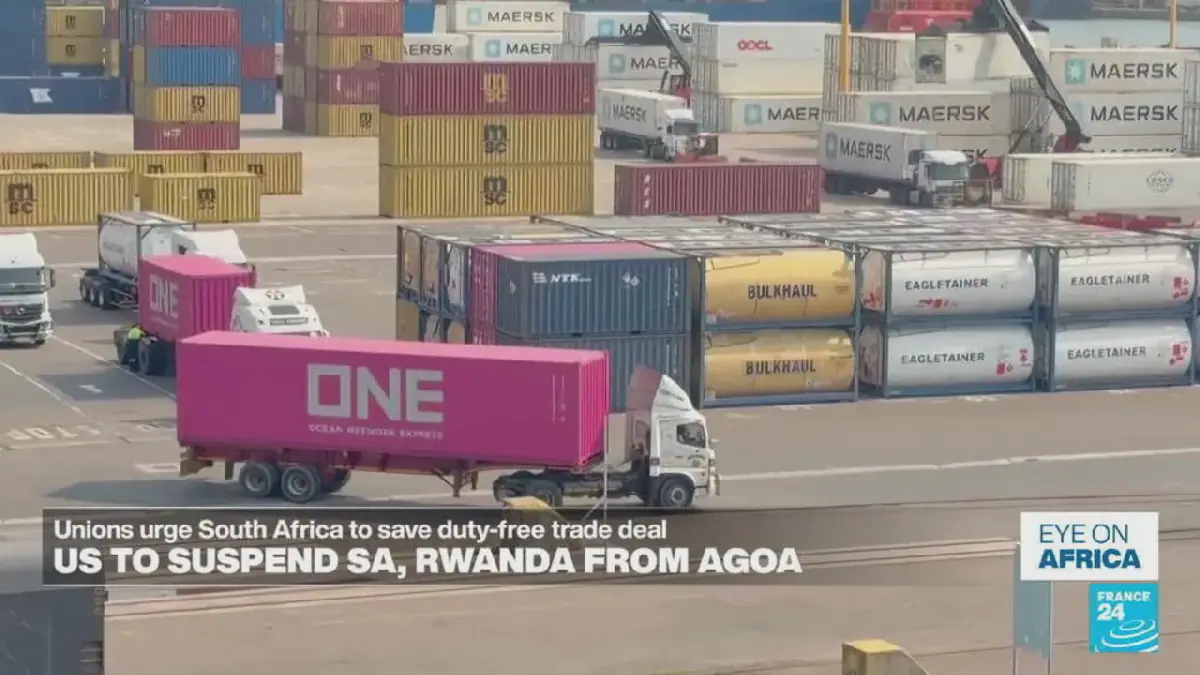
South Africa is bracing for potential job losses after being excluded from the African Growth and Opportunity Act (AGOA) trade program. The program allowed eligible African countries to export goods to the US market duty-free. The country's exclusion from AGOA means that some industries may struggle to remain competitive. This development has raised concerns about the impact on the South African economy and employment.
The AGOA trade program was designed to promote economic growth and development in African countries. South Africa's exclusion from the program is expected to affect various sectors, including textiles and manufacturing. The country's government has been working to mitigate the effects of the exclusion. However, some industries may still face significant challenges in accessing the US market.
The end of AGOA's duty-free access to the US market comes at a challenging time for South Africa. The country is experiencing water shortages and frustration with local services. These issues are likely to be exacerbated by the potential job losses resulting from AGOA's end. The government will need to address these concerns to minimize the impact on the economy and citizens.
Rwanda is also affected by the end of AGOA, as it will lose its duty-free access to the US market. The country's government will need to explore alternative trade arrangements to minimize the impact on its economy. The loss of duty-free access may lead to increased costs for exporters and reduced competitiveness in the US market.
The exclusion of South Africa and Rwanda from AGOA has raised concerns about the impact on trade relations between these countries and the US. The US has been a significant trading partner for both countries, and the loss of duty-free access may lead to reduced trade volumes. The governments of South Africa and Rwanda will need to engage with the US government to explore alternative trade arrangements.
In addition to the challenges posed by AGOA's end, South Africa is also dealing with frustration and anger among its citizens. The country recently held elections, with voters expressing concerns about local services and governance. The government will need to address these concerns to maintain stability and promote economic growth.
The impact of AGOA's end on South Africa and Rwanda will be closely watched by other African countries. The program has been an important part of US trade policy in Africa, and its effects will be significant for countries that have benefited from it. The governments of South Africa and Rwanda will need to adapt to the new trade environment and explore alternative opportunities for economic growth.
Key points
- South Africa faces potential job losses after being excluded from the AGOA trade program.
- Rwanda is also affected by the end of AGOA, losing duty-free access to the US market.
- The governments of South Africa and Rwanda will need to explore alternative trade arrangements to minimize the impact on their economies.