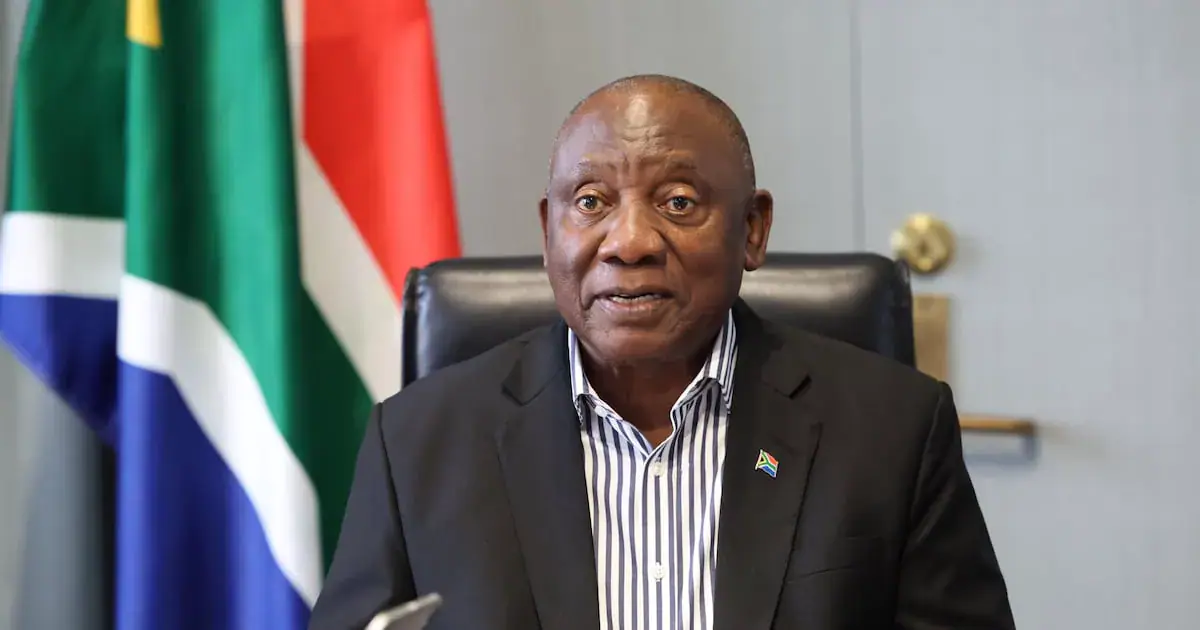
President Cyril Ramaphosa is leading a delegation to the US to promote South Africa as a hub for artificial intelligence (AI) in Africa. He highlighted the country's expanding energy capacity, telecommunications infrastructure, and established data-centre industry as key foundations for attracting investment and developing homegrown technology. Ramaphosa emphasized that South Africa wants to move beyond hosting digital infrastructure to developing local AI enterprises, applications, and intellectual property that can compete globally.
Ramaphosa noted that major tech companies such as Microsoft, Amazon Web Services, and Google have established significant data-centre and cloud-computing operations in South Africa, which he sees as a vote of confidence in the country's infrastructure, skills, and institutions. The delegation's programme includes engagements with Stanford University, Alphabet, Google, Cisco, Palo Alto Networks, and Microsoft, as well as investors, academics, and technology specialists. This visit aims to help South Africa understand how the technology industry has developed in the US.
The South African government is seeking to strengthen digital connectivity and attract investment in data centres, advanced computing, research and development, and technology-driven industries. Ramaphosa stated that the country is generating an electricity surplus and plans to build 14,000km of transmission lines while expanding nuclear and renewable energy capacity. He emphasized the need to move from being a location for digital infrastructure to becoming a centre of digital innovation.
Ramaphosa identified access to venture capital as a crucial part of building local technology companies, enabling them to secure funding and grow into globally competitive enterprises. He stressed that universities and research institutions must play a greater role in technological development and commercial innovation. The president also highlighted the importance of creating opportunities for entrepreneurs in townships and rural communities, as well as major cities.
The investment drive comes as countries compete to attract capital into an industry requiring substantial computing capacity, data infrastructure, and reliable electricity. According to the presidency, global hyperscalers are planning around $650bn in AI capital expenditure in 2026, while venture capital investment in AI reached $259bn in 2025. Ramaphosa emphasized that South Africa wants investment partnerships that support local startups, strengthen universities, and provide opportunities for domestic innovators to access international markets.
Ramaphosa raised concerns about the risks associated with AI, including the misuse of personal information, discrimination embedded in automated systems, misinformation, and the concentration of technological power in a small number of companies. He argued that technological innovation must remain subject to human oversight and democratic accountability. The president also called for technology and knowledge transfer, citing the experience of Asian economies that have used this approach to advance their industrial development.
To attract investment, Ramaphosa emphasized that the government must address constraints that could undermine the country's competitiveness, including the need for more reliable and affordable electricity, expanded digital connectivity, stronger skills development, and an easier environment for establishing and growing businesses. The president also noted that South Africa has raised the need for AI guardrails at the Brics summit in India and should work with other developing countries to ensure that international rules reflect their interests.
Key points
- South Africa aims to become a leading hub for AI in Africa, leveraging its expanding energy capacity and data-centre industry.
- The country seeks to develop homegrown AI enterprises, applications, and intellectual property that can compete globally.
- President Ramaphosa emphasizes the need for investment partnerships that support local startups, strengthen universities, and provide opportunities for domestic innovators to access international markets.
Reporting sources
- Why SA should be Africa’s AI hub, Cyril Ramaphosa tells US · The Rand Daily Mail