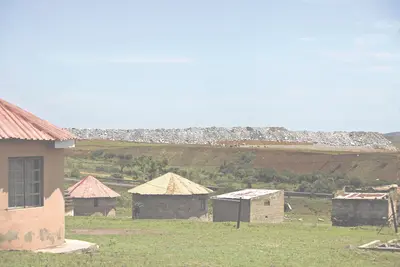
A recent analysis of historical survey data from 115 households affected by the Somkhele opencast coal mine in northern KwaZulu-Natal has found that they have suffered more than R80 million in quantified losses to land, crops, livestock, and water since mining began. The researchers used an "asset-based livelihoods approach" to measure loss and damage to land, crops, livestock, cultural assets, ecological systems, and health, both immediately and over 20 years. The study was conducted by researchers from King's College London and the University of KwaZulu-Natal.
The Somkhele coal mine, operated by Tendele Coal Mining, began mining in the community in 2006, with clear effects emerging in 2007. Of the 115 households surveyed, 106, or 92%, had owned a combined 270 hectares of land. After the onset of mining activities, the households were left with 68ha, a reduction of 202ha, or 75%. The researchers suggest R60.6m as a "good approximation" of the land loss. This significant loss of land has had a profound impact on the households' livelihoods.
Crop production also declined sharply, with total crop yields falling from 137 tonnes before mining to 7.6 tonnes afterwards, a 94% reduction. Maize production fell by 97%, with seventy households reporting producing a combined 76 tonnes of maize before the mine, compared with 2.3 tonnes afterwards. The researchers conservatively calculate cumulative lost crop income at R8.17m between 2007 and 2018. This loss of crop production has further exacerbated the households' vulnerability.
Livestock holdings also fell substantially, from 7 574 animals to 2 643, representing a 65% decline. The report calculates the value of all livestock losses at nearly R11.9m. For cattle alone, 82 respondents reported owning cattle before the mine, while 73 provided monetary valuations. The researchers calculate a loss of R9.82m in cattle value, with the average affected household losing 15 cattle. The loss of livestock has significant implications for the households' future income and security.
The R3.65m in total compensation recorded in the survey was equivalent to 30.7% of the immediate livestock losses alone. Only 25 of the 115 households, or 22%, recorded receiving compensation. The report said 58% recorded receiving none, while there was no response from the remainder. The researchers argue that standard compensation practice often fails to account for the full extent of losses, including future income and household security.
The researchers also documented losses that are not easily reduced to monetary values. Households reported the destruction or relocation of graves, disrupted access to 15 indigenous plants used for food and medicine, damage to housing, impaired water access, and increased illness. The report records that households incurred at least R46 388 in costs buying water after sources became contaminated or were fenced off. Mining-related losses also included the erosion of cultural practices and spiritual relationships with the land.
The report concludes that the 115 households experienced severe and ongoing loss and damage. The effects extend beyond the surveyed households into the broader community. The findings resonate with a truth "that many affected communities have long expressed: that when land is transformed, the consequences extend beyond economics. They may include disruptions to cultural practice, ancestral relationships, indigenous knowledge systems, ecological balance, and social cohesion."
Key points
- The Somkhele coal mine has caused significant losses to households, with over R80 million in quantified losses to land, crops, livestock, and water.
- The compensation paid to households represents only a small fraction of the total losses, with R3.65m equivalent to 4.7% of the quantified immediate losses.
- The report highlights the need for a more comprehensive approach to calculating loss and damage, one that takes into account the full extent of harm experienced by affected communities.