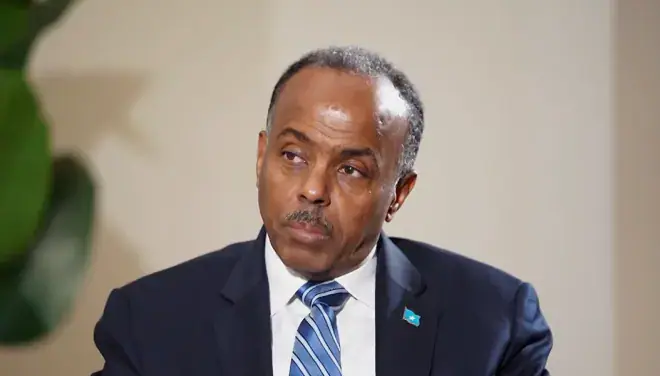
Somalia's government has expressed concerns that the worsening political and security situation in neighboring Ethiopia could have a negative impact on security operations within Somalia, including the African Union mission fighting al-Shabab. State Minister for Foreign Affairs Ali Mohamed Omar Balcad stated that Ethiopia's stability is directly linked to Somalia's security due to their shared border and deep economic, social, and historical ties.
The African Union Support and Stabilization Mission in Somalia (AUSSOM) currently has a significant component of Ethiopian troops, with around 2,500 deployed as part of the mission, alongside forces from Uganda, Kenya, Djibouti, and Egypt. Additionally, Ethiopia has deployed extra forces in Somalia under bilateral arrangements. The African Union Peace and Security Council had praised Ethiopia and Uganda in February for sending additional troops to address Somalia's security situation.
A deterioration in Ethiopia's internal security could lead to consequences for Somalia if Ethiopian forces are required to redeploy or become less able to support operations against al-Shabab. This development could create additional pressure on Somali security forces as the federal government and AUSSOM work to gradually transfer responsibility for national security to Somali institutions.
The warning comes amid renewed fighting in Ethiopia, including conflict between the federal government and forces linked to the Tigray People's Liberation Front, which effectively broke down the 2022 Pretoria peace agreement. Ethiopian government forces later retook much of Tigray, including the regional capital, Mekelle. Violence has also continued in Amhara, with drone strikes on a displacement camp killing at least 15 people, including children, on October 30.
Regional tensions have increased between Ethiopia and Eritrea, with the two countries severing diplomatic relations and reports of Eritrean troops entering northern Ethiopia during the renewed Tigray fighting. Ali Balcad also warned that violence in Ethiopia could directly affect ethnic Somalis living in Ethiopia's Somali Region, which borders Somalia.
AUSSOM's mandate includes supporting Somali forces in operations against al-Shabab, protecting key population centers and infrastructure, and helping Somali security institutions assume greater responsibility for national security. The African Union has repeatedly warned that any changes to the mission must be carefully coordinated to prevent security gaps, particularly while al-Shabab retains the ability to carry out major attacks.
The situation highlights the interconnectedness of regional security, with developments in one country having potential impacts on others. Somalia's warning emphasizes the need for stability in Ethiopia to ensure the success of security operations in Somalia and the broader region.
Key points
- Ethiopia's instability could impact AUSSOM's security operations in Somalia.
- Somali government warns of potential consequences for Somalia if Ethiopian forces are redeployed.
- Renewed fighting in Ethiopia could affect ethnic Somalis living in Ethiopia's Somali Region.