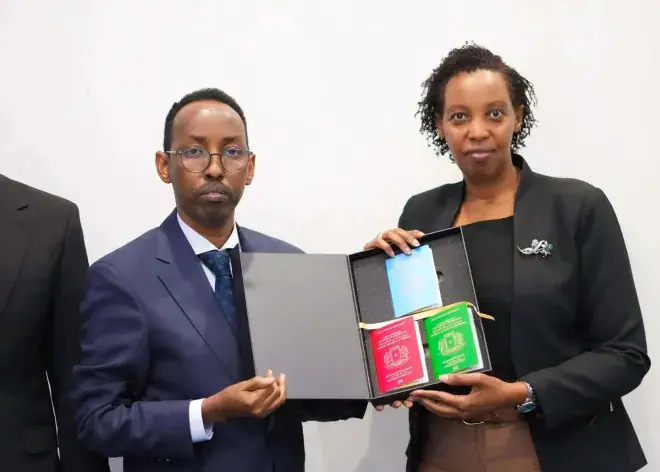
Somalia has taken a significant step towards regional integration by unveiling its new electronic passport. The third-generation passport was presented to East African Community (EAC) member states during a meeting of immigration chiefs in Kampala, Uganda. The meeting, which concluded on Thursday, focused on implementing EAC Council of Ministers' decisions and harmonizing immigration procedures. Somalia's delegation was led by Hussein Qasim Yusuf, Director-General of the Immigration and Citizenship Agency.
The new electronic passport incorporates modern security measures while reflecting Somalia's national identity, cultural heritage, and traditions. The document is designed to strengthen travel security, improve border management, and facilitate regional mobility. Somalia's presentation follows its approval to adopt and issue the EAC electronic passport, a key requirement in the country's efforts to align its travel documents with regional standards. This move is part of Somalia's efforts to modernize its travel documentation and strengthen immigration cooperation with other member states.
Somalia officially joined the East African Community on 4 March 2024, becoming the regional bloc's eighth member state. Since joining, Mogadishu has been working to align its policies and institutions with regional commitments, particularly in immigration, trade, and the movement of people. The introduction of the electronic passport represents another step towards meeting those obligations and strengthening Somalia's participation in the regional bloc. The EAC electronic passport was first launched during the bloc's 17th Ordinary Heads of State Summit on 2 March 2016.
The EAC electronic passport is issued in three categories: ordinary, service, and diplomatic passports, replacing older national passports in participating countries. The document has been designed to facilitate the movement of people across the region and improve cooperation between member states. Officials also discussed the recognition of national identity cards, the modernization of immigration services, and measures to facilitate the movement of people across the region during the meeting.
In February 2026, Somalia's Ambassador to Tanzania and Permanent Representative to the EAC, Ilyas Ali Hassan, formally handed over the authorization to Somali Internal Security Minister Abdullahi Sheikh Ismail, known as Fartaag. The authorization, granted in December 2025, allowed Somalia to adopt the EAC passport's approved design and proceed with preparations for its issuance. Somalia has since been working to modernize its travel documentation and strengthen immigration cooperation with other member states.
According to the latest Henley Passport Index, Somalia ranks 99th globally, with its passport providing access to 32 destinations without a prior visa. The introduction of the electronic passport is expected to improve Somalia's ranking and increase the number of destinations its citizens can access without a visa. The new passport is also expected to boost Somalia's economy by facilitating travel and trade with other EAC member states.
The unveiling of the electronic passport marks a significant milestone in Somalia's efforts to integrate with the East African Community. The country is expected to continue working with other member states to strengthen immigration cooperation and facilitate the movement of people across the region. With the introduction of the electronic passport, Somalia is poised to reap the benefits of regional integration, including increased economic opportunities and improved travel security.
Key points
- Somalia's new electronic passport is designed to strengthen travel security and facilitate regional mobility.
- The passport was presented to East African Community member states during a meeting of immigration chiefs in Kampala, Uganda.
- Somalia officially joined the East African Community on 4 March 2024, becoming the regional bloc's eighth member state.