Somalia's governance framework, established 21 years ago at the Mbagathi conference, has failed to evolve and is now exacerbating the country's security risks. The framework, known as reconciliation-first governance, prioritized clan reconciliation over building governance capacity. This approach was suitable for its time but has hindered the development of a professional civil service, independent judiciary, and functioning parliament. The current administration has further complicated the situation by extending its term without federal member states' agreement.
The Somali National Reconciliation Conference, held in Eldoret and Mbagathi from 2002 to 2004, brought together warlords and clan-family representatives, resulting in the 4.5 formula for representation and federalism in provisional form. However, the framework's evolution toward governance based on competence never occurred. Instead, the operating grammar of the Somali state remains stuck in the reconciliation conference mode. This has led to a lack of institutional development, with the senior civil service still based on clan balance rather than capability.
The consequences of this stagnation are evident in various aspects of Somali governance. The Corruption Perceptions Index scored Somalia 21 out of 100 in 2005, dropping to 9 in 2025. The security transition promised for the end of 2024 did not occur, and the African Union Support and Stabilisation Mission's funding cliff on December 31 will leave Somali forces unable to hold the ground. The current administration's actions have aggravated the situation, deploying security forces against political opposition rather than fighting Al-Shabaab.
The use of federal forces against opposition militias has significant implications for Somalia's security. In Mogadishu, federal forces used heavy artillery to bombard opposition positions in the capital, while in Baidoa, federal troops fought opposition militias inside a state capital. These actions have played into Al-Shabaab's hands, allowing the terrorist group to benefit from the infighting. The mechanism driving this conflict is straightforward: the ruling party has pre-selected incumbents, and states and clans that would normally compete are refusing the process due to lack of trust.
Somalia's political crisis has significant regional implications. The country's instability poses a risk to neighboring countries and the global community. The current administration's actions have undermined the country's progress, and there is a need for a new approach to governance. The international community is watching closely, and Somalia's leaders must work together to find a solution.
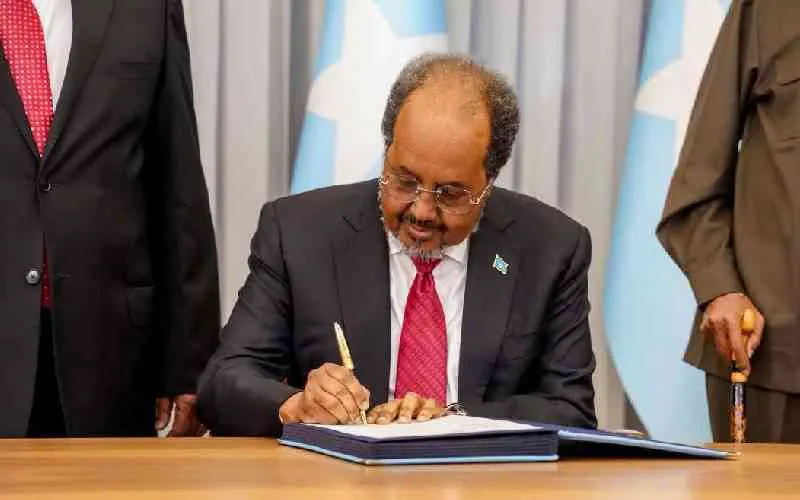
The extension of the President and Parliament's terms from four to five years, delaying elections by a year, has further complicated the situation. The president's original term expired on May 15, but he did not leave office. Puntland and Jubaland have refused to engage with the president, citing the lack of an agreed constitution, electoral model, and political consensus. This has created a security risk, which Somalia can ill afford.
To move forward, Somalia needs a new governance model that prioritizes competence and institutional development. The country requires a professional civil service, independent judiciary, and functioning parliament. The international community can support Somalia by providing assistance and guidance, but ultimately, the country's leaders must work together to find a solution. The current administration must take steps to address the country's governance crisis and ensure a peaceful transfer of power.
Key points
- Somalia's governance model has failed to evolve over the past 21 years, exacerbating security risks and undermining institutional development.
- The current administration's actions have aggravated the situation, deploying security forces against political opposition rather than fighting Al-Shabaab.
- Somalia needs a new governance model that prioritizes competence and institutional development to move forward.