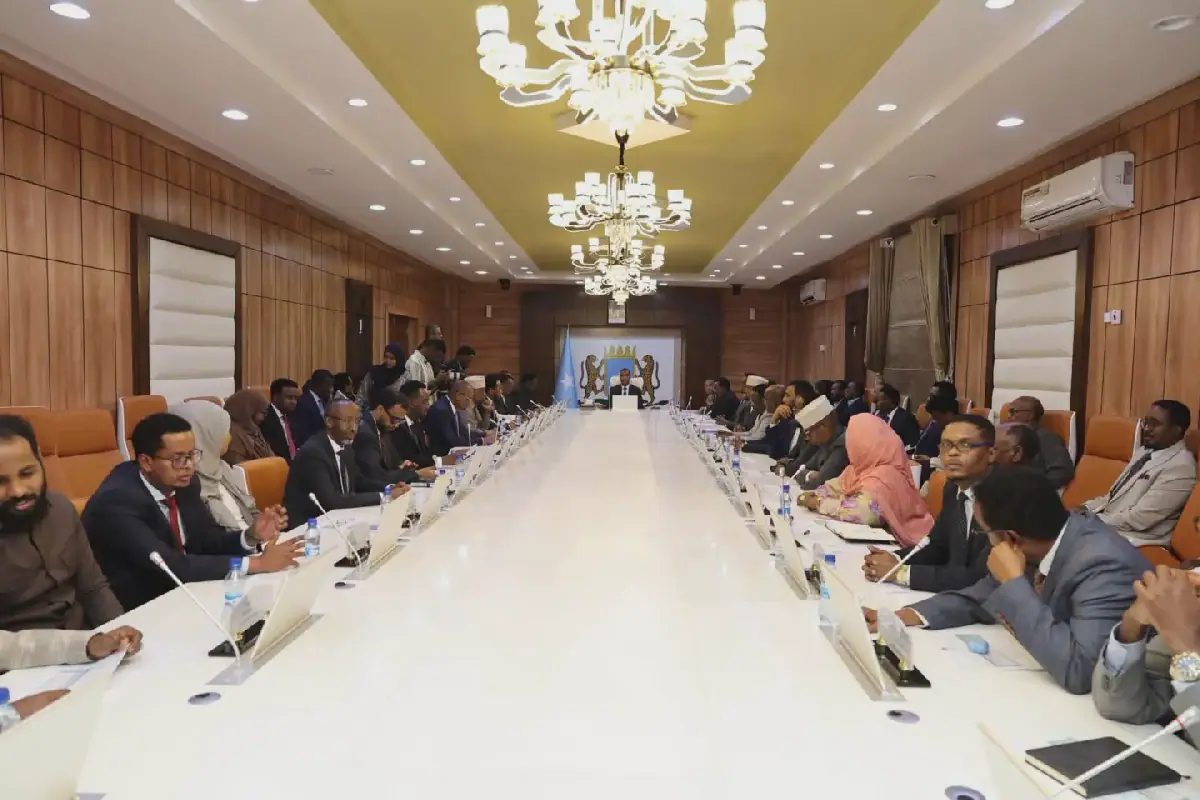
The Somali Council of Ministers has approved changes to the country's election law and political party law. The changes were made during an extraordinary meeting on November 24, 2026, and are aimed at aligning the laws with the country's new constitution. The new constitution was ratified on November 28, 2024. According to a statement from the Office of the Prime Minister, Hamza Abdi Barre, the changes are necessary to ensure the laws are consistent with the constitution.
The changes to the election law include amendments to 23 articles, while the law on political parties and organizations has been amended in 8 articles. One of the key changes is that the people's elected representatives will now choose local councils, state legislatures, and members of the federal parliament. Additionally, the councils will elect officials from the district level up to the president. These changes aim to ensure that the electoral process is more representative and democratic.
The revised law on political parties and organizations stipulates that a political organization that receives at least 10% of the votes in a federal election will be officially recognized as a national party. Furthermore, the Council of Ministers has agreed that political parties will submit their parliamentary candidate lists through a closed list system. This change aims to promote transparency and accountability in the electoral process.
The Council of Ministers has also agreed to grant the Independent Electoral Commission and Boundaries the authority to develop a system to facilitate voter registration and voting. This move is in line with the constitutional provision that requires the government to make it easier for citizens to participate in the electoral process. The changes are expected to improve the integrity and transparency of the electoral process.
The Somali government has been working to strengthen its democratic institutions and ensure that the electoral process is free and fair. The changes to the election law and political party law are part of these efforts. The government has also been working to improve the country's infrastructure, including the construction of new airports and roads.
The changes to the election law have been welcomed by many Somalis, who see them as a positive step towards consolidating democracy in the country. However, some critics have expressed concerns that the changes may not go far enough in addressing the country's electoral challenges. The government has promised to continue working to improve the electoral process and ensure that it is transparent and accountable.
The Somali government has also been working to strengthen its relations with other countries and international organizations. The country has been a member of the African Union and the Arab League, and has been working to improve its relations with neighboring countries. The changes to the election law are expected to promote stability and security in the region.
Key points
- The changes to the election law and political party law aim to align Somalia's electoral process with its new constitution.
- The revised laws include changes to the way representatives are elected and the recognition of national parties.
- The changes are expected to promote transparency, accountability, and stability in Somalia's electoral process.