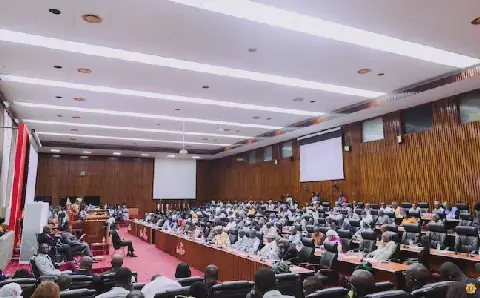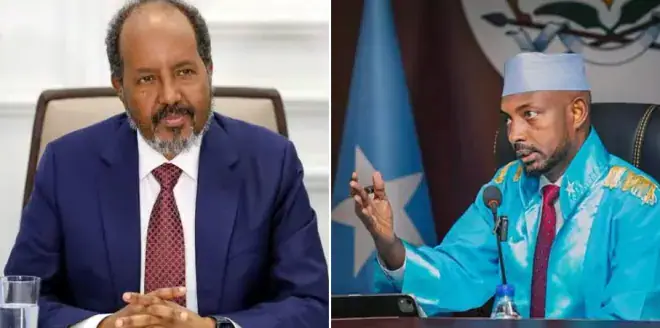
Somalia is grappling with a constitutional crisis as President Hassan Sheikh Mohamud's administration faces scrutiny from the judiciary. On November 7, 2026, President Mohamud attended the swearing-in of Ibrahim Idle Suleiman as Chief Justice of the Supreme Court, emphasizing judicial independence, accountability, and equal justice. However, the circumstances surrounding the appointment raise questions about the presidency's commitment to these principles.
The crisis began when the Supreme Court ruled that the mandates of Somalia's federal institutions had expired. The court held that constitutional amendments increasing terms from four to five years did not automatically grant existing officeholders another year. The court directed stakeholders to agree on an electoral framework within 30 days and hold elections within 90 days, limiting the government to routine administration. This ruling tests whether Somalia's constitutional institutions can impose meaningful limits on those in power.
The dispute concerns the timing of elections and the legal effect of subsequent constitutional amendments. Under the 2012 Provisional Constitution, parliamentary and presidential terms were four years. Any claim to an additional year depends on the legal effect of subsequent amendments, particularly their transitional provisions. Changing the length of future terms and extending an incumbent's mandate are distinct legal acts, requiring a clear constitutional foundation.
The situation has been complicated by the judicial leadership dispute. President Mohamud dismissed Chief Justice Baashe Yusuf Ahmed before the mandate ruling, citing concerns about the administration of justice. The Supreme Court declared the dismissal unconstitutional and accused the president of interfering with a pending constitutional case. The replacement's swearing-in proceeded, raising concerns about executive interference.
The presidency must explain the legal basis for removing the previous Chief Justice and appointing his successor while its own mandate is under judicial examination. Article 90(j) of the 2012 constitutional text connects presidential judicial appointments to recommendations from the Judicial Service Commission. The government should publish relevant decrees and demonstrate compliance with the applicable framework.
The judiciary must also establish the basis of its authority. The 2012 constitutional framework assigns important constitutional functions to a distinct Constitutional Court. A complete assessment must explain how the Supreme Court's Constitutional Division acquired jurisdiction over this dispute. The authenticated judgment, operative constitutional amendments, and relevant judicial laws should be publicly accessible.
International partners should support transparency, judicial independence, and an inclusive electoral settlement with clear deadlines. Their pursuit of stability must reinforce constitutional accountability. President Mohamud has called for judicial independence; he should demonstrate that commitment by submitting his administration's claimed mandate and judicial appointments to transparent legal scrutiny.
Key points
- The constitutional crisis tests whether Somalia's institutions can impose meaningful limits on presidential power.
- The judiciary's independence and authority are crucial in resolving the crisis.
- International partners must support transparency and constitutional accountability to ensure lasting stability.
Reporting sources
- Somalia’s Constitutional Test: Presidential power must answer to law · Hiiraan Online