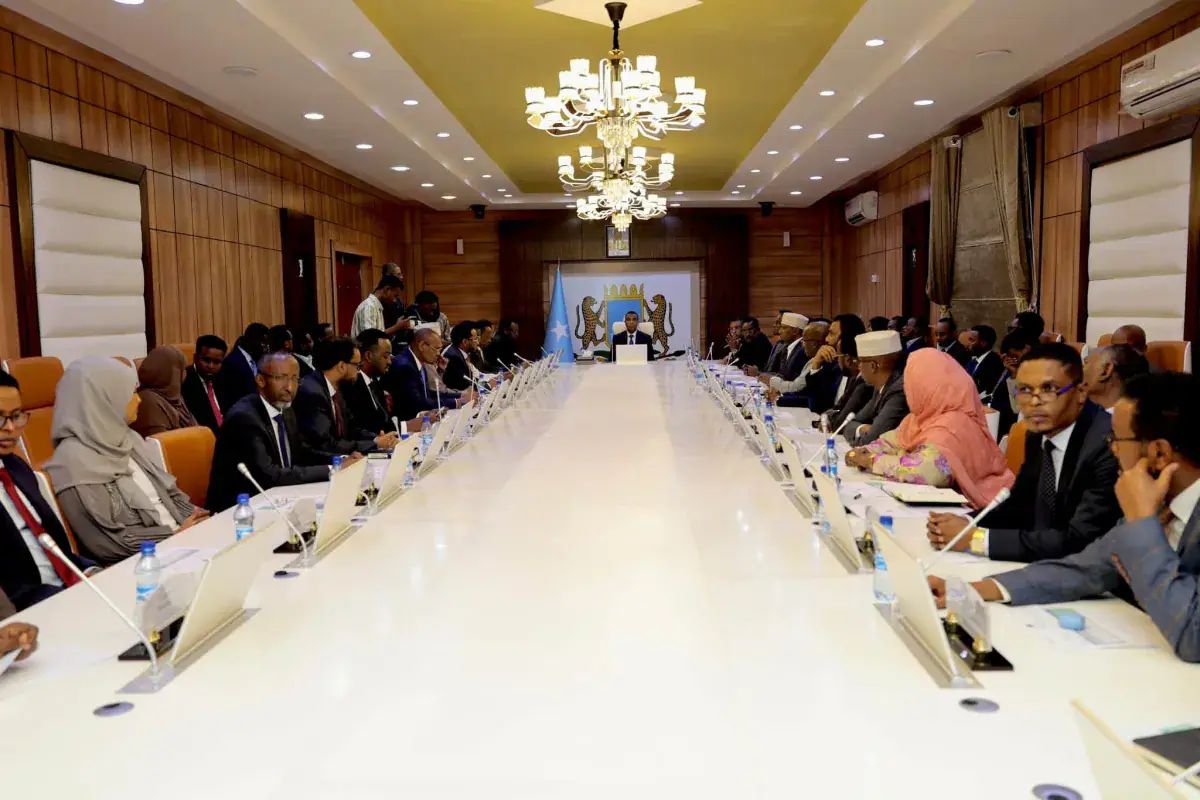
The Somali cabinet has approved changes to the country's election law, as part of efforts to align the legislation with the new constitution. The Council of Ministers, led by Prime Minister Hamza Abdi Barre, held an extraordinary meeting on November 24, 2026, to discuss the proposed changes. The amendments aim to ensure that the laws are consistent with the constitution, which was approved earlier.
The changes affect 23 articles of the Election Law and 8 articles of the Law on Political Parties and Organizations. One key provision is that local councils, state legislatures, and members of parliament will be elected by the people, while higher offices, including the presidency, will be chosen by these elected bodies. This reform aims to increase the representation and participation of citizens in the electoral process.
The revised Law on Political Parties and Organizations introduces new requirements for parties to be recognized at the federal level. To be considered a national party, an organization must receive at least 10% of the votes in a federal election. Additionally, parties will submit candidate lists through a closed list system, known as "Diiwaanka Xiran". This change aims to promote transparency and accountability in the electoral process.
The Council of Ministers also agreed to grant the Independent Electoral Commission and Boundaries the authority to develop mechanisms for facilitating voter registration and voting. This move is in line with the constitutional provision that requires the government to make voting easier for citizens. The commission will work with various government agencies to implement the new system.
In a related development, the cabinet approved an agreement between the Somali government and the United Nations, represented by the Office of the High Commissioner for Human Rights (OHCHR). The agreement establishes an office for OHCHR in Somalia, ensuring diplomatic immunity for its staff. The office will work closely with various government departments to promote human rights.
The agreement was presented to the council by the Ministry of Family and Human Rights Development. The ministry's efforts aim to strengthen human rights in Somalia, in collaboration with international partners. The establishment of the OHCHR office is expected to enhance the protection of human rights in the country.
The Somali government's efforts to reform its electoral laws and strengthen human rights have been ongoing. The approval of these changes marks a significant step towards consolidating democracy and promoting citizen participation in the electoral process. The implementation of the new laws will be closely watched by citizens, international observers, and human rights organizations.
Key points
- The Somali cabinet approves changes to the election law, aligning with the new constitution.
- The changes introduce a closed list system for candidate submission and new requirements for national parties.
- The agreement with OHCHR establishes an office in Somalia to promote human rights.