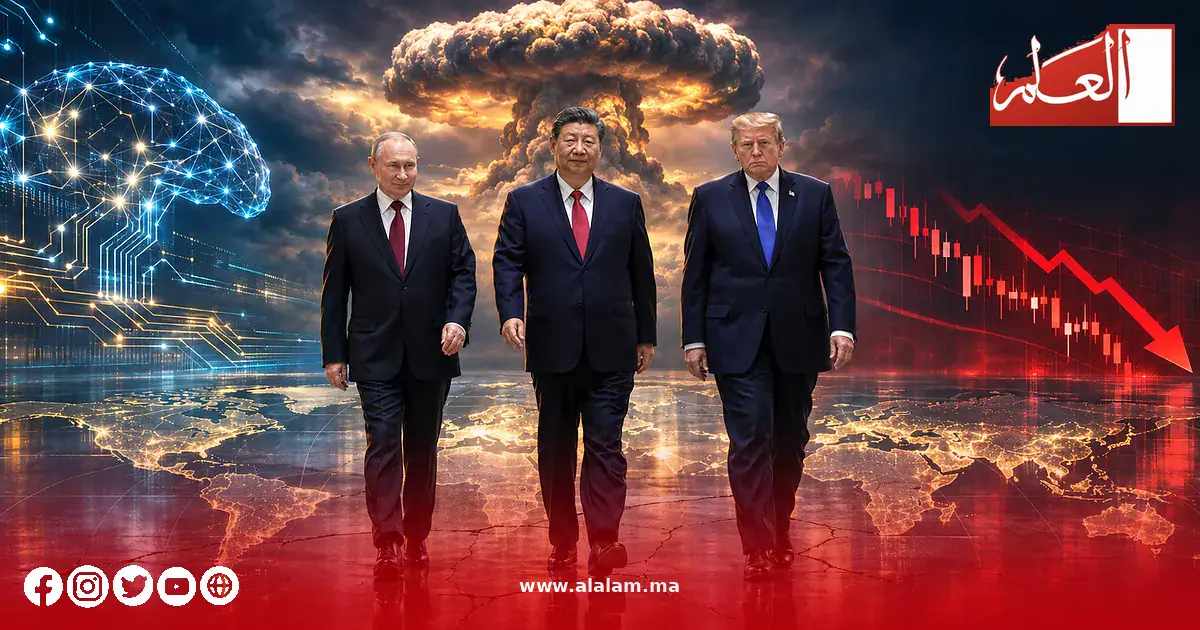
The world is witnessing a surge in global tensions, with multiple conflict zones flaring up, from Ukraine to Iran. The situation has sparked concerns about the possibility of a nuclear war. In response, Chinese President Xi Jinping, US President Donald Trump, and Russian President Vladimir Putin held a trilateral summit in Shenzhen, China, on November 19, 2026. The meeting aimed to address these pressing issues and find ways to mitigate the risks of a global conflict.
The summit resulted in a joint statement, dubbed a "peace declaration," which emphasized that a nuclear war cannot be won and should never be fought. However, the statement did not include any binding commitments to reduce nuclear arsenals or specific actions to address the ongoing conflicts. The leaders agreed to continue dialogue on reducing nuclear risks and preventing the proliferation of nuclear weapons. Critics argue that the declaration lacked concrete measures to address the escalating tensions.
The global landscape is marked by numerous conflicts, with over 50 active armed conflicts in Africa alone, accounting for nearly 40% of global conflicts. The wars in Ukraine and Syria, as well as tensions in the Middle East, have raised concerns about the potential for a broader conflict. The trilateral summit aimed to address these issues, but its outcome has been met with skepticism. Some observers argue that the meeting was a photo opportunity rather than a meaningful step towards resolving the conflicts.
The conflict in Ukraine continues to escalate, with concerns that Russia may gain the upper hand. The West is worried that Moscow's tactics of gradual territorial gains without incurring significant costs may ultimately lead to a Ukrainian defeat. This scenario could prompt some European countries that recently joined NATO to reconsider their alliances and return to a neutral stance. In response, NATO countries are increasing their military preparedness in the Baltic region.
The situation in Iran remains volatile, with the US and Israel maintaining a hardline stance against Tehran. Experts warn that the window for a military strike against Iran is narrowing, as the Democrats prepare to take control of Congress in January 2027. Some predict that a comprehensive attack on Iran may occur before the end of 2026, potentially involving nuclear weapons. This scenario could have far-reaching consequences, drawing in China and Russia.
The trilateral summit has sparked mixed reactions, with some viewing it as a positive step towards dialogue and others dismissing it as a failure to address pressing issues. French President Emmanuel Macron stated that the joint declaration did not amount to a new world order and was not comparable to the 1945 Yalta Conference. German Chancellor Friedrich Merz emphasized that any negotiations to end the Ukraine conflict must involve Ukraine and Europe.
As global tensions continue to rise, the international community remains uncertain about the effectiveness of the China summit in preventing a broader conflict. The outcome of the summit has done little to alleviate concerns about the potential for a nuclear war or the ongoing conflicts in Ukraine and Iran. The world remains on high alert, as leaders struggle to find a way to mitigate the risks of a global catastrophe.
Key points
- The China summit resulted in a joint statement emphasizing that a nuclear war cannot be won and should never be fought.
- The global landscape is marked by numerous conflicts, with over 50 active armed conflicts in Africa alone.
- The situation in Ukraine and Iran remains volatile, with concerns about the potential for a broader conflict.