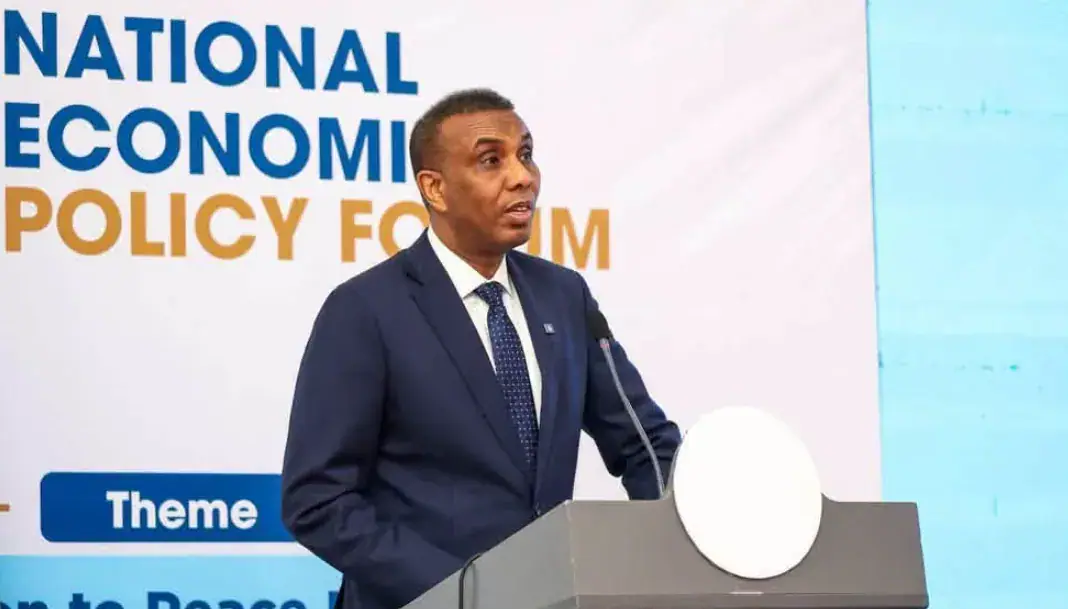
Somali Prime Minister Hamza Abdi Barre recently opened the ninth National Economic Policy Forum in Mogadishu, calling for a shift away from economic practices shaped by decades of civil conflict. The forum, themed "Transitioning to a Peace Economy," brought together economists, business leaders, and government officials to discuss Somalia's economic future. Hamza emphasized the need for Somalia to build an economy driven by peace, stability, and private investment. This move is seen as a significant step towards strengthening the country's institutions and expanding economic opportunities.
The forum featured discussions on how economies emerge and expand during periods of peace, particularly as state institutions become stronger. Studies presented at the gathering indicated that Somalia had entered a phase of transition towards a peace-driven economic model. According to Hamza, the country needs to abandon practices inherited from the civil war era and align its commercial and economic systems with international standards. This alignment is expected to create a favourable business environment and attract private investment.
Hamza highlighted the progress made in Mogadishu's security situation, citing the reduction of illegal checkpoints from 65 when President Hassan Sheikh Mohamud first took office. He expressed optimism about the country's direction, stating that Somalia is moving forward, albeit not at the desired pace. The prime minister also pointed to the government's National Transformation Plan and the president's Vision 2060 as key frameworks for shaping the country's long-term economic prospects.
The government's economic plans focus on creating 160,000 jobs within a relatively short period, with private businesses and a free-market economy expected to play a leading role in generating employment opportunities. Hamza emphasized that the government's responsibility is to establish favourable conditions for economic growth by supporting investment, strengthening institutions, and creating an environment in which businesses can operate and expand.
The National Economic Policy Forum comes as Somalia seeks to strengthen its institutions and expand economic opportunities after decades of conflict. Policymakers are increasingly focusing on the relationship between security, governance, and private-sector development. The forum provided a platform for economists, business leaders, and government officials to discuss the challenges and opportunities facing Somalia's economy.
Somalia's transition towards a peace-driven economy is seen as a critical step towards achieving stability and prosperity. The country's economic growth is expected to be driven by private investment, with the government playing a supportive role. Hamza's vision for a peace-based economy has been welcomed by economists and business leaders, who see it as a positive step towards Somalia's economic recovery.
The implementation of Hamza's economic plans will be closely watched by Somalis and international observers. The country's ability to create a favourable business environment and attract private investment will be crucial to the success of its economic plans. With the right policies and institutions in place, Somalia has the potential to achieve significant economic growth and improve the living standards of its citizens.
Key points
- Somalia aims to create 160,000 jobs within a relatively short period through private businesses and a free-market economy.
Reporting sources
- Somalia PM Says Country Moving Towards Peace-Based Economy · Shabelle Media Network