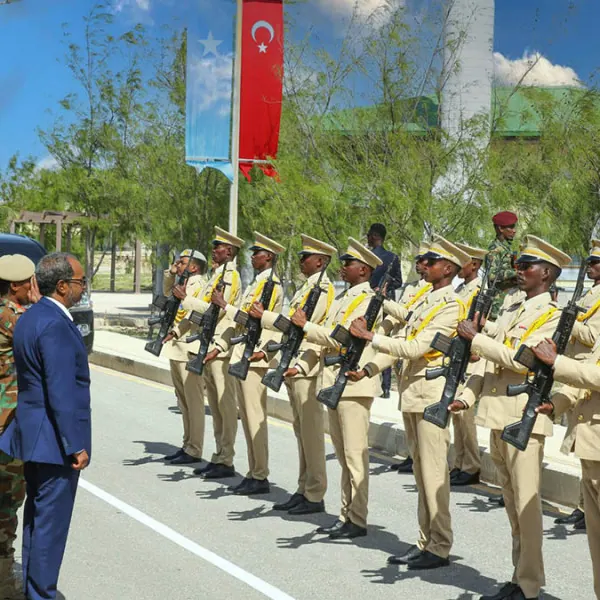
A recent report by the International Crisis Group (ICG) has highlighted that Somalia's security forces are not yet capable of quickly and fully assuming all responsibilities currently carried out by the African Union Support and Stabilization Mission in Somalia (AUSSOM). The report pointed to security operations in Lower Shabelle, where Somali forces have continued to rely on external support to conduct operations. This has raised concerns about the readiness of Somali forces to take over security responsibilities.
The ICG report also noted that political disputes between the federal government and some federal member states, particularly Puntland and Jubaland, are hampering efforts to build a unified national military. These disputes have created challenges for the Somali government in developing a cohesive security strategy. The report emphasized the need for the Somali government and its international partners to address these issues to ensure a smooth transition of security responsibilities.
Somalia has established bilateral security arrangements with Uganda, Kenya, and Ethiopia, which could allow troops from these countries to remain in Somalia even if AUSSOM is scaled down or eventually ends. These agreements are seen as a way to ensure continued security support for Somalia. The report also highlighted Türkiye's growing role in Somalia's security sector, with Ankara training thousands of Somali soldiers and providing military support to the country.
The United States is expected to continue conducting separate counterterrorism operations in Somalia against Al-Shabaab. The ICG report warned that if United Nations support through the UN Support Office in Somalia (UNSOS) ends, AUSSOM could struggle to maintain its operations at their current level. This could create security gaps, particularly in areas vacated by AUSSOM forces, which could become vulnerable to attacks or attempts by Al-Shabaab to retake territory.
The ICG identified Lower Shabelle and Middle Shabelle as areas requiring particular security planning, with key towns and roads likely to need dedicated protection as international forces draw down. Somali forces and troops from countries with bilateral security agreements with the federal government could play a role in securing those areas after AUSSOM's withdrawal. The report emphasized the need for a new security plan to be developed before UNSOS support is fully phased out.
The ICG urged the Somali government and its international partners to urgently develop a new security plan to address the potential security gaps during the transition. The report warned that a lack of preparation could create security challenges for Somalia. The Somali government and its international partners are working to address these issues, but the transition process is complex and requires careful planning.
The report's findings highlight the need for continued international support for Somalia's security sector. The Somali government and its international partners must work together to develop a comprehensive security strategy that addresses the country's security challenges. This will require a coordinated effort to ensure a smooth transition of security responsibilities and prevent security gaps that could be exploited by extremist groups.
Key points
- Somalia's security forces are not yet capable of fully assuming responsibilities from AUSSOM.
- Political disputes between the federal government and some federal member states are hampering efforts to build a unified national military.
- The Somali government and its international partners must urgently develop a new security plan to address potential security gaps during the transition.