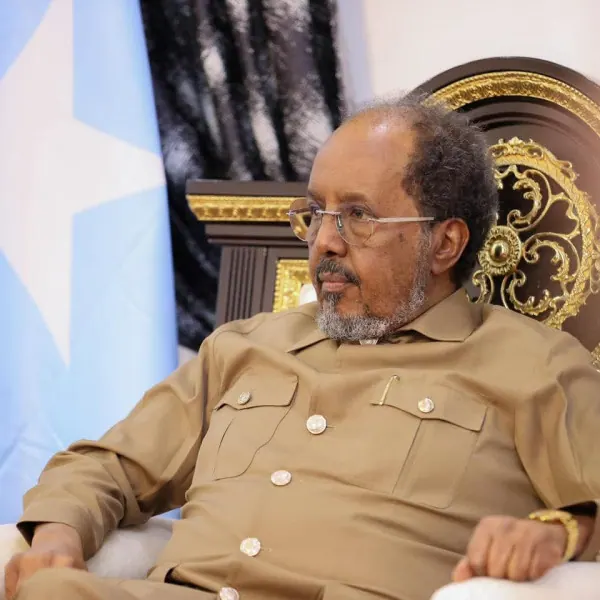
Somalia is experiencing economic strain due to recent disruptions in the Strait of Hormuz, a critical waterway for global trade and energy flow. The country's domestic revenue from customs duties has fallen by about 40%, term-ended President Hassan Sheikh Mohamud said in a speech to the United Nations General Assembly. This decline is attributed to Somalia's heavy reliance on goods imported from the Middle East.
The disruptions in the Strait of Hormuz have significantly impacted Somalia's import-dependent economy. According to President Mohamud, the country's customs revenue, an important source of funding for economic reforms, growth, and poverty reduction efforts, has been severely affected. The president emphasized that ensuring free and fair navigation through the Strait of Hormuz is critical to protecting vulnerable economies like Somalia.
The impact of the disruptions extends beyond customs revenue, with food and fuel prices in Somalia increasing, along with inflation, transport costs, and insurance premiums for goods shipped to the country. A report by Somalia's national statistics agency submitted to the Cabinet in May revealed that the volume of goods entering the country had fallen by nearly 40% during the disruptions. Food prices rose by 10%, while healthcare costs increased by 14%.
The Somali government has taken steps to mitigate the economic pressure on the population. The Cabinet directed relevant government agencies to implement measures to ease the impact of the disruptions. Somalia imports a significant share of its food, fuel, and essential goods, making households and businesses vulnerable to higher shipping costs and global supply chain disruptions.
The decline in imports can reduce customs collections, which are an important component of federal domestic revenue, at a time when higher transport and insurance costs are increasing consumer prices. President Mohamud stated that his government is continuing efforts to increase domestic revenue despite external economic pressures. Somalia has strengthened public financial management and budget transparency while expanding the financial system.
The Somali government is working to improve the investment climate, and President Mohamud reported that the country's economy is expected to record real growth of 3.1% this year, despite significant pressures from the global economy. However, he did not provide further details on how the disruption in the Strait of Hormuz was incorporated into that growth projection.
President Mohamud's statement highlights the need for international cooperation to ensure the free flow of trade and commerce. Somalia's economic challenges underscore the importance of addressing global economic pressures and their impact on vulnerable economies. The country's reliance on imports and customs revenue emphasizes the need for diversified economic development and resilience.
Key points
- Somalia's customs revenue has declined by 40% due to disruptions in the Strait of Hormuz.
- The disruptions have led to increased food and fuel prices, inflation, and transport costs in Somalia.
- Somalia's economy is expected to record real growth of 3.1% this year despite significant global economic pressures.