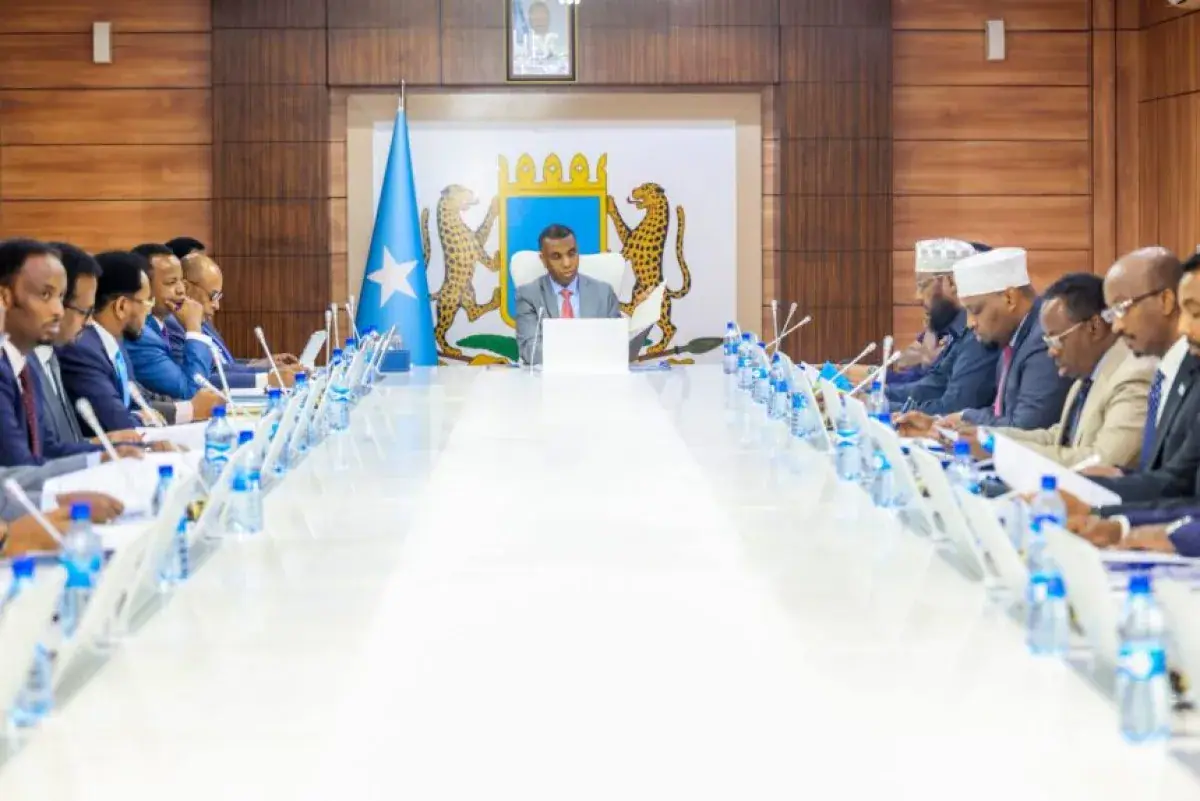
Somalia's Council of Ministers has approved amendments to the country's electoral laws, introducing significant changes to how citizens elect political representatives and how political organisations qualify for recognition as national parties. The amendments were endorsed during an extraordinary cabinet meeting chaired by Prime Minister Hamza Abdi Barre. According to a statement from the Prime Minister's Office, the revisions affect 23 provisions of the National Electoral Law and eight provisions of the Political Associations and Parties Law.
The changes are intended to align both laws with Somalia's recent constitutional reforms. Under the revised electoral framework, Somali citizens will directly elect members of local councils, federal member state legislatures and both chambers of the Federal Parliament. However, senior government officials, including the president, will continue to be elected by their respective representative bodies rather than through direct popular voting.
The cabinet also approved provisions authorising the National Independent Electoral and Boundaries Commission to establish procedures for simplifying voter registration and voting, in accordance with constitutional requirements. This move aims to make the electoral process more accessible and efficient for Somali citizens.
A key aspect of the amendments is the introduction of a 10 percent electoral threshold for political organisations seeking recognition as national political parties. Under the proposed provisions, political organisations must secure at least 10 percent of the votes in federal-level elections to qualify for national party status.
The cabinet also endorsed a closed-list electoral system, under which political parties will submit predetermined lists of candidates for parliamentary elections. Under this arrangement, voters will cast their ballots for political party lists rather than individual candidates. Parliamentary seats will then be allocated to parties according to the applicable electoral rules and their share of the vote.
The cabinet's decision comes amid continuing disagreements over Somalia's electoral framework and the implementation of constitutional reforms. Opposition groups and several federal member states have called for broader consultations on proposed political and electoral changes, highlighting differences over the country's future governance and election arrangements.
The amendments approved by the cabinet represent another step in the government's efforts to reshape Somalia's electoral system and establish a framework governing political representation and party participation at the national level. However, the reforms are being advanced against a backdrop of ongoing political debate over the electoral process, federal relations and the extent of consultation required to secure agreement among Somalia's political stakeholders.
Key points
- The amendments introduce a 10% electoral threshold for national political parties.
- The revised electoral framework allows for direct elections for local councils and federal legislatures.
- The cabinet endorsed a closed-list electoral system for parliamentary elections.