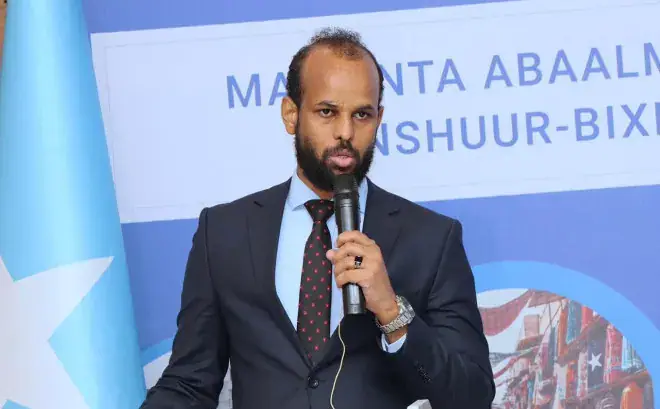
Somalia has reached a significant milestone in its economic development, with the appointment of Feisal Mohamed Hashi as Director General of the newly formed Somali Revenue Authority (SRA). The Council of Ministers of the Federal Government of Somalia made the appointment on November 12, 2026. Hashi brings over 12 years of experience in public financial management, economic policy, and revenue mobilisation to the role. His expertise spans tax reform, customs administration, fiscal federalism, revenue forecasting, and the design of legal and regulatory frameworks.
Hashi's appointment is a strategic move to drive Somalia's revenue reforms and economic strategy. He previously served as Director General of Revenue at the Ministry of Finance, where he led the modernisation of tax administration, strengthening of customs, and drive for domestic revenue mobilisation. These efforts have steadied the public finances and supported renewed economic growth. The Somali government is placing domestic revenue at the centre of its economic strategy, aiming to raise collections and modernise the tax system after years of relying heavily on external support.
Hashi's career has been built inside Somalia's institutions, with roles in the Ministry of Finance, including Head of Budget Execution and Head of the Macroeconomic Policy and Analysis Unit. He also taught Economic Planning and Financial Management at Somali National University between 2020 and 2023. His academic background includes a Bachelor's degree in Accounting from SIMAD University and a Master's in Economic Development from Ritsumeikan University in Japan. Hashi's expertise will be crucial in leading the Somali Revenue Authority's reform agenda.
One of Hashi's key achievements is the development of the Integrated Tax Administration System (ITAS), a digital platform designed to replace paper trails and personal discretion with records, rules, and audit logs. ITAS will simplify compliance for taxpayers, reduce paperwork, and provide stronger oversight and cleaner data for the government. The rollout of ITAS is expected to begin at the end of 2026 and run into 2027, marking a significant turning point in Somalia's public financial management reforms.
The Somali government's efforts to modernise its revenue collection systems are part of a broader strategy to finance the state from within. Hashi's core argument is that a state that cannot raise its own finance cannot set its own priorities. He has pressed for domestic revenue mobilisation as a national cause, not just a technical target. The reforms aim to create systems that can keep collections growing for years and convince the public that taxes are assessed fairly and transparently.
The appointment of Hashi as Director General of the Somali Revenue Authority is a clear signal that the government is committed to carrying forward the momentum of revenue reforms. The authority will be responsible for collecting revenue, modernising the tax system, and ensuring transparency and efficiency in revenue collection. Hashi's leadership will be crucial in driving these efforts and achieving the government's economic goals.
The Somali government's economic strategy is focused on domestic revenue mobilisation, with a goal of raising collections and modernising the tax system. The appointment of Feisal Mohamed Hashi as Director General of the Somali Revenue Authority is a key step in achieving this goal. With his expertise and experience, Hashi is well-positioned to lead the authority and drive Somalia's revenue reforms forward.
Key points
- The appointment of Feisal Mohamed Hashi as Director General of the Somali Revenue Authority marks a significant milestone in Somalia's economic development.
- Hashi's expertise in tax reform, customs administration, and revenue mobilisation will be crucial in driving the Somali Revenue Authority's reform agenda.
- The Integrated Tax Administration System (ITAS) is a key component of Somalia's revenue reforms, aiming to simplify compliance and improve transparency in revenue collection.
Reporting sources
- Feisal Mohamed Hashi: The Vision Behind Somalia's Revenue Reforms · Hiiraan Online