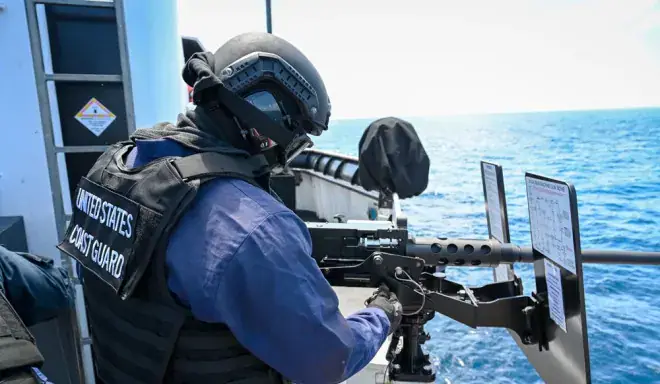
The United States Coast Guard has designated Somalia as a country with ineffective counterterrorism security measures at its ports. This decision, announced on October 27, 2026, in the U.S. Federal Register, follows a thorough assessment of Somalia's port security arrangements. As a result, vessels arriving in the United States from Somali ports will face additional security requirements. The Coast Guard's evaluation revealed that Somalia's current measures are insufficient to prevent terrorist acts at its port facilities.
The US Coast Guard's decision was made under the authority of the Maritime Transportation Security Act and other federal laws governing maritime and port security. Somalia is now among 24 countries identified by the United States as not maintaining effective counterterrorism measures at their ports. This list includes countries such as Iran, Iraq, Libya, Sudan, Syria, Yemen, Venezuela, and North Korea. The designation will impact vessels arriving from Somali ports, which will be subject to enhanced security procedures when entering U.S. waters.
The additional security requirements for vessels arriving from Somali ports are aimed at mitigating potential terrorist threats. Although the specific measures are not detailed in the Federal Register notice, the Coast Guard's Deputy Commandant for Operations, Admiral Nathan A. Moore, signed the decision. The notice took effect on October 27, 2026, and vessels arriving from Somali ports will need to comply with the new security protocols when entering the United States.
The US Coast Guard's assessment of Somalia's port security arrangements is part of a broader effort to ensure the safety and security of maritime trade. The designation of Somalia as a high-risk port is intended to protect U.S. ports and vessels from potential terrorist threats. The Coast Guard works closely with international partners to promote maritime security and prevent terrorist activities.
The impact of the US Coast Guard's decision on Somalia's maritime trade and economy is not yet clear. However, the designation is likely to affect the country's ability to engage in international trade, particularly with the United States. Somalia's ports play a critical role in the country's economy, and any disruption to maritime trade could have significant economic and social implications.
The US Coast Guard's decision to add Somalia to its list of high-risk ports highlights the need for the country to improve its counterterrorism security measures. Somalia's government will need to work to address the security concerns identified by the Coast Guard and implement effective measures to prevent terrorist acts at its ports. This may require significant investment in port security infrastructure and training for port personnel.
The designation of Somalia as a high-risk port also underscores the importance of international cooperation on maritime security issues. The US Coast Guard works closely with international partners to promote maritime security and prevent terrorist activities. The decision is a reminder that countries must work together to address common security challenges and ensure the safety and security of global trade.
Key points
- The US Coast Guard added Somalia to its list of high-risk ports due to inadequate counterterrorism security measures.
- Vessels arriving in the United States from Somali ports will face additional security requirements.
- Somalia is among 24 countries identified by the United States as not maintaining effective counterterrorism measures at their ports.