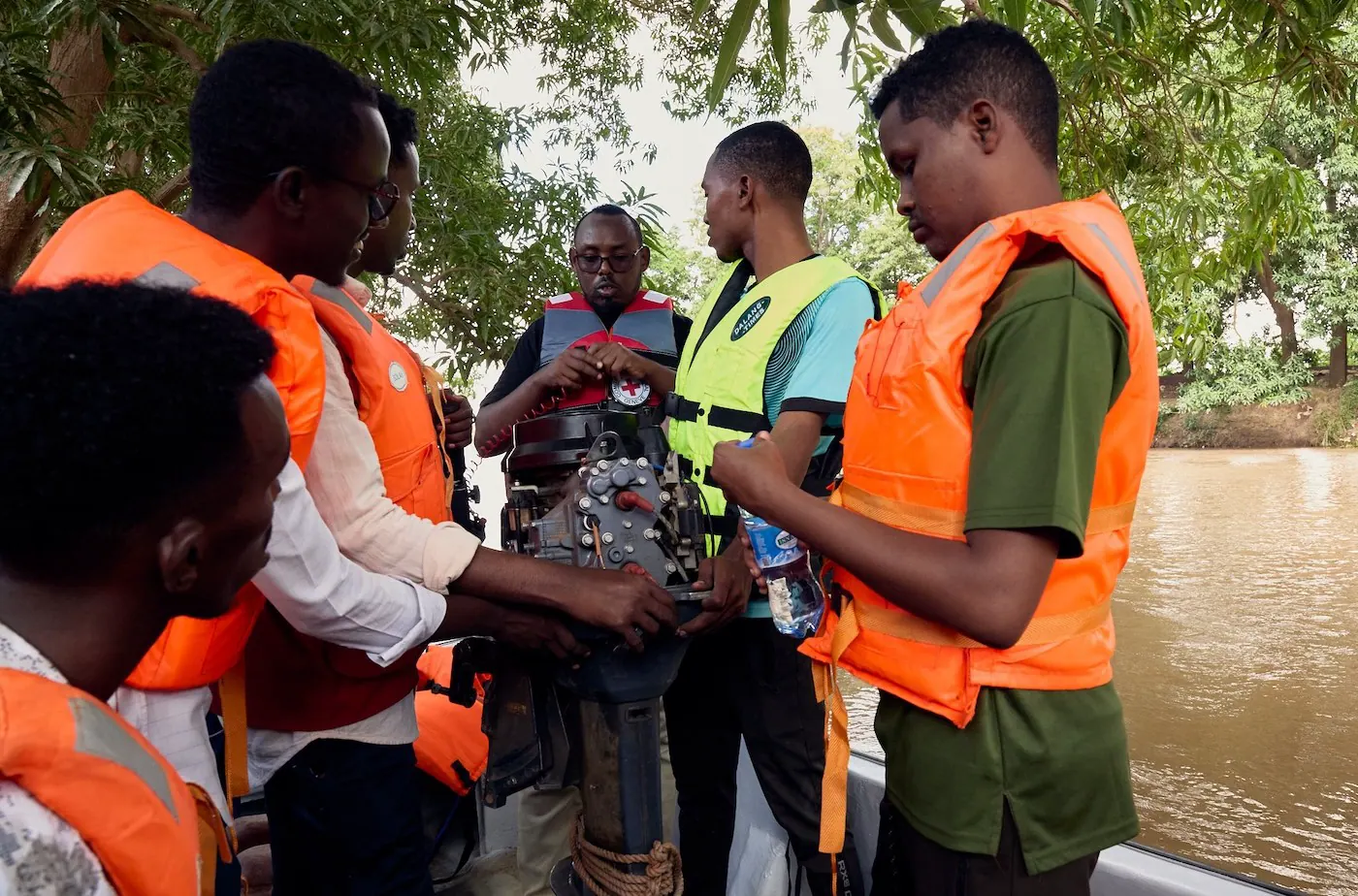
The Somali Red Crescent Society (SRCS) and the International Committee of the Red Cross (ICRC) have launched a training program for 72 responders in anticipation of El Niño-related flooding in Somalia. The training, taking place in flood-prone areas such as Bardere, Jowhar, Beletweyne, and Kismayo, aims to equip participants with practical skills needed during flood emergencies. The program includes instruction on boat handling, safety procedures, and communication techniques used during rescue operations.
The training program is part of a broader effort to prepare for the expected El Niño floods along Somalia's Juba and Shabelle rivers. The SRCS has positioned nine boats across flood-prone areas as part of its preparations. According to the ICRC, the preparations are crucial in mitigating the impact of severe flooding during the October-to-December Deyr rainy season. Somalia faces a heightened risk of flooding, with some areas having as much as a 90% probability of receiving above-normal rainfall.
The Food and Agriculture Organization (FAO) warned in September that strengthening El Niño conditions could bring significantly above-normal rainfall to much of central and southern Somalia. The Somalia Disaster Management Agency (SODMA) estimates that between 2.5 million and 3.5 million people could be exposed to flooding this season, with as many as 1 million people potentially displaced from farming and grazing areas. The SRCS and ICRC are seeking to position rescue teams before rivers overflow and access to vulnerable communities becomes difficult.
Similar El Niño conditions caused widespread flooding in Somalia in 2023, resulting in the displacement of over 1 million people and affecting approximately 2.5 million. The floods damaged homes, farms, roads, and other infrastructure across large parts of the country. The latest flood threat comes as millions of Somalis are already facing food insecurity following repeated droughts, conflict, and displacement.
The government and United Nations project that 5.4 million people will face crisis levels of hunger or worse between October and December, including 1.5 million facing emergency levels. Humanitarian agencies have warned that severe flooding could destroy crops and livestock, disrupt markets, contaminate water sources, and trigger additional displacement. The Red Crescent training is intended to ensure teams are able to begin rescue operations quickly if flooding materializes.
The training program focuses on equipping responders with the necessary skills to respond to flood emergencies, particularly in riverine communities where roads and bridges can become inaccessible. The SRCS and ICRC are working to position rescue teams in areas where they can quickly respond to emergencies. The program also aims to enhance the capacity of local communities to respond to flooding.
The Red Crescent training program is a critical component of Somalia's preparedness efforts ahead of the expected El Niño floods. With millions of people at risk, the SRCS and ICRC are working to mitigate the impact of severe flooding and ensure that rescue teams are equipped to respond quickly and effectively in the event of an emergency.
Key points
- 72 responders are being trained by SRCS and ICRC to respond to El Niño-related flooding in Somalia.
- Somalia faces a heightened risk of severe flooding during the October-to-December Deyr rainy season.
- 5.4 million people are projected to face crisis levels of hunger or worse between October and December.