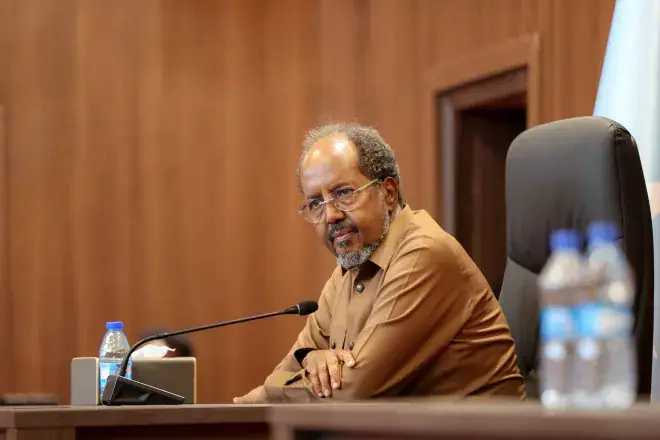
Somali President Hassan Sheikh Mohamud has been in office since 2022, when he took the oath of office under the provisional constitution of 2012. At the time, the country had a federal government and federal member states, which were established through a political agreement and power-sharing deal. However, critics now argue that President Mohamud has undermined this federal system by concentrating power in the hands of a few close allies.
The president's rule has sparked concerns that Somalia's federal system is being eroded. The country's federal member states, including Jubaland, Puntland, Southwest, and Hirshabelle, have expressed dissatisfaction with the president's policies and leadership style. These states have been excluded from key decision-making processes, which has led to a breakdown in trust and cooperation between the federal government and the member states.
Critics argue that President Mohamud's administration has become increasingly personalized, with power concentrated in the hands of a few individuals close to the president. His family members, including his daughters, are said to be influential advisors, while his nephews are reportedly involved in politics, often interacting with opposition politicians. This has raised concerns about nepotism and cronyism.
The prime minister, Hamza Abdi Barre, and other senior officials, including the interior and security ministers, appear to have limited powers and influence. This has led to questions about the effectiveness of the federal government and its ability to make decisions that reflect the interests of all Somalis. The concentration of power in the hands of a few individuals has also sparked concerns about the erosion of Somalia's democratic institutions.
Somalia's federal system was established to promote power-sharing and representation among different regions and communities. However, the current situation suggests that this system is under threat. The president's actions have been criticized for undermining the country's constitution and the principles of federalism. Many Somalis are calling for a return to the principles of power-sharing and representation.
The situation in Somalia has sparked concerns among international partners and observers. The country's international relationships, including its cooperation with Türkiye and India, may be affected by the ongoing political tensions. Somalia's ability to address pressing challenges, including security and economic development, may also be impacted by the concentration of power in the hands of a few individuals.
To address these concerns, President Mohamud needs to take steps to restore Somalia's federal system and promote power-sharing and representation among different regions and communities. This will require a renewed commitment to the country's constitution and the principles of federalism. Ultimately, Somalia's stability and prosperity depend on its ability to establish a more inclusive and representative government.
Key points
- President Hassan Sheikh Mohamud's rule has sparked concerns over the erosion of Somalia's federal system.