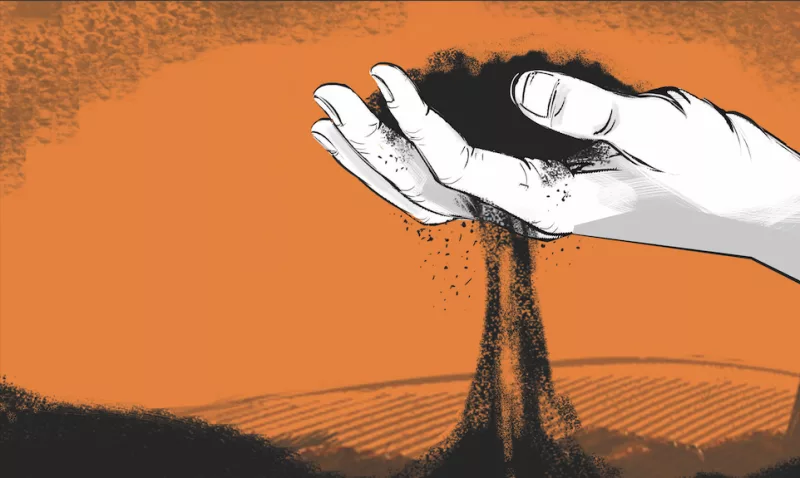
Agriculture remains the backbone of Kenya's economy, with millions of small-scale farmers relying on it for their livelihoods. For generations, farming has been based on traditional practices and shared knowledge passed down through generations. However, this approach has resulted in a cycle of low production volumes that fail to match the cost of inputs and labor, leading to demoralized farmers. The sector is evolving due to climate change and changes in farming practices. Soil acidity has degraded 63% of Kenya's arable land, impacting crop yields and food security.
Soil acidity affects about 7.5 million hectares of Kenya's arable land, driving down staple crop yields and threatening national food security. To achieve optimal crop yields, farmers must improve soil composition with vital nutrients for better water retention, natural disease resistance, and long-term sustainability. However, farmers often apply fertilizers and chemical nutrients based on habitual patterns or general recommendations, rather than soil testing. The government has a critical role in educating farmers on the importance of soil testing before every planting season.
Soils are unique, with varying levels of acidity, nutrients, and organic matter. Blind fertilizer application without comprehensive soil analysis can lead to undesired outcomes. Neighboring farms may have different soil conditions, making it essential for farmers to test their soil to determine its specific needs. The government has facilitated soil testing facilities for farmers through the refurbished and re-equipped soil chemistry laboratory at the Kenya Agricultural Livestock and Research Organisation (Kalro) in Kabete.
The Kalro laboratory has state-of-the-art diagnostic capacity featuring modern analytical equipment, enabling accurate measurement of soil pH, nutrients, and contaminants across agricultural counties in Kenya. This facility will help farmers optimize crop yields and reduce fertilizer wastage. The Ministry of Agriculture and Livestock Development encourages farmers to utilize this facility to ensure maximum efficiency of their farms. Counties must also make soil testing services available to all farmers and provide co-financing programs that do not burden the farmer.
Soil testing is a foolproof investment that has yielded impressive agricultural results for countries such as Ethiopia, Tanzania, and Zambia. More than eight million farmers are registered with the Kenya Integrated Agriculture Management Information System, with five million benefiting from the government's fertilizer subsidy program. However, the gains from this initiative are suppressed when farmers receive fertilizers they do not need. The results sought will not be attained by sole government initiatives but require synergized efforts among stakeholders in the private and public sectors.
To achieve food security, it is essential to prioritize farmer sensitization on the existence of soil testing laboratories and facilities. Farmers must be educated on what their soils contain, what they lack, and what they require to efficiently support their labor and maximize agricultural productivity. Sustainable soil management practices such as mulching, reduced tillage, and crop rotation must also be encouraged for improved output. When farmers understand their soil's chemical characteristics, required soil adjustments can be made more accurately, improving farm input efficiency and contributing to better yields.
The Cabinet Secretary for Agriculture and Livestock Development emphasized the importance of soil testing in achieving food security. The government is committed to helping farmers rethink their decisions on soil inputs and overturn repetitive crop failure cycles. By working together, stakeholders can transform guesswork into precision agriculture for higher yields and a food-sufficient nation. The synergy between researchers, fertilizer suppliers, and farmers is crucial in achieving this goal.
Key points
- Soil testing is essential for improving crop yields and food security in Kenya.
- The government has facilitated soil testing facilities for farmers through the refurbished and re-equipped soil chemistry laboratory at Kalro.
- Soil testing can help reduce fertilizer wastage and improve farm input efficiency.