The Moroccan government has initiated discussions on the social protection of mariners, with a recent meeting between Minister of Maritime Fisheries Ahmed El Mehdi Mezouari and Director-General of the National Social Security Fund (CNSS) Hassan Boubrik. The talks aimed to address the challenges faced by mariners, including unstable income, work stoppages, labor shortages, and exposure to maritime risks. These issues have raised concerns about the effectiveness of their social protection.
Hamid Halim, an expert in maritime media and communication, welcomed the initiative, noting that mariners are vulnerable to professional risks, income fluctuations, and work interruptions. He emphasized that the development of Morocco's maritime fishing sector must consider not only production, exports, and investments but also working conditions, professional safety, and economic stability for mariners. The expert highlighted that the effectiveness of social rights depends on the nature of professional relationships, contract clarity, and workers' ability to prove their income.
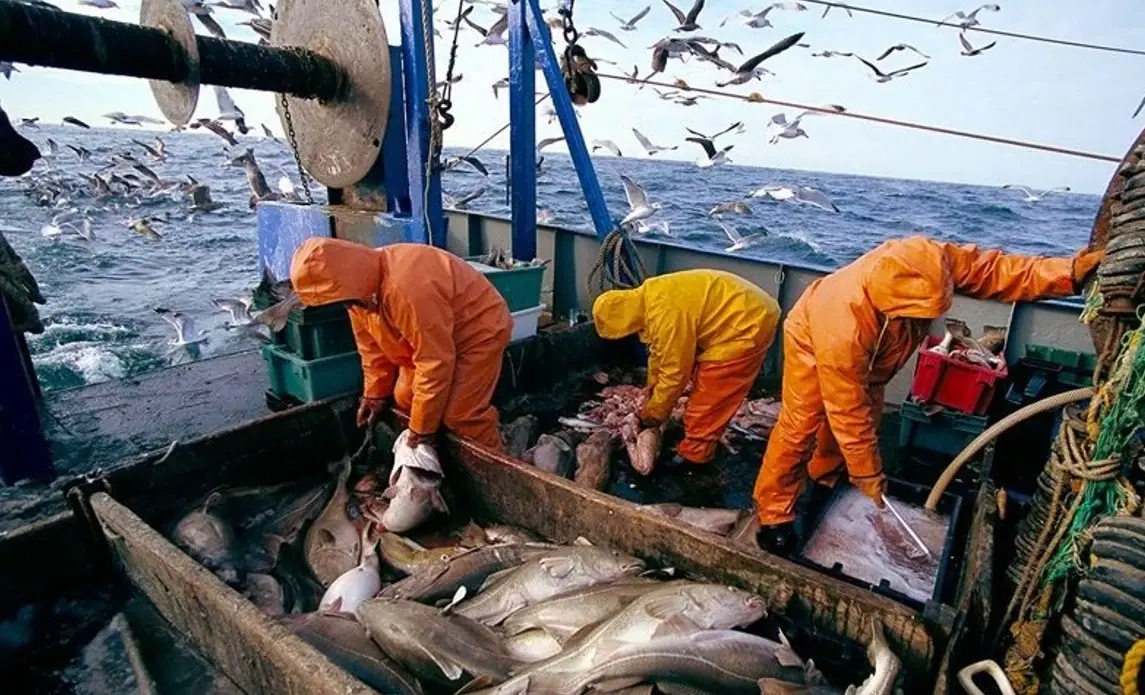
The Moroccan maritime fishing sector faces unique challenges, with varying conditions across different activities, such as deep-sea fishing, coastal fishing, and aquaculture. The "remuneration à la part" system, historically linked to certain fishing activities, poses difficulties in calculating contributions and determining social rights. This system is based on the distribution of revenue from a fishing trip between the shipowner and crew members, making it challenging to ensure stable income and social protection for mariners.
Labor shortages and the unattractiveness of fishing professions are significant concerns, with some vessels unable to set sail due to incomplete crews. The departure or disembarkation of a single crew member can immobilize a ship, resulting in economic losses for both shipowners and other crew members. This situation highlights the relationship between working conditions and the continuity of activity, making it difficult to attract and retain labor in the sector.
The expert emphasized the importance of transparent and reliable declarations of catches, as underreporting can impact mariners' remuneration and social rights. The implementation of more transparent procedures, such as digitalized declarations, could facilitate the control of sold quantities, calculation of shares, and verification of contributions. However, this would require accessible mechanisms for rectification and appeal.
Interruptions of work, due to various reasons such as professional conflicts, personnel shortages, or environmental concerns, can result in income losses for mariners. The "repos biologique" (biological rest) required to preserve fish resources also affects mariners' families, whose income depends on fishing activities. The challenge lies in balancing environmental objectives with adapted support mechanisms for those affected.
The management of relief and solidarity funds is another contentious issue, with a need for clarity on financing, management, and disbursement modalities, as well as public disclosure of related information. Ensuring the effective social protection of Moroccan mariners requires a comprehensive approach that addresses these challenges and provides a stable and secure working environment.
Key points
- Moroccan authorities are re-examining the social protection of mariners to address precarious working conditions and unstable income.
- The social protection of mariners requires a comprehensive approach that considers the unique challenges of the sector.
- Transparent procedures and reliable declarations of catches are crucial for ensuring mariners' social rights.