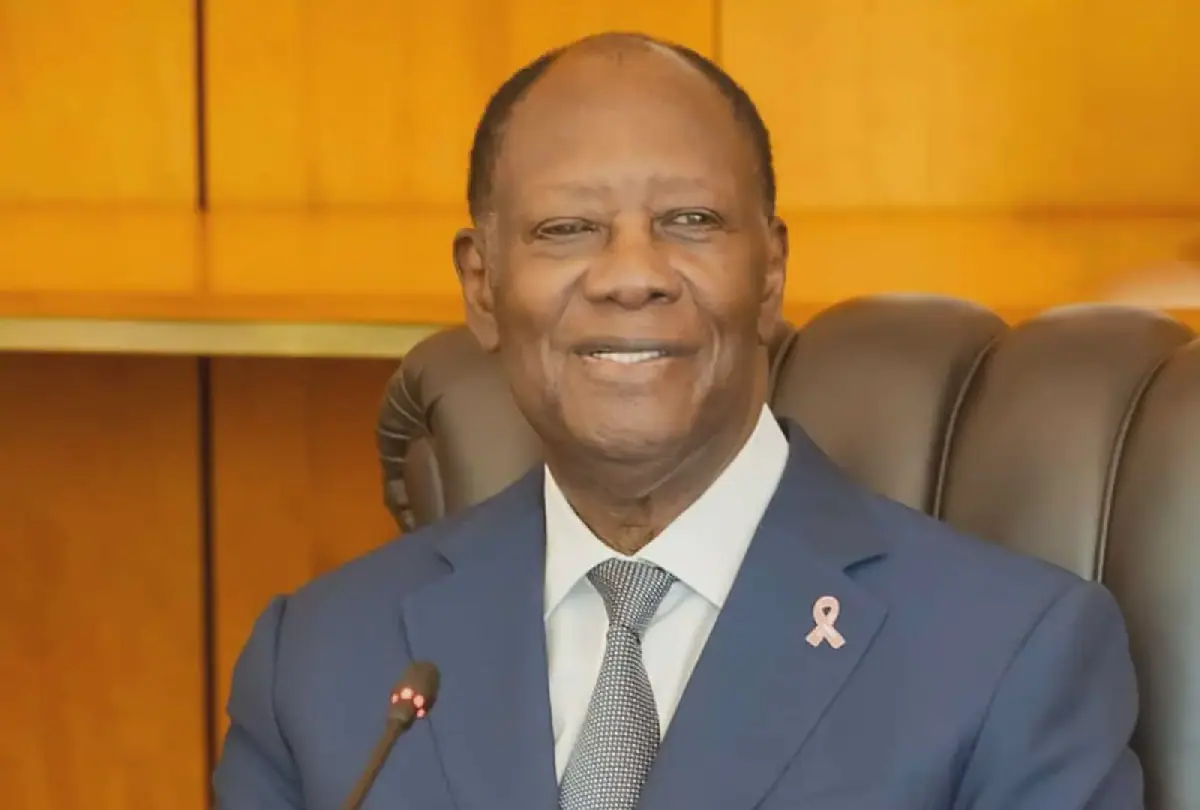
Côte d'Ivoire is grappling with a significant cancer burden, with over 20,000 new cases reported annually. President Alassane Ouattara has reiterated his government's commitment to enhancing cancer care, emphasizing the importance of early screening and access to treatment. In a message released on social media during the Octobre Rose and Novembre Bleu campaigns, Ouattara highlighted the progress made in cancer care and the need for continued efforts to address this public health challenge.
Breast cancer is the most common type in Côte d'Ivoire, with approximately 4,850 new cases reported each year, followed by prostate cancer. Ouattara expressed solidarity with cancer patients and their families, citing advances in medical care that have improved diagnosis and treatment. He noted that 63 women out of 100 are in remission five years after a breast cancer diagnosis, compared to 30 previously, and that early detection can increase survival rates to nine out of ten.
The Ivoirian government aims to strengthen its cancer care infrastructure, with a focus on modernizing healthcare facilities and expanding access to treatment. Since 2011, the country has made significant progress in developing its healthcare system, including the establishment of several cancer treatment centers. These include the Centre national d'oncologie médicale et de radiothérapie Alassane Ouattara, as well as centers in Treichville, Yopougon, and Bouaké.
To further enhance cancer care, the government plans to construct a new center in Grand-Bassam and develop regional centers of excellence. This expansion aims to increase the country's treatment capacity and improve access to care for patients. In addition to infrastructure development, the government has implemented measures to reduce the financial burden of cancer treatment, including making certain medications free in public healthcare facilities.
Since 2019, certain expensive anticancer medications have been provided free of charge in public healthcare facilities. Ouattara assured that no treatment is delayed due to financial constraints at the Centre national d'oncologie médicale et de radiothérapie Alassane Ouattara. The government also provides support to vulnerable patients, with First Lady Dominique Ouattara's initiative providing free care to 90% of children with cancer at the Hôpital Mère-Enfant de Bingerville.
Ouattara acknowledged the contributions of medical professionals, caregivers, associations, and non-governmental organizations in supporting cancer patients and their families. He emphasized that the fight against cancer requires not only infrastructure and treatment but also sustained awareness, increased screening, and ongoing support for patients. The government aims to consolidate progress, expand care capacity, and reduce inequalities in access to treatment.
The Octobre Rose and Novembre Bleu campaigns serve as a reminder of the importance of continued efforts to address the cancer burden in Côte d'Ivoire. The government's commitment to improving cancer care reflects its recognition of the significant impact of this disease on the country's population. By prioritizing early screening, access to treatment, and support for patients, the government aims to make progress in reducing the country's cancer burden.
Key points
- Côte d'Ivoire reports over 20,000 new cancer cases annually, with breast cancer being the most common type.
- The government has implemented measures to reduce the financial burden of cancer treatment, including free medications and support for vulnerable patients.
- President Alassane Ouattara has reiterated his government's commitment to enhancing cancer care, emphasizing the importance of early screening and access to treatment.