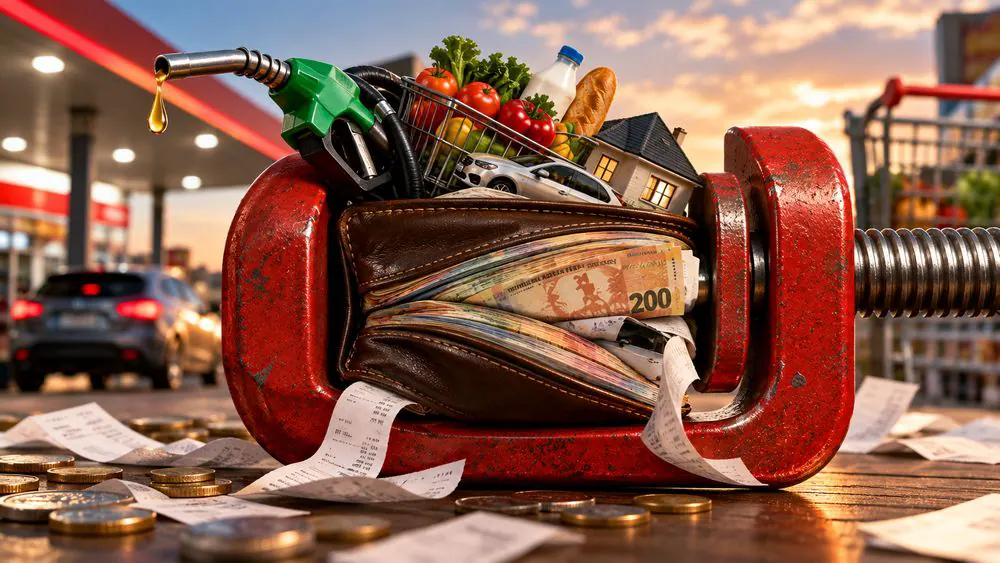
South Africans are bracing for another interest rate hike as fuel prices continue to soar, feeding into inflation and straining already stretched household budgets. Investec chief economist Annabel Bishop expects petrol and diesel to increase by around R3 a litre in October, which she said “will push up CPI inflation again towards 5% year-on-year, and could fuel another hike in the repo rate for South Africa in November”. This comes as inflation edged up to 4.4% in August, driven by rising transport costs.
The impact of higher fuel prices is being felt across the economy, with households and businesses facing increased costs. The cost of transport has pushed up 8.8% year-on-year, driven by rising fuel prices. According to Bishop, market concerns over the war in the Middle East and its impact on oil supply and prices have also contributed to the increase in fuel prices. As a result, another 0.25 percentage point hike is being priced in for the remainder of the year, which would take prime lending rate to 11%.
The effects of higher interest rates will be felt by households, particularly those with debt. If another rate hike takes prime from 10.75% to 11%, a R1.5 million home loan over 20 years would increase from about R15,228 to R15,483 a month, adding R255 a month to the repayment. A R500,000 car financed over six years would also increase from about R9,453 to R9,517 a month, adding another R64 a month. This would add about R319 a month for a household carrying both debts, before the impact of higher fuel, transport, and food costs is taken into account.
The picture is considerably worse among consumers already under financial pressure. According to DebtBusters' 2026 Money-Stress Tracker, based on almost 18,000 respondents, 53% were spending more than 40% of their take-home pay on debt repayments, up from 48% last year. Among respondents taking home more than R20,000 a month, 75% were spending more than the recommended 30% on debt, while those earning more than R50,000 a month would theoretically be paying more than they take home on paying back loans.
The vicious cycle of higher fuel prices is also affecting the cost of living, with food and transport costs increasing. The South African Financial Pressure Index found the median applicant to Debt Solutions 4U between June and August was already committing 58.4c out of every R1 they take home on debt repayments. Meanwhile, average take-home pay increased from R21,399 in March to R21,622 in August, a rise of just more than 1%. However, in real terms, average take-home pay in August was R20,164, 2.6% lower than a year earlier.
The impact of higher fuel prices on food costs is also a concern, as trucks carrying food and other goods around the country face increased operating costs. The Road Freight Association says fuel accounts for about 35% to 55% of road-freight companies' operating costs. Based on the September diesel increase, it estimated freight operating costs could rise by around 4% to 6%. However, PSG senior economist Johann Els said there had so far been very little visible feed-through from higher petrol and diesel prices into food and other consumer goods.
Despite the challenges, Els said higher fuel costs could create “deflationary forces” as consumers spend more on transport and less elsewhere, while businesses try to protect sales volumes. The cost of a food basket as measured by the Pietermaritzburg Economic Justice and Dignity Group’s Household Affordability Index has increased 2% year-on-year to an average of just under R5,500. Year-on-year, the average cost of the foods prioritised and bought first in the household food basket increased by 2.9%.
Key points
- Soaring fuel prices are expected to push up inflation and could lead to another interest rate hike.
- Households are facing increased costs, with debt repayments and fuel costs taking a bigger share of take-home pay.
- The impact of higher fuel prices on food costs is a concern, but so far, there has been little visible feed-through into food and other consumer goods.