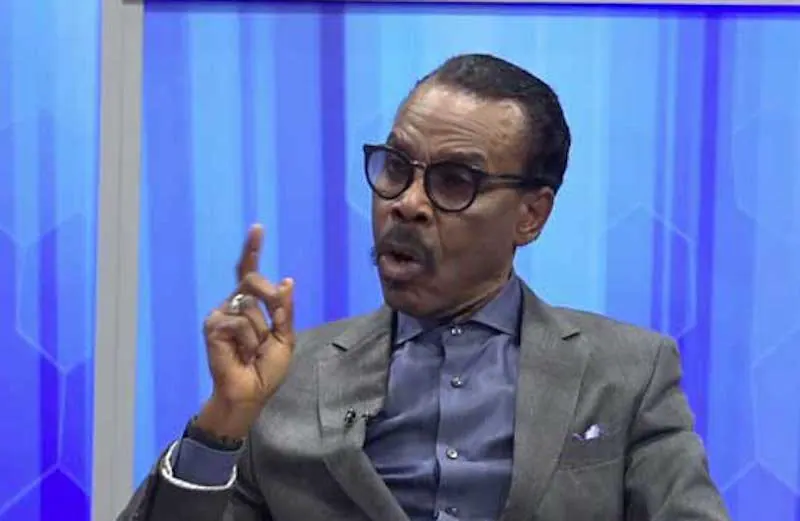
The Chief Executive Officer of Financial Derivatives Company Limited (FDC), Mr. Bismarck Rewane, has stated that Nigeria's next growth phase would be determined by how fast the government can close the gaps that enable smuggling to thrive. According to Rewane, smuggling is trade that deliberately avoids duties and rules at the border, and it is the unpriced competition for consumer goods, which is the height of the informal economy. He made this statement during the LBS Breakfast Session titled, 'Smuggling Paradox: Good for the Few, Bad for the Economy'.
Rewane identified the victims of smuggling as the government, local manufacturers, and formal businesses. The government loses Customs' revenue, taxes, and duties, while local manufacturers face unfair competition from cheaper untaxed imports. Formal businesses and importers lose market share to informal competitors. He also noted that smuggling could expose consumers to unsafe, counterfeit, or substandard products and force the financial system to lose formal foreign exchange and transaction flows.
The depreciation of the Naira is accelerating the value of smuggled goods across the Nigerian borders. The value of seizures made by the Nigerian Customs Service (NCS) rose from N17.56 billion in 2023 to N59 billion in 2025. Rewane stated that smuggling has grown with the weak Naira, and customs data tells the story. The value of seizures doubled from N17.56 billion in 2023 to N35.29 billion in 2024, when officers made 3,555 seizures, including 183,527 bags of rice and over 1.7 million litres of fuel.
In 2025, the number of seizures fell to just over 2,500, but their value rose to more than N59bn, over three times the 2023 figure. The pattern points to a fact: as the Naira depreciated, the value of contraband rose sharply. Rewane noted that a large informal market, demand for cheaper goods, and price differentials with neighbouring countries are among the factors that accelerate smuggling.
Rewane suggested that more formal ECOWAS and Intra-African trades could reduce incentives for some forms of smuggling. He pointed out that even though the African Continental Trade Area (AfCFTA) is not automatically an anti-smuggling agreement, its trade-facilitation provisions can reduce smuggling by lowering the cost of legal trade. This, he believes, can help mitigate the negative impacts of smuggling on the economy.
According to Rewane, the telecoms sector is the least vulnerable to the impact of smuggling, while building materials and pharmaceuticals have low exposure to its effects. However, FMCG and downstream refining rely heavily on volume to offset high production costs and thin margins, making smuggled imports catastrophic as they destroy market share and scale.
Rewane concluded that Nigeria's next phase of growth depends on how fast the government can close the gaps that enable smuggling to thrive, including price gaps, policy gaps, and infrastructure gaps. He emphasized that smuggling has reduced, but persistent price gaps, informal networks, and porous borders make complete elimination unlikely. The government and relevant stakeholders must work together to address these gaps and mitigate the negative impacts of smuggling.
Key points
- Smuggling costs Nigeria billions and stifles local industry, says FDC CEO Bismarck Rewane.
- The depreciation of the Naira is accelerating the value of smuggled goods across the Nigerian borders.
- Rewane suggests that more formal ECOWAS and Intra-African trades could reduce incentives for some forms of smuggling.