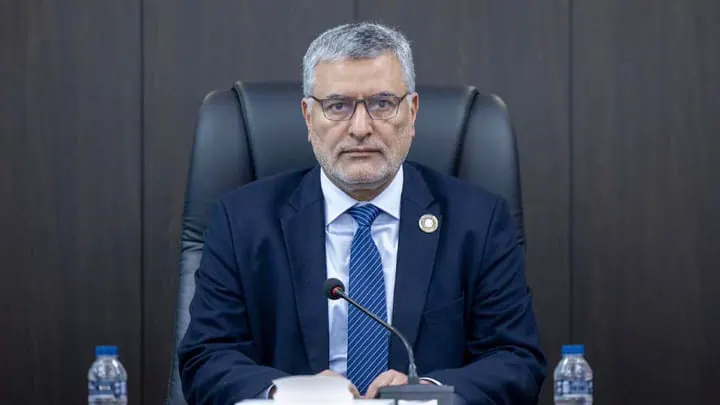
The High Council of State in Libya has taken a significant stance by rejecting the outcomes of the 4+4 committee and certain decisions made by the House of Representatives. This move was communicated through a formal letter sent by the Council's head, Mohamed Takkala, to the head of the UN Support Mission in Libya, Hanna Siaru Titeh. The letter, dated October 5, 2026, emphasizes the Council's stance against any unilateral actions that bypass the established constitutional and legal frameworks.
The High Council of State's decision specifically targets the outcomes of the 4+4 committee, which was established to facilitate dialogue and find a way forward for the Libyan political process. According to the Council, the committee's outcomes overstep the constitutional and legal boundaries that govern Libya's political process. The Council reiterated its commitment to the roadmap announced by the UN Support Mission on August 21, 2025, as the basis for moving forward.
In addition to rejecting the 4+4 committee's outcomes, the High Council of State also expressed its dissapproval of certain laws passed by the House of Representatives. These laws include the amendment to the law on the election of the House of Representatives, the amendment to the law on the election of the President, and the law amending the establishment of the High National Elections Commission. The Council argues that these laws were passed unilaterally and without proper consultation.
The High Council of State further criticized the House of Representatives for passing decisions without consensus. One such decision is the adoption of an agreement by the parties participating in a mini-meeting on the roadmap. The Council also rejected the House of Representatives' decision to reconstitute the High National Elections Commission, emphasizing that any actions taken must be neutral and maintain the Commission's independence.
The rejection by the High Council of State highlights the ongoing divisions within Libya's political landscape. The Council's insistence on adhering to established frameworks and its rejection of unilateral actions underscore the challenges faced in achieving a unified political process. The situation demands careful navigation to ensure that Libya's path forward is grounded in consensus and legitimacy.
The developments reflect broader tensions between different Libyan political institutions. The High Council of State and the House of Representatives have had differing views on various aspects of the political process. The involvement of the UN Support Mission in Libya adds an international dimension to the situation, with efforts aimed at facilitating a peaceful and inclusive resolution.
As Libya continues to navigate its complex political situation, the international community watches closely. The UN Support Mission in Libya plays a crucial role in mediating and supporting the Libyan parties. The rejection by the High Council of State serves as a reminder of the need for a comprehensive and agreed-upon approach to Libya's political future.
Key points
- The High Council of State rejects the outcomes of the 4+4 committee and certain laws and decisions made by the House of Representatives.