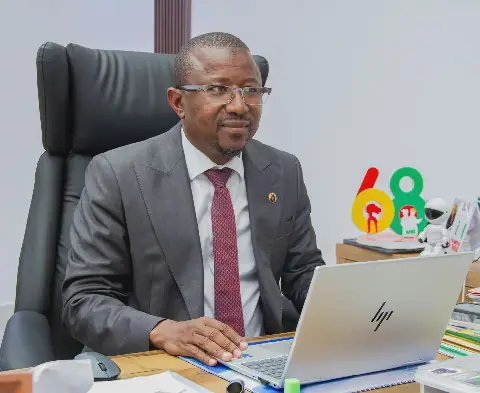
The Director-General of the Small and Medium Enterprises Development Agency of Nigeria (SMEDAN), Charles Odii, has emphasized the need for stronger collaboration between traditional institutions and government intervention agencies to improve food security, create jobs, and expand economic opportunities at the grassroots. Odii made this call while delivering the keynote address at the 2026 Ulefunta Annual Lecture in Akure, Ondo State. The lecture, themed "Food Security, Wealth Creation and National Development: Building Strategic Partnerships Between Traditional Institutions and Intervention Agencies," aimed to bridge the gap between traditional institutions and government intervention agencies.
Odii noted that government policies and intervention programs often fail to achieve their intended objectives when designed without adequate input from communities and their leaders. He stressed that traditional rulers and community leaders understand the peculiarities of their communities, including land use, customs, economic potential, and local challenges, making their involvement critical to the success of development programs. The SMEDAN chief executive identified community participation, transparency, impact measurement, inclusion, and sustainability as key requirements for effective government interventions.
SMEDAN has introduced its Community Enterprise Development Programme to strengthen the participation of traditional institutions in enterprise development. The program involves traditional rulers and community leaders throughout the implementation of development projects, rather than engaging them only after major decisions have been taken. Odii explained that traditional institutions can assist intervention agencies in mobilizing farmers, artisans, women, and youths, identifying viable economic opportunities, and promoting community ownership of government programs.
Odii also urged stakeholders to move agriculture beyond subsistence production by investing in the entire value chain, including processing, packaging, logistics, technology, and marketing. He suggested that developing economic clusters around the comparative advantages of different communities could boost productivity, create jobs, and improve access to markets. The SMEDAN boss called for greater investment in young people and women through skills acquisition, digital literacy, mentorship, access to finance, and market linkages.
The Deji and Paramount Ruler of Akure Land, Oba Aladetoyinbo Ogunlade Aladelusi, Odundun II, said the annual lecture was organized to bridge the gap between traditional institutions and government intervention agencies. The monarch disclosed that the forum was also intended to expose rural dwellers, farmers, and young entrepreneurs to funding and other opportunities available through government programs. He described the Ulefunta Festival as an annual socio-cultural reunion featuring tourism and cultural activities.
The Vice-Chancellor of the Federal University of Technology, Akure (FUTA), Prof. Adenike Oladiji, commended the Deji of Akure for his support for the university, particularly his role in facilitating the recent accreditation of its medical program by the Medical and Dental Council of Nigeria. Prof. Oladiji described the Ulefunta Annual Lecture as a platform for intellectual exchange, cultural preservation, and discussions on solutions to national challenges. She called for stronger partnerships among traditional institutions, universities, and government intervention agencies to promote sustainable development.
The National Orientation Agency (NOA) has pledged its support for the initiative, promising to deploy its resources to sensitize residents of the Akure Kingdom to opportunities available under government intervention programs in food security and wealth creation. The agency's South-West Zonal Director, Martin Kehinde Ogunkuade, described the partnership between the agency and the Akure traditional institution as a potential model for collaboration between traditional institutions and government agencies.
Key points
- SMEDAN Director-General Charles Odii calls for collaboration between traditional institutions and government agencies to improve food security and create jobs.