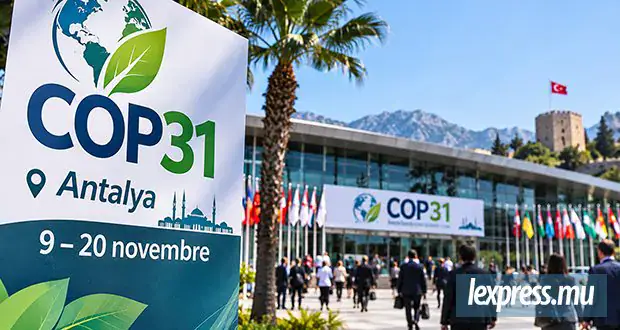
The 31st Conference of Parties (COP31) will take place in Antalya from November 9 to 20, where the world's attention will be focused on the urgent need for climate action. For small island nations, including Mauritius, this conference is particularly significant as it will be the first COP to judge countries on their delivery on climate promises, not just their pledges. The government of Mauritius, led by the President of the Republic, has already voiced its concerns at the Pre-COP in Funafuti and Nadi, highlighting the importance of financial support and loss and damage funding.
In recent months, several significant developments have taken place that will shape the discussions at Antalya. The UN General Assembly approved the first Political Declaration on Sea Level Rise on September 24, which reaffirms the stability of maritime zones established under the Convention on the Law of the Sea. This is a crucial victory for small island nations, including Mauritius, which has a 2.3 million km² exclusive economic zone. Additionally, 27 countries and entities adopted the Taku Pakasoa Declaration on October 6, which calls for maintaining the 1.5°C goal, reforming international financial architecture, and placing the ocean at the center of climate action.
The International Court of Justice (ICJ) has also played a significant role in shaping the climate agenda. On July 23, 2025, the ICJ issued an advisory opinion, which stated that countries' climate obligations are part of international law, not just voluntary commitments. This opinion was initiated by Vanuatu and has significant implications for small island nations. Furthermore, the Sixth Committee has opened discussions on the protection of people affected by sea-level rise, a critical issue for countries like Mauritius.
At Antalya, the governance structure will be innovative, with Türkiye presiding and leading the action agenda, while Australia, through Minister Chris Bowen, will preside over the negotiations. This separation of roles presents both opportunities and challenges for small island nations. Five key issues will be on the table: finance, loss and damage funding, fossil fuel phase-out, ambition, and ocean protection. The COP29 in Baku set a goal of $300 billion per year by 2035, but this falls short of the actual needs of small island nations.
The tripling of adaptation finance by 2030, agreed upon in Belém, is still awaiting its modalities. The loss and damage fund has started to disburse funds, with over $800 million pledged by 27 contributors, but this is a fraction of the actual needs. The debate on fossil fuel phase-out will continue, with some countries pushing for a more ambitious timeline. The Brazilian presidency is expected to present an informal roadmap on this issue.
The ambition of countries to reduce their greenhouse gas emissions will also be under scrutiny. The Nationally Determined Contributions (NDCs) of third-generation countries were expected by February 2025, but several major emitters have yet to submit theirs. The report of the "Mission of Belém towards 1.5°C" will be published before Antalya, highlighting the gap between current commitments and the 1.5°C goal.
Finally, the protection of the ocean will be a critical issue at Antalya. Small island nations, including Mauritius, are pushing for the ocean to be placed at the center of climate action. The outcome of the COP31 will have significant implications for the future of small island nations, and it remains to be seen whether countries will deliver on their promises.
Key points
- The 31st Conference of Parties in Antalya will assess countries' delivery on climate promises, not just their pledges.
- Small island nations, including Mauritius, are pushing for increased financial support, loss and damage funding, and protection of the ocean.
- The conference will debate the phase-out of fossil fuels, ambition, and ocean protection, with significant implications for the future of small island nations.